
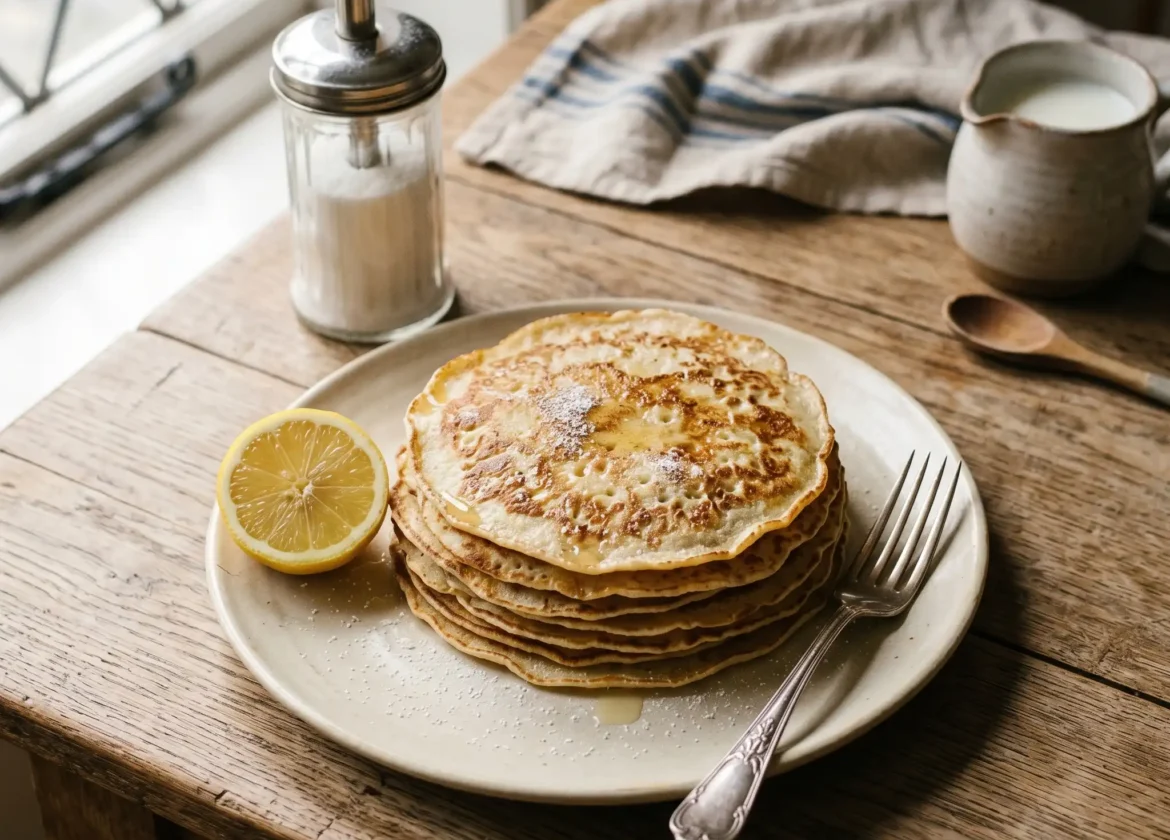
Mary Berry Simple Pancake Mixture Recipe is one of those classic pancake recipes that never goes out of style. Whether you’re making thin pancakes for a lazy Sunday or preparing Pancake Day treats on Shrove Tuesday, this reliable batter delivers every single time. What makes it special is how it turns everyday ingredients into something genuinely beautiful beautifully light pancakes with delicate edges, a smooth buttery flavor, and that signature golden finish that makes you want to stack them high. I’ve made this recipe more times than I can count, and it never disappoints.
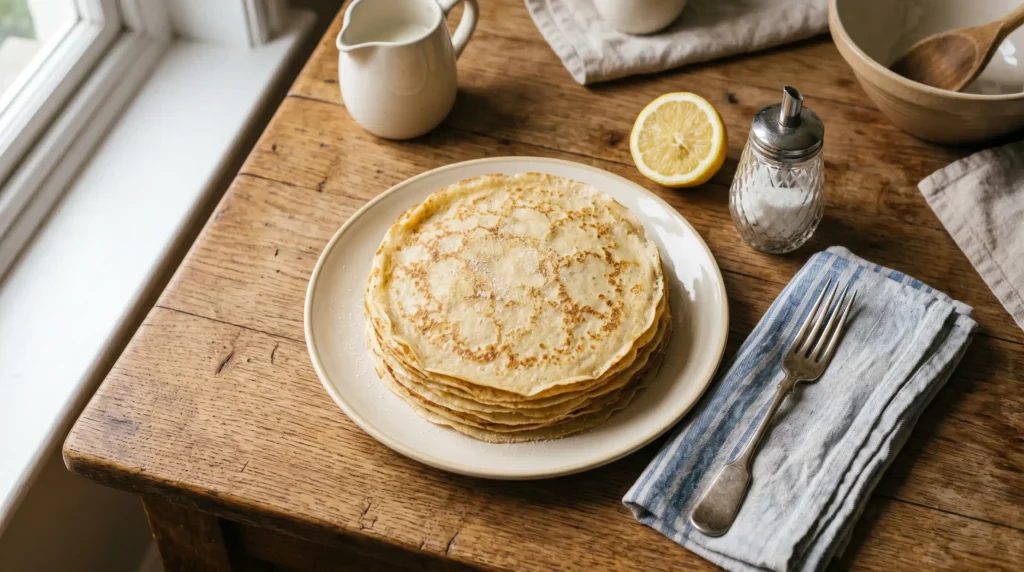
What I love most is how this recipe works for everyone from absolute beginners to experienced home cooks who just want a trustworthy go-to. It’s a true British pancakes staple, perfect for a comforting breakfast, a relaxed family brunch, or even a quick weeknight treat. The simple preparation means you’re never spending more time in the kitchen than you need to. You get up to 12 thin pancakes from one batch, each one easy to flip, wonderfully tender, and versatile enough to carry both sweet toppings and savory toppings with equal charm. These traditional British pancakes are soft, golden, and honestly — worth every flip.
What You’ll Need — Ingredients Breakdown
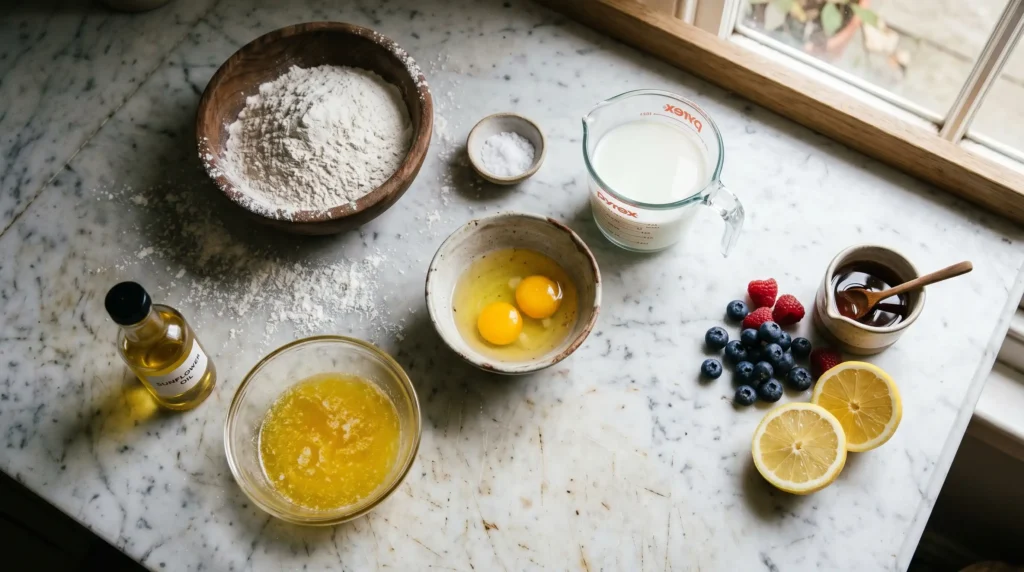
| Category | Ingredient | Quantity / Options | Notes |
| Core Batter Ingredients | Plain flour | 100g plain flour | Preferred for lighter, lacy crepe-style pancakes |
| Core Batter Ingredients | Plain flour (alternative) | 125g plain flour / 4½ oz plain flour | Creates a slightly thicker texture |
| Core Batter Ingredients | Eggs | 2 large eggs | Standard option |
| Core Batter Ingredients | Eggs (alternative) | 1 medium egg + 1 extra egg yolk | Adds extra richness |
| Core Batter Ingredients | Milk | 300ml milk | Main liquid for the batter |
| Core Batter Ingredients | Semi-skimmed milk | 300ml semi-skimmed milk | Works especially well |
| Core Batter Ingredients | Milk measurement equivalent | ½ pint milk | Alternative measurement |
| Core Batter Ingredients | Melted butter | 1 tablespoon melted butter | Adds flavor and softness |
| Core Batter Ingredients | Sunflower oil | 1 tablespoon sunflower oil | Alternative to butter |
| Core Batter Ingredients | Salt | Pinch of salt | Balances flavor |
| Core Batter Ingredients | Extra oil | As needed | For frying the pancakes |
| Optional Sweet Toppings | Lemon juice + caster sugar | To taste | Classic British pancake topping |
| Optional Sweet Toppings | Maple syrup | To taste | Sweet and rich option |
| Optional Sweet Toppings | Fresh berries | To taste | Adds freshness and color |
| Optional Sweet Toppings | Chocolate spread | To taste | Popular indulgent topping |
| Optional Sweet Toppings | Whipped cream | To taste | Light and creamy finish |
| Optional Savory Toppings | Savory fillings/toppings | Flexible | The neutral pancake base works for savory options too |
Tools That Make It Easier — Kitchen Equipment
Having the right kitchen equipment on hand makes the whole process far smoother than you’d expect. At a minimum, you’ll need 2 mixing bowls one for sifting and one for combining along with a sieve, a whisk (a balloon whisk gives the best results), and a sturdy spoon for making that all-important well in the flour. A pastry brush is incredibly handy for greasing the pan evenly between batches without overdoing the oil, and it’s one of those small tools that genuinely changes your results.
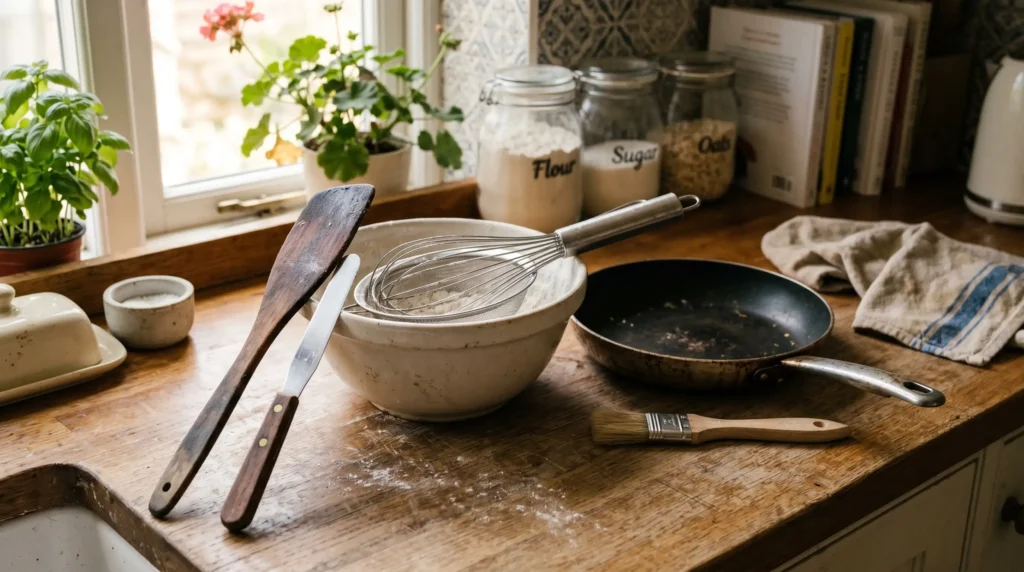
For cooking, a good large frying pan is essential, but if you want truly authentic results, reach for a non-stick frying pan or even a dedicated crêpe pan the flat, shallow sides make flipping pancakes so much easier. When it comes to turning them, both a spatula and a palette knife work well depending on your confidence level. I started out using a spatula and eventually moved to a palette knife, which gives you far more control. Don’t underestimate how much these whisking tools and the right frying pan can elevate your whole pancake experience it’s not just about the batter.
How To Make Mary Berry Simple Pancake Mixture Recipe
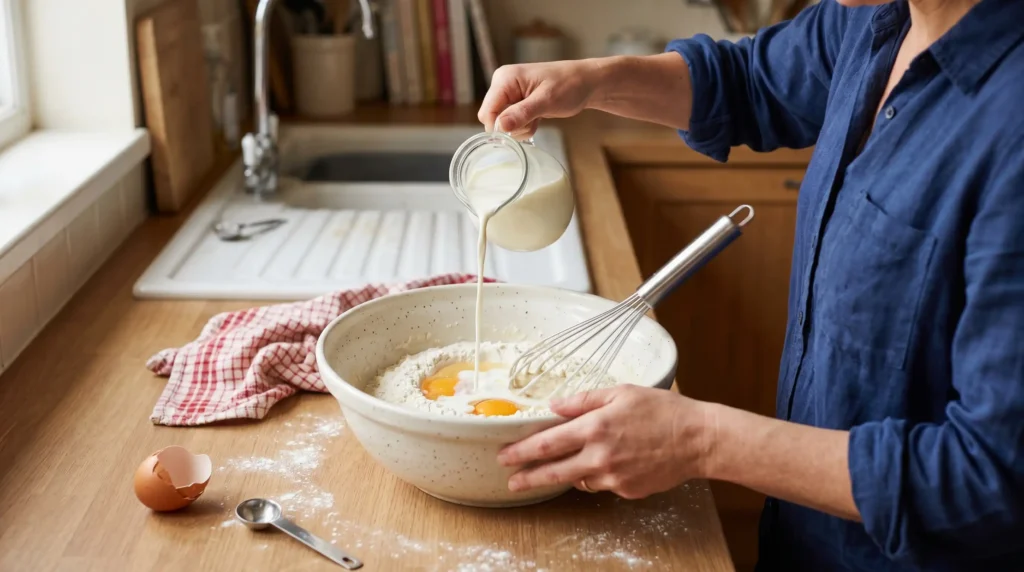
To prepare batter, start by placing plain flour and a pinch of salt into a large mixing bowl and use a sieve to sift flour through this step aerates flour and sets you up for a lighter batter from the very beginning. Next, make a well in the centre using a spoon, creating a hollow center in the dry mixture. Crack eggs your whole egg plus the extra egg yolk directly into the well, add a splash of milk, and begin to whisk together from the centre outward, pulling in the flour bit by bit. Keep whisking from center outward until you have a smooth thick paste, avoiding lumps at every stage. Then gradually pour in the remaining milk, whisking continuously until you achieve a smooth batter that’s completely free from lumps. Stir in the melted butter and a tablespoon oil, and check the consistency it should resemble single cream consistency. Now let the batter rest for at least 15 minutes, though 30 minutes is even better. This resting time allows the starch to swell and absorb liquid, giving you a noticeably softer texture and a smoother final result.
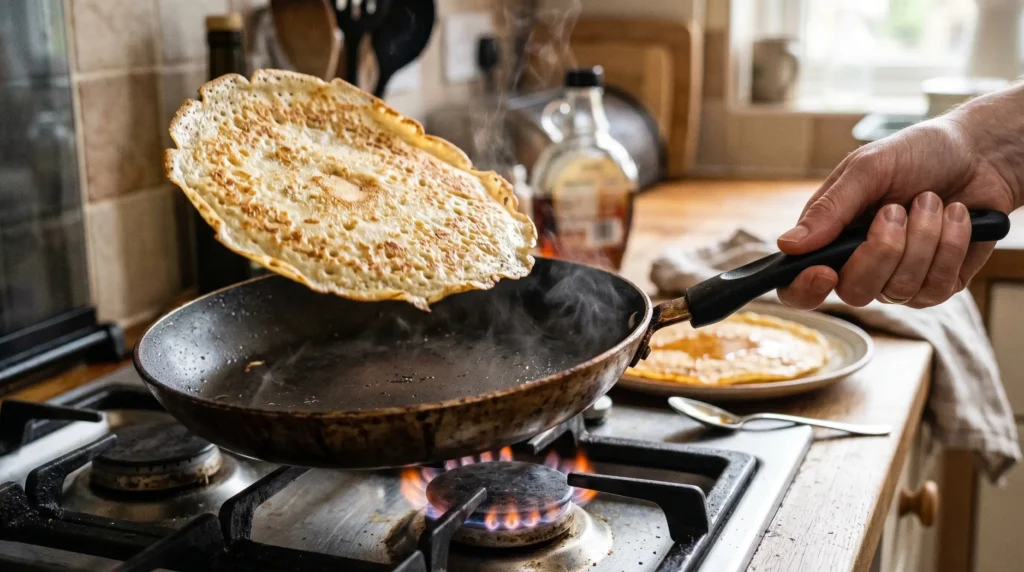
When you’re ready to start cooking, place a non-stick frying pan or crêpe pan over medium-high heat and lightly grease the surface use a pastry brush to brush oil or a small knob of butter or oil across the hot pan. Drop in a teaspoon batter first to check it should sizzle immediately. Then, using a small ladle or small ladleful, pour the pancake mixture into the pan while swirling evenly in a circular motion to coat base evenly in a thin, even layer, covering base completely. Let it cook pancakes for about 1 minute until lightly golden underneath you’ll know the underside golden and the top set when the edges begin to lift slightly. Then it’s time to flip pancake either by tossing if you’re feeling brave or using a spatula or palette knife for a more controlled pancake flipping. Cook the second side for just 30 seconds to 30-45 seconds until spotted brown and beautifully golden. Transfer to a warm plate and repeat with the remaining batter, serving each golden pancake fresh and warm with your favourite toppings. Good batter consistency and consistent frying technique are what give you that perfect pancake texture and smooth consistency every time.
Tips for the Best Pancakes
One of the most common issues home cooks face is pancake batter lumpy and the fix is simple. Always add milk gradually while whisking constantly, so you never give dry pockets of flour a chance to form. If you take your time and work slowly, you’ll end up with a silky smooth batter that cooks evenly and looks beautiful in the pan. Another thing worth doing is letting the batter rest before cooking pancakes even just 10 to 15 minutes noticeably improves texture and produces softer pancakes. I used to skip this step and honestly, the difference when you don’t rush it is remarkable. Also, be careful with overmixing batter an over-whisked batter risks developing gluten, which makes your tender pancakes turn tough. Just whisk until smooth and stop there; the gluten doesn’t need any encouragement.
To stop pancakes sticking, always use a non-stick pan and remember to grease between batches but don’t go overboard. Too much oil leads to greasy pancakes, and nobody wants that. Instead, use a folded piece of kitchen paper to wipe pan clean and add just a touch more oil each time, rather than pouring oil directly into pan. Watch your best heat too medium heat is the sweet spot. A pan too hot means pancakes brown quickly on the outside without cooking through, leaving you with an uneven result. If your batter feels too thick after resting, just add a tablespoon water or a splash of milk to loosen batter slightly. When it comes to stacking pancakes, layer cooked pancakes between sheets of baking parchment over simmering water to keep them warm without letting pancakes stick together. Getting the liquid ratio and measurements right from the start goes a long way in avoiding most pancake troubleshooting moments and trust me, once you nail the frying technique, everything else falls into place.
Ways to Serve Your Pancakes
The most iconic way to serve with lemon juice and a sprinkle of caster sugar is the undisputed classic British pancake combination there’s a reason it’s been on breakfast tables for generations. But if you want to branch out, maple syrup drizzled over a stack of warm British pancakes feels luxurious without any real effort. Add fresh berries, a dollop of whipped cream, or even sliced strawberries for dessert pancakes that feel genuinely indulgent. A smear of chocolate hazelnut spread think Nutella or chocolate spread with sliced bananas turns them into something your kids will ask for every weekend. These sweet fillings and fruity fillings work so well because the base is intentionally neutral pancakes that let the toppings do the talking.
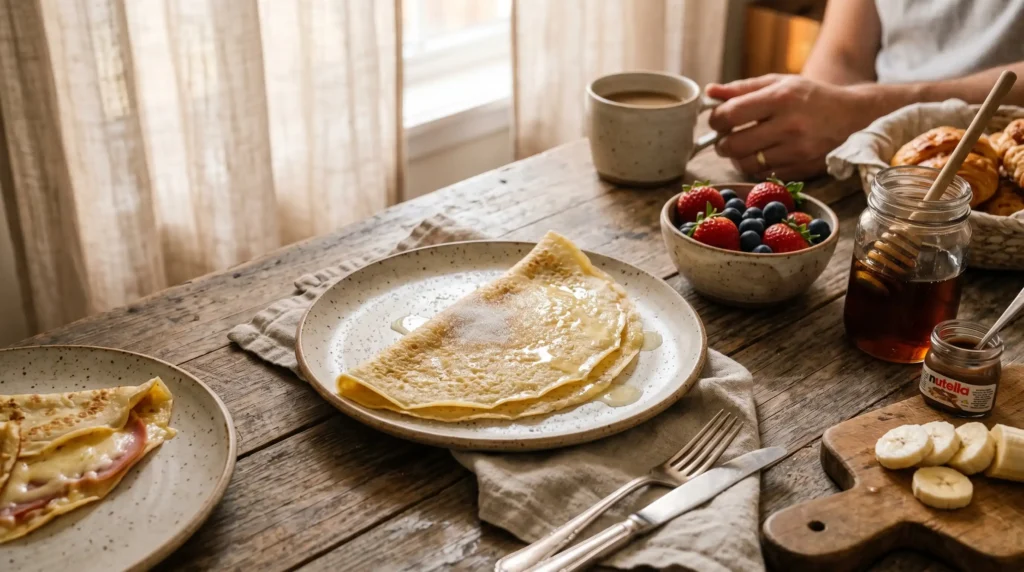
If you’re leaning toward something more savory, these savory pancakes hold up just as well. A simple filling of ham and cheese makes a brilliant quick lunch, and it’s one of my personal favorites when I want something more substantial. Stewed apples with a pinch of cinnamon is a beautiful autumnal option that sits right in between sweet pancakes and comfort food the warmth of the spice and the softness of the fruit melt filling right into the pancake. Whether you’re going with savory fillings, pancake toppings, or classic sweet combinations, the versatility here is genuinely one of the best things about this recipe. Every plate ends up looking and tasting completely different, which makes it a great recipe for feeding a crowd.
Storing Your Pancakes the Right Way
If you’re not eating your pancakes right away, leave them at Room Temperature only if the pancakes cooled completely, and even then only for up to 2 hours beyond that, you’ll want to move them to the Refrigerator. You can actually refrigerate batter up to 12 hours in advance even 24 hours works well — just make sure it’s covered batter to prevent it from drying out or absorbing other fridge smells. For fridge storage of cooked pancakes, stack them in an airtight container with baking parchment or parchment paper between each one to prevent sticking, and they’ll keep well in refrigerator storage for up to 3 days. Always give the batter a good whisk before using if it’s been sitting overnight.
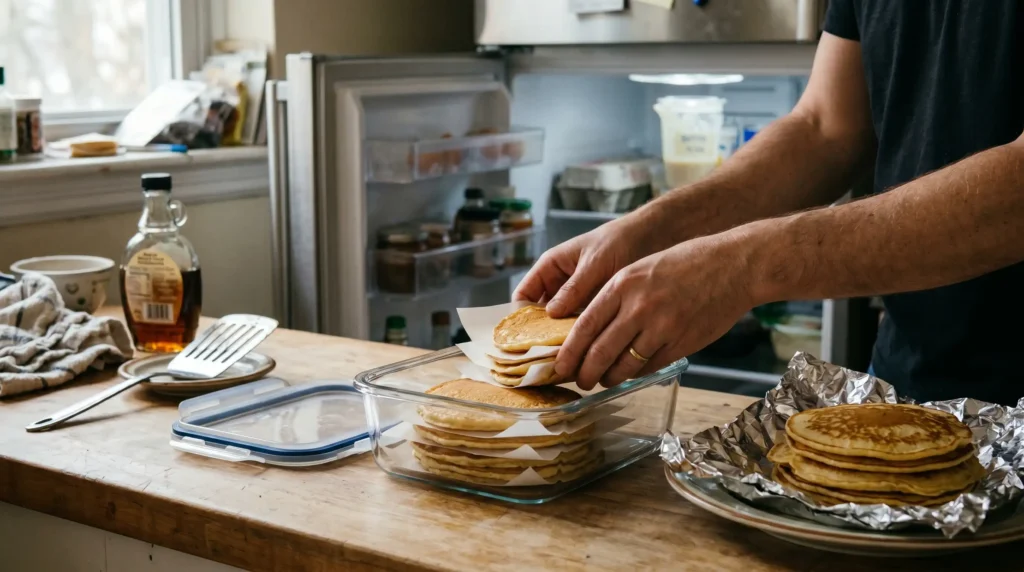
For longer pancake storage, Freezing is the way to go. You can freeze pancakes in stacks separated by parchment, and they’ll keep for up to 2 months some sources say 3 months with no real drop in quality. When you’re ready to eat, you can reheat directly from frozen no need to thaw. Frozen pancakes go straight into a dry frying pan over low heat, or you can use microwave reheating for speed, covering them loosely with foil wrap to keep moisture in. Room temperature storage is really only for short windows, so don’t leave cooked pancakes sitting out too long. Whether you’re freezing pancakes for future breakfasts or planning reheating pancakes for a quick weeknight treat, this recipe stores far better than most people expect.
Nutritional Information
Each pancake from this recipe comes in at around Calories 140 kcal per serving, though a lighter version can come closer to Calories 90 depending on how much oil you use during frying and which toppings you add. In terms of macros, you’re looking at roughly Carbohydrates 15g per pancake, or as low as Total Carbohydrates 12g with a leaner mix. Protein 5g is standard for the full-egg version, while a reduced-egg variation may yield closer to Protein 3g. Fat sits at around Fat 6g, dropping to Total Fat 3g with semi-skimmed milk and minimal oil. Saturated Fat ranges from Saturated Fat 1g to Saturated Fat 3g depending on whether you use butter or sunflower oil.
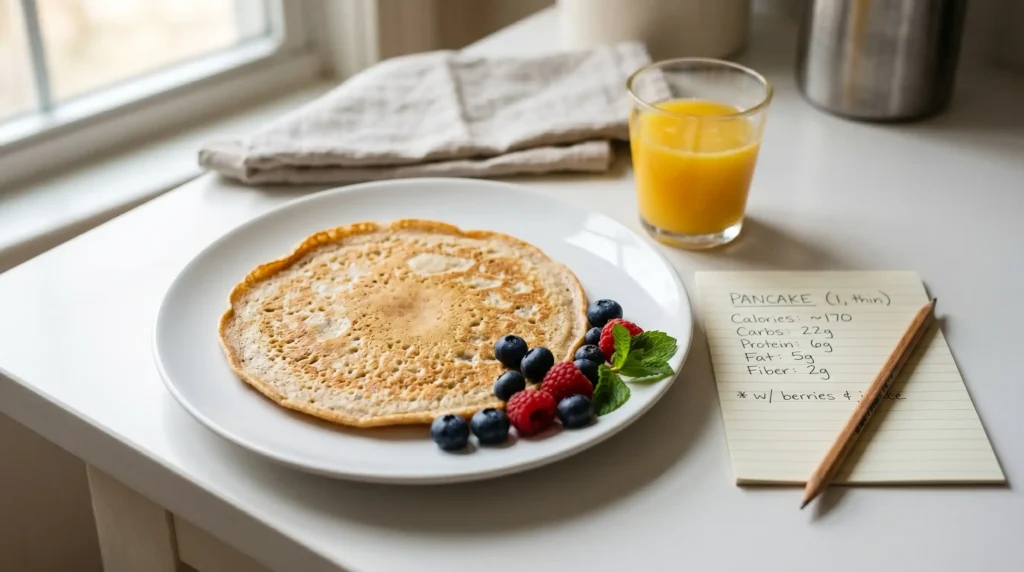
On the micronutrient side, Sodium is typically between Sodium 50mg and Sodium 90mg, and Cholesterol lands at around Cholesterol 45mg per pancake, largely from the eggs. There’s a small amount of Dietary Fiber 0.5g and barely any Sugar 1g in the base batter itself the rest comes from your toppings. These nutrition values are all estimated nutrition figures based on standard ingredients used, so keep in mind they’ll shift based on portion size and what you add on top. As a rough guide, the full batch makes 8-10 pancakes, giving you a helpful baseline for tracking calorie count and broader nutritional information. Overall, these are a fairly balanced option as a pancake nutrition standpoint — especially if you keep the toppings light.
Step-by-Step Directions
To get started, place flour and salt into a mixing bowl and create a well in centre. Add your eggs into the hollow, then gradually whisk milk in small amounts, working from the centre outward until you have a smooth batter that’s completely lump free. Once the batter comes together, stir melted butter through and then rest batter for at least 15 minutes this short pause genuinely makes a difference to the final texture and is one of those steps worth not skipping.
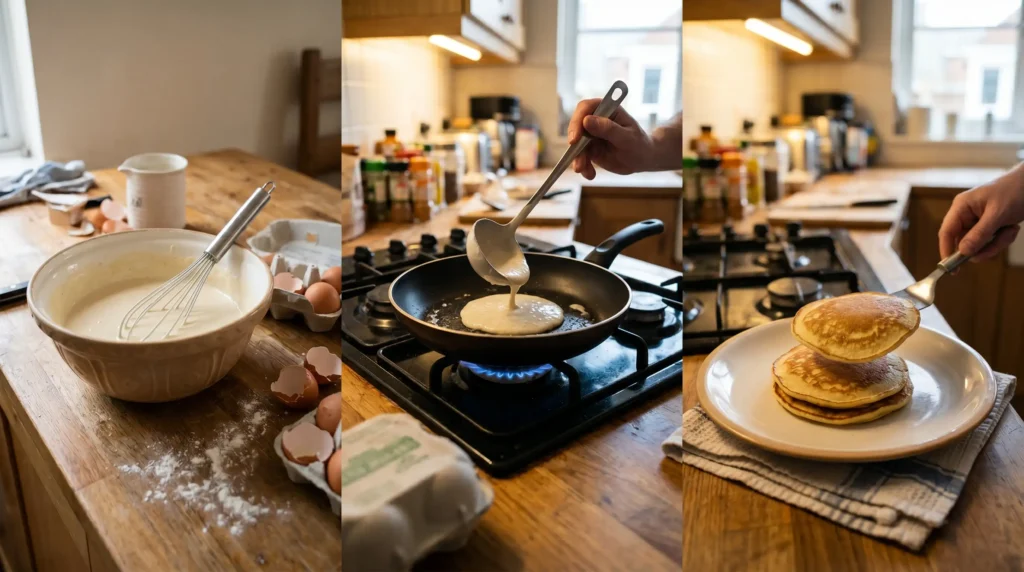
When you’re ready to cook, heat a lightly greased frying pan over medium heat and pour in a small ladle of batter, immediately swirl batter in a circular motion to coat base evenly. Let it cook 1 minute until golden underneath, then flip pancake and cook other side for around 30 seconds. Continue until you’ve used up all the remaining batter, keeping each pancake warm while you work through the batch. These pancake directions keep everything organised from batter preparation right through to frying pancakes, and by the end you’ll have a beautiful stack ready to serve warm with your favourite toppings.
Notes & Chef’s Tips
Always allow batter rest before you start cooking even a short rest makes a real difference to how smoother pancakes turn out, both in texture and in how evenly they cook. Using a non-stick pan is genuinely one of the best things you can do for easier flipping, especially if you’re making a big batch and don’t want to babysit every single pancake. These aren’t just pancake notes for beginners — even seasoned cooks revisit the basics and find something useful in slowing down and following each step with care.
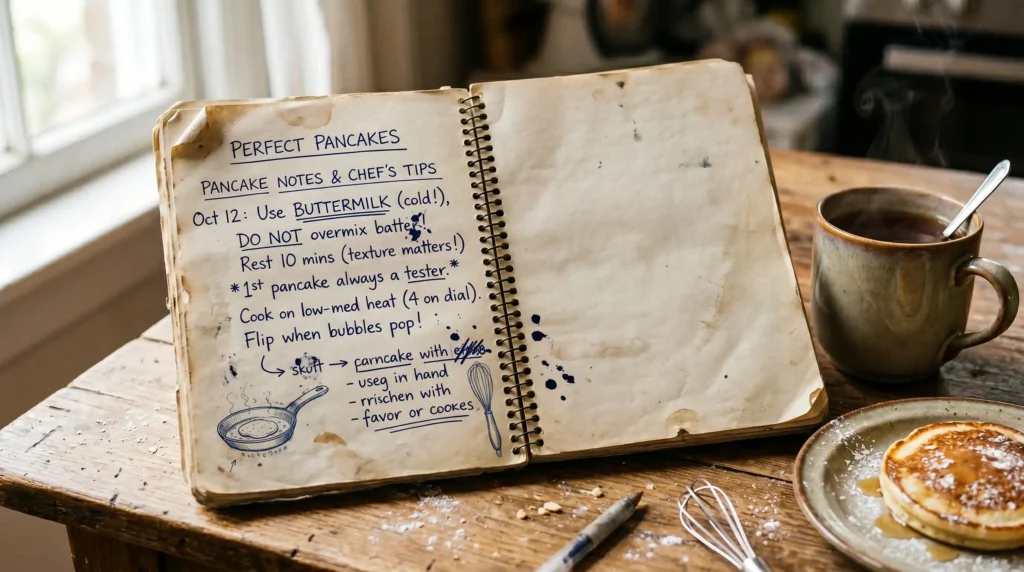
One of the best Chef’s Notes I’d pass along is to keep your cooked pancakes warm by loosely covering the stack with foil while you finish the batch it keeps them soft and ready to serve without drying out at the edges. There are no clever shortcuts here that compromise quality, but there are a few cooking secrets worth knowing: let the pan heat properly before the first pancake, don’t rush the flip, and always taste the first one for seasoning. These small habits, more than anything else, are what separate a good stack from a great one.
Discover More from Mary Berry’s Collection
If you’ve fallen in love with this recipe, it’s worth exploring the wider world of British classics that Mary Berry has spent decades perfecting. From Herbs & Spices to Applesauce, her approach to Cuisines spans everything from rustic Desserts to elevated Poultry dishes and beautifully simple bread all made with the same approachable, restaurant method mindset that makes every dish feel achievable at home. Her recipes aren’t about complexity; they’re about understanding what makes food good, and then doing exactly that.
Her full recipe collection is available in book form on Amazon from around £9.99, and it’s the kind of purchase that genuinely earns its place on your shelf. Alongside the recipes themselves, presentation matters too and if you want to elevate how your food looks, brands like Jin Designs and their Kitchen Collection offer beautiful fine bone china plates and decorative tableware that make every stack of pancakes feel special. Their Sitting Cat Plate and coordinating Sitting Cat Tea Towel are personal favourites of mine for a cosy brunch setup, and a matching milk jug on the table ties the whole thing together with real charm. Stylish tableware won’t make the pancakes taste better but it will make the whole morning feel better.
Frequently Asked Questions
| Question | Answer |
| Can you make pancake batter ahead of time? | Yes, you can prepare pancake batter in advance and store it in the refrigerator for up to 24 hours. Stir it well before using because the ingredients may settle over time. |
| Can you use self-raising flour instead of plain flour? | Technically yes, but plain flour is recommended for traditional thin British pancakes. Self-raising flour creates thicker, American-style pancakes instead of light crepe-style results. |
| Why should pancake batter rest before cooking? | Resting the batter allows the flour to fully hydrate, which helps create smoother pancakes with a softer texture and better bite. |
| Can you freeze homemade pancakes? | Yes, homemade pancakes freeze very well. Place baking parchment between each pancake before freezing, and they can be stored for up to two months. |
| How should you store pancakes in the freezer? | Stack pancakes with sheets of baking parchment between them to prevent sticking and make reheating easier. |
| Why do pancakes turn rubbery? | Rubbery pancakes are usually caused by over-whisking the batter, overdeveloping gluten, or adding too much flour, which disrupts the liquid ratio. |
| How can you avoid rubbery pancakes? | Follow the ingredient measurements carefully, whisk only until the batter is smooth, and avoid overmixing. |
| Is freezing pancakes good for meal prep? | Yes, freezing pancakes is a great meal-prep option because you can make a large batch in advance and enjoy ready-made breakfasts throughout the week. |

Once your Mary Berry Chocolate Chip Banana Bread Recipe loaf has fully cooled, storing it correctly makes all the difference between a slice that tastes great on day one and one that still feels worth eating several days later. At room temperature, keep the loaf covered in an airtight container and it will hold its moisture and texture comfortably for up to 3 days to 4 days without drying out. From my own experience, wrapping it well is the key any exposure to air pulls the moisture out faster than you would expect. If the weather is particularly warm where you are, it is worth moving it to the fridge to preserve freshness, where it will keep for up to 1 week when properly covered. Just bring it back to room temperature before serving so the texture returns to its best and does not feel cold or dense on the palate.