There are certain dishes that just feel like a hug in a dish, and Mary Berry Chicken Tartiflette Recipe is exactly that. This isn’t the traditional pork-and-potato tartiflette you might know from the Alps — this recipe swaps in tender chicken, wrapped with smoky bacon, then layered through soft potatoes and blanketed in melted cheese until the whole thing turns golden, with a bubbling topping that you can smell from the next room before it’s even out of the oven. I’ve made both versions more times than I can count, and honestly, the chicken version wins for me on a weekend dinner — it’s just as rich and indulgent, but a little lighter, and it still gives you that same creamy, comforting pull of a proper potato bake.
What makes this one worth keeping in your back pocket is how straightforward and family-friendly it is, without tasting like a shortcut. The total time from start to finish sits around 1 hour and 10 minutes, which for a proper layered bake full of spuds, crispy ham, and savoury, hearty flavour is genuinely simple for weeknight fare — nothing about it demands restaurant-level skill, just a bit of attention to timing. Get that right and you’ll have something that looks properly elegant on the table; get it wrong — rush the cream stage and you’ll end up with a runnier sauce, or skip resting and risk dry chicken — and you might land yourself a slightly wonky batch where the sauce separates. But once you’ve got a feel for it, this bake becomes one you’ll return to again and again, especially with firm potatoes holding their shape underneath all that cheese.
Chicken Tartiflette
Chicken tartiflette is refreshingly quick to get on the table considering how indulgent it tastes — you can prepare everything in less than 30 mins, then cook it through in anywhere from 30 mins to 1 hour depending on your oven and how deep your dish is. It’s built to serve 6, which makes it a solid choice if you’re feeding a family or a small gathering, and on the dietary side, it’s naturally nut-free, so there’s one less thing to worry about when you’re cooking for a group with mixed needs.
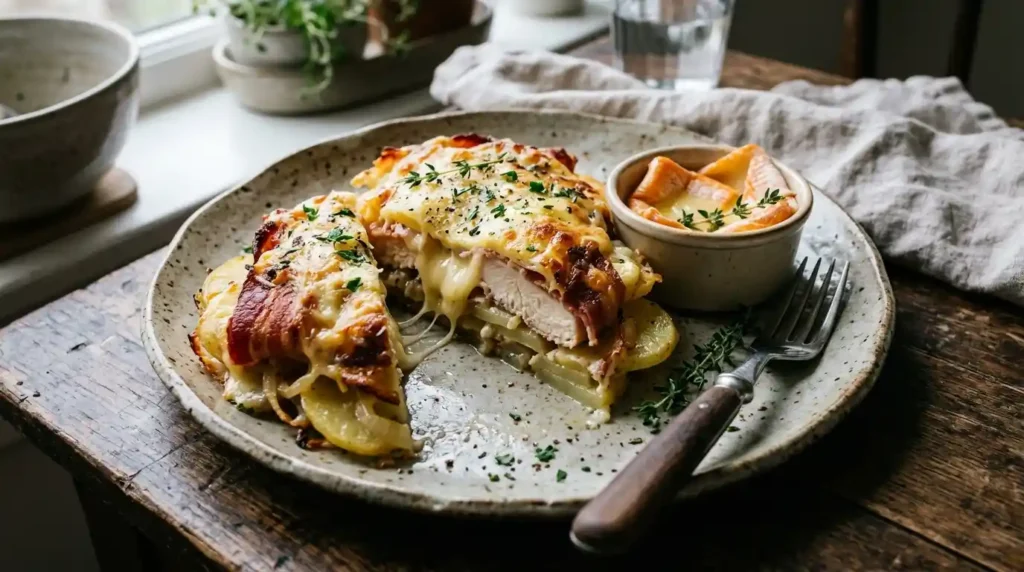
Unlike a classic tartiflette, which leans on potato, bacon, and onions bound together with proper Reblochon cheese — the traditional choice straight from the Alps — this version brings in chicken wrapped with smoked cured ham for that same savoury depth. If Reblochon isn’t available, or you simply want a different choice, both Brie and Camembert make a fine substitute; you just want something cheese-wise that’s properly smoked or cured in character so it melts down into that same silky, rich sauce rather than just sitting on top.
Ingredients
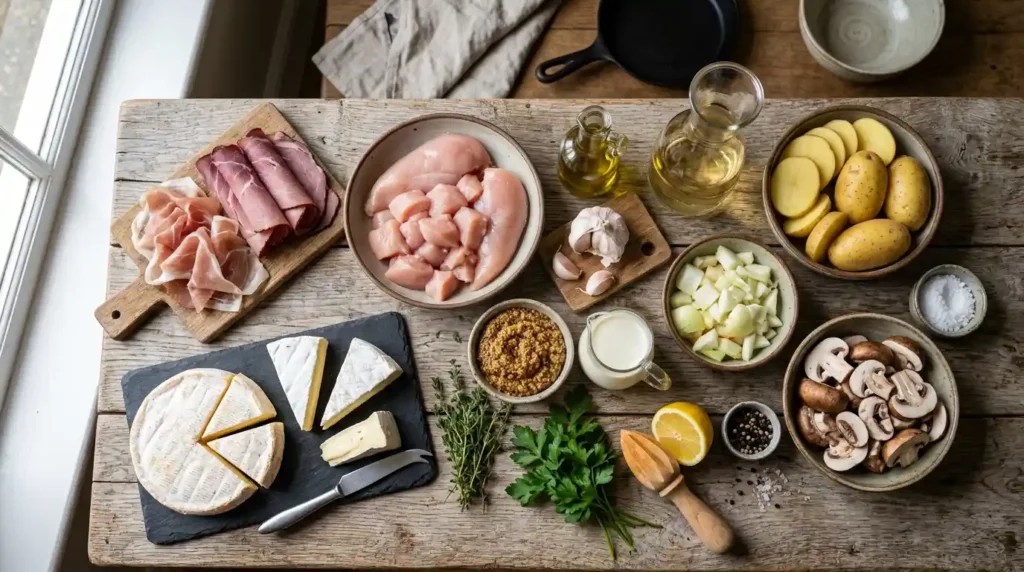
| Ingredient | Amount | Notes / Alternatives |
| Cooked chicken breasts | 2–6 small breasts (125–150g / 4½–5½oz each) | Shredded or diced; use boneless, skinless chicken. |
| Parma ham / Black Forest ham | 8 slices | Wrap around each chicken breast. |
| Smoked bacon lardons or smoked cured ham | 150–200g (115g for smaller portions) | Alternative to Parma ham. |
| Waxy potatoes | 500–800g (7oz–1lb 2oz) | Charlotte or Yukon Gold work well. |
| New or floury potatoes | 500–800g | Can be used instead of waxy potatoes. |
| Olive oil | 1–2 tbsp | For frying the vegetables. |
| Onion | 1 medium | Finely or thinly sliced. |
| Garlic | 2 cloves | Crushed. |
| Button mushrooms | 150–200g | Sliced; optional but adds flavour and texture. |
| Dry white wine | 100–200ml (about ⅓ pint) | Replace with chicken stock if preferred. |
| Double cream | 150ml (about ¼ pint) | Single cream can also be used. |
| Reblochon cheese | 200–250g | Rind removed and diced. |
| Brie, Camembert, or Gruyère | 200–250g | Suitable substitutes for Reblochon. |
| Wholegrain mustard | 1 tbsp | Adds depth and gentle sharpness. |
| Lemon juice | Juice of ½ lemon | Brightens the creamy sauce. |
| Fresh thyme | 1–2 tsp, chopped | Or use thyme leaves. |
| Fresh parsley | 2 tbsp, chopped | For garnish and freshness. |
| Salt | To taste | Adjust seasoning as needed. |
| Freshly ground black pepper | To taste | Season before baking. |
How to Make Mary Berry Chicken Tartiflette
Start with the basics: prepare oven by getting it up to temperature, preheat to 200°C, or 200C, which is 180°C fan or 180C Fan, roughly Gas 6, with a shelf positioned at the middle shelf. You’ll want a roasting tin, either a shallow roasting tin or a deep metal roasting tin, plus a buttered ovenproof dish ready for later, and a pan of salted water on to boil. Drop the potatoes in to simmer for about 8 to 10 minutes until just tender, then drain and leave them well drained, and set aside while you get on with the rest.
Heat a bit of oil and fry the bacon until crisp — I like to snip it into two slices or small pieces first so it renders down evenly — then toss it with the potatoes and roast for about 25 minutes, letting these roast vegetables, or roast potatoes, properly soften alongside the potatoes, onions, and garlic in a splash of olive oil. Season with salt and pepper, freshly ground black pepper, in a large frying pan or straight in the large roasting tin. Meanwhile, prepare filling by giving the cooked chicken, whether that’s chicken breasts or a single chicken breast, a stir, then wrap chicken in the remaining ham, roll it up so you’ve got neat wrapped chicken, or wrapped chicken breasts. Pour in the white wine, let it bubble for 2 to 3 minutes, then stir through cream or double cream along with mushrooms, or mushroom, and your cheese, whether that’s diced cheese or cheese slices, to make the chicken mixture rich and glossy — fold in the vegetables, or veg, at this point too.
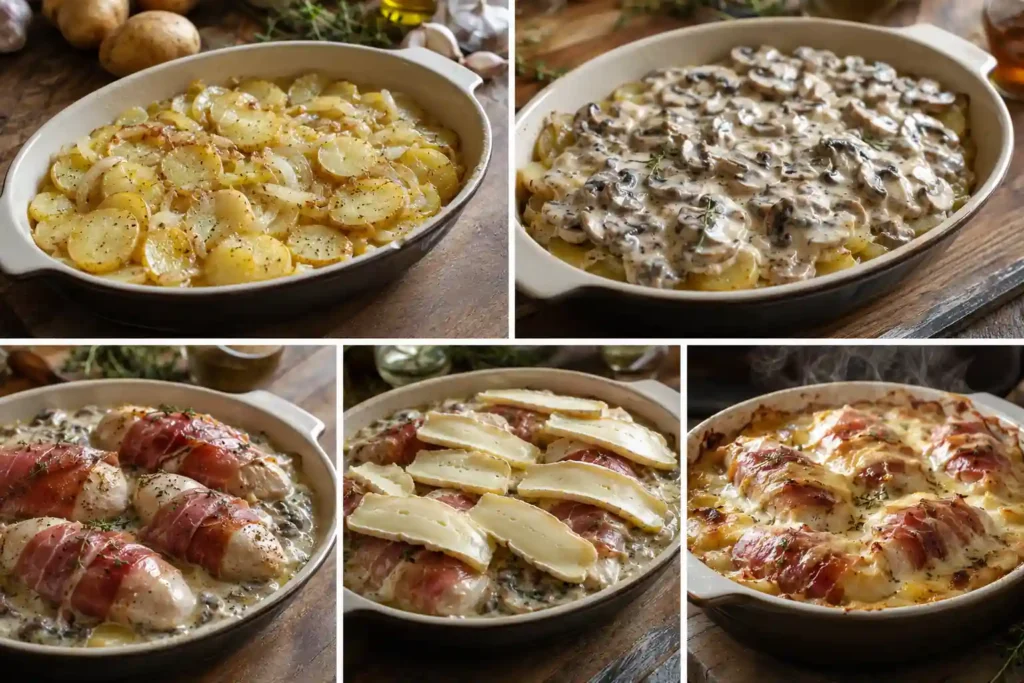
Now assemble: layer half potatoes in the dish, nestle chicken on top, then cover with the remaining potatoes. Return to oven and bake, or bake again, for around 20–22 minutes, sometimes stretching to 25 to 30 minutes, until cooked through, golden, melted, and properly bubbling. Remove and let it sit briefly before serving on a warm plate — a short rest of 5 minutes helps everything settle before you carve it into three pieces per portion and spoon over the sauce, finished with mustard or wholegrain mustard, a touch of lemon juice, and fresh thyme and parsley, or herbs, all combined. Serve piping hot, alongside green vegetables, and let it settle nicely for a minute or two before serving.
The Secret Behind This Bake
Here’s the real secret behind why this bake works so well as a tartiflette-style dish: everything that goes into it bakes or roasts separately first. The vegetables, or veg, get properly roasted rather than boiled to death, which stops them turning mushy or greasy once they’re layered up. That extra step of wrapping the chicken in ham before it ever meets the oven keeps the meat juicy, while the cream, wine, and cheese are brought together into a sauce first, rather than just poured in raw, so everything melts into that same bubbling, French-inspired sauce you want rather than a greasy mess.
The little additions matter more than people expect — mustard and lemon aren’t just seasoning afterthoughts, they cut through the richness so a dish this heavy doesn’t feel flat, giving it a sharpness that keeps every bite tasting dreamy rather than one-note. The mushrooms add an earthy layer of flavour that stops the sauce from feeling like it’s just cream and cheese, and that final lift at the end is really what separates a good tartiflette from a great one — it’s less about any single ingredient and more about not letting any one element sponges up all the moisture before it’s had a chance to properly bind together.
Tips
A few tips worth knowing before you start: if you want to stop dish becoming watery, keep an eye on your cream sauce and give it time to thicken properly before assembling the layers — rushing this step is the most common reason things go wrong. This recipe is also brilliant with leftover roast chicken, so if you’ve got leftover roast chicken sitting in the fridge, use it here for extra flavour rather than letting it go to waste. On the cheese front, Reblochon, Brie, and Camembert are all excellent substitutes for one another and taste fairly similar once melted, each bringing that same creamy finish and golden topping, so don’t stress too much about sourcing the exact one. If it needs a final push once it’s out, pop it under the grill on the middle shelf for a few minutes at the end, if needed.
Some of the recipe tips I’d flag from experience: get your first stage of cooking the vegetables right before adding chicken, and you can prep the whole thing up to 2 hours ahead if you’re organising a bigger meal. Watch that your potatoes aren’t too firm going in — you want them to pre-roast just enough. If your sauce too runny turns out to be a problem, it’s usually because of too much wine, or the dish coming out underbaked, so always measure wine carefully. Give the bake proper resting time too, since skipping it can leave you wondering why the cheese disappeared into the sauce, often because it was added too early — the trick is folding it in during that second bake rather than the first. Overdo the oven time and you risk chicken dry and overbaked, so stick close to bake 20–22 mins and rest 5 mins as your guide. For neat slicing, here’s the fix: slice potatoes to about 5mm thick, going thinner if you want them extra soft, and always cut on a wooden board once the sauce thickens and the seasoning — a light hand with salt — is right; a ceramic dish also helps the edges turn nicely crisps.
Making It Yours (Without Ruining It)
If you fancy a cheese swap, Reblochon is the classic pick, but Brie works beautifully if you want something a touch riper and gooier, while Camembert gives a similar creamy pull; Gruyère shifts the whole flavour and vibe toward something nuttier if that’s more your style. For anyone cooking gluten-free, the good news is that most of the base ingredients here are naturally GF, so you’re mainly just checking your mustard and ham for hidden additives. If you’re catering for dairy-free eaters, swapping in something like Oatly cream and a DF Camembert gets you remarkably close to the original texture without losing too much of what makes it special.
I’ve also played around with bulking this out using spinach or roasted red peppers for a bit of colour and sweetness, though I’d steer clear of anything too watery vegetables-heavy, like raw courgette, unless you cook it down properly first — otherwise it’ll thin out your sauce and undo all that careful reducing you did earlier.
Serving Suggestions
To serve this properly, I like to keep the sides simple so the tartiflette stays the star of the plate. A crisp green salad on the side cuts through the richness nicely, or if you’d rather something warm, steamed green beans or broccoli tossed in buttery peas makes a lovely pair alongside the bake.
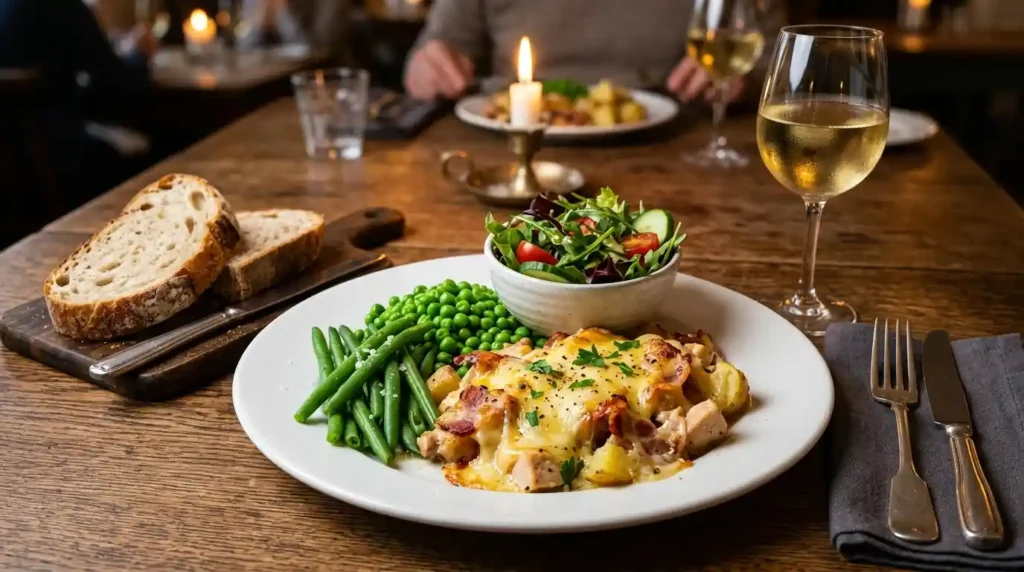
A chunk of crusty bread is never a bad idea either, since it’s perfect to soak up any extra sauce left on the plate. To really enjoy the meal, pour yourself a glass of dry white wine — something light and crisp balances the richness of the dish beautifully.
Storage
For storage, let the dish cool to room temperature first — just remember to allow to cool within 2 hours and do not leave out longer than that. Once cooled, transfer it to the refrigerator or fridge in an airtight container; it will store and keeps well for up to 3 days. When you’re ready to reheat, do it thoroughly and gently, either in the oven or the microwave, adding a small splash of cream or stock if the sauce has thickened too much in the fridge.
For longer-term freezing, this dish holds up well in the freezer — just freeze portions in individual containers for up to 2 months. Defrost overnight in the fridge while chilled, making sure it’s fully defrosted before reheating, so you avoid a soggy texture; reheating properly ensures it’s hot throughout and gives you the best texture once it’s back on the plate.
Nutrition
On the nutrition side, one serving comes in at around 520 kcal, with carbohydrates sitting at roughly 35g. You’re looking at a decent protein count of 32g, alongside fat at about 28g, of which saturated fat makes up around 14g.
Rounding out the numbers, sodium typically lands around 780mg per serving. As always, these are approximate values and will shift a little depending on the exact ingredients used, so treat them as a guide — actual figures will naturally vary from kitchen to kitchen.
Mary Berry Chicken Tartiflette Recipe (FAQs)
Can I make this ahead of time?
Yes. This dish is ideal for making ahead. Assemble it the day before or a few hours in advance, cover, and refrigerate. When ready to serve, bake it straight from the fridge, adding an extra 10–15 minutes to the cooking time since it will be cold.
What potatoes work best?
Waxy potatoes such as Charlotte or Yukon Gold are the best choice. They keep their shape during baking while becoming tender and creamy.
Can I use a different cheese?
Yes. Reblochon is the traditional choice, but Brie or Camembert are excellent alternatives. Choose a ripe, soft cheese for the richest, creamiest finish.
Can I leave out the white wine?
Absolutely. Replace the white wine with the same amount of chicken stock. The flavour will be slightly milder, so you can add a small squeeze of lemon juice to brighten the dish.
Can I use chicken thighs instead of chicken breasts?
Yes. Boneless, skinless chicken thighs work very well and stay extra juicy. Increase the cooking time by about 5 minutes to ensure they’re fully cooked.
Can I use raw chicken?
No. The chicken should be fully cooked before assembling the dish. This recipe is designed to combine cooked chicken with the potatoes, sauce, and cheese before the final bake.
Should the vegetables and chicken be cooked separately?
Yes. Roast the vegetables and cook the chicken separately before assembling everything. This creates the rich layers of flavour and texture the dish is known for.
Can I make a smaller batch?
Yes. Simply halve all the ingredients to make a smaller portion. Serve with a fresh green salad or steamed vegetables for a complete meal.
Try More Recipe
Mary berry chicken tikka masala recipe
Mary Berry Chicken Tagine Recipe
Mary Berry Spanish Chicken Recipe
Mary Berry Italian Chicken Recipe
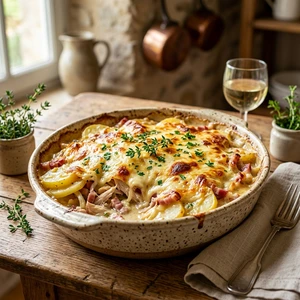

Mary Berry Chicken Tartiflette Recipe
Ingredients
Equipment
Method
- Preheat the oven to 200°C (180°C Fan/Gas 6).
- Toss the potatoes, onions, garlic, olive oil, salt, pepper, and chopped ham in a roasting tin.
- Roast for 25 minutes until the potatoes begin to soften.
- Wrap each chicken breast with the remaining Parma ham and season.
- Remove the roasting tin from the oven.
- Stir in the mushrooms, white wine, double cream, and Reblochon cheese.
- Place the wrapped chicken on top of the vegetables.
- Return to the oven and bake for 20–22 minutes until the chicken is fully cooked.
- Remove the chicken and allow it to rest for 5 minutes.
- Stir the mustard, lemon juice, thyme, and parsley into the vegetables and sauce.
- Slice the chicken and serve over the creamy potato mixture.
Notes
- Brie or Camembert can replace Reblochon cheese.
- Chicken stock can replace white wine.
- Roast the potatoes first to keep them tender without becoming mushy.
- Rest the chicken before slicing for juicier meat.
- Fresh thyme and parsley add the best finishing flavour.