What Is Mary Berry Chicken Cobbler?
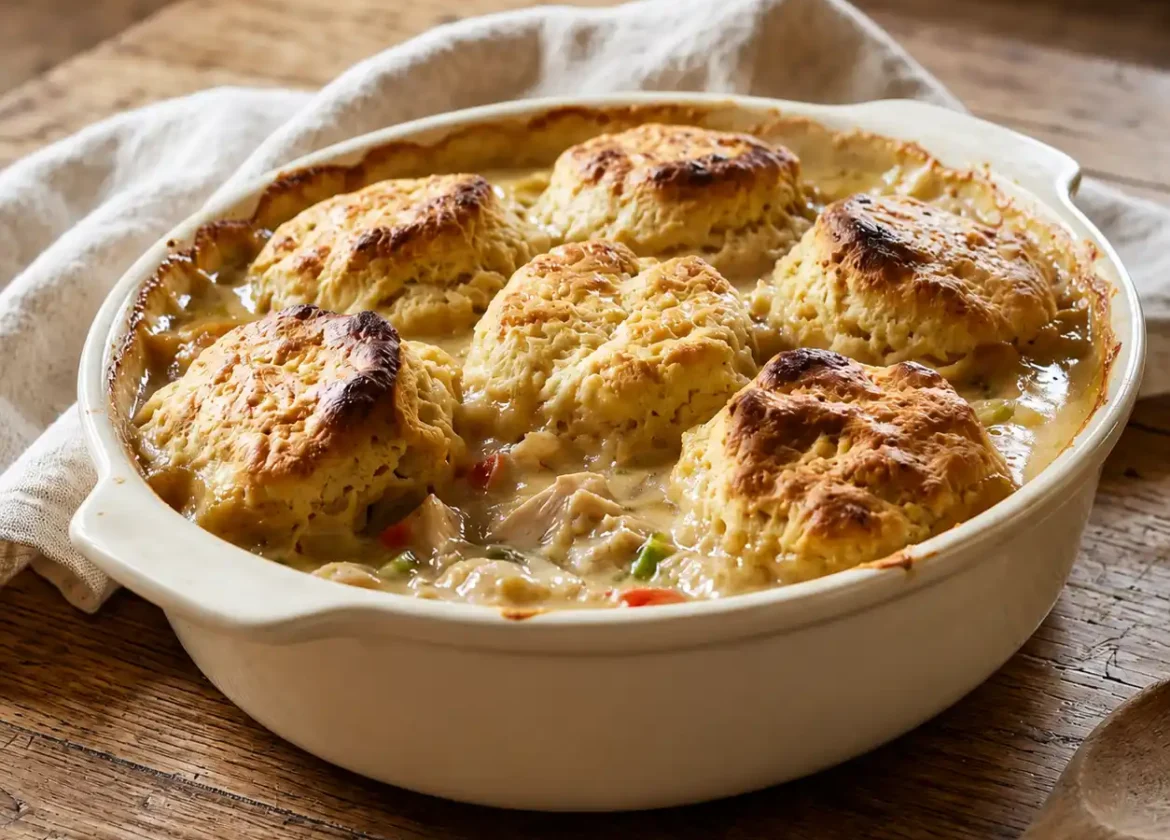
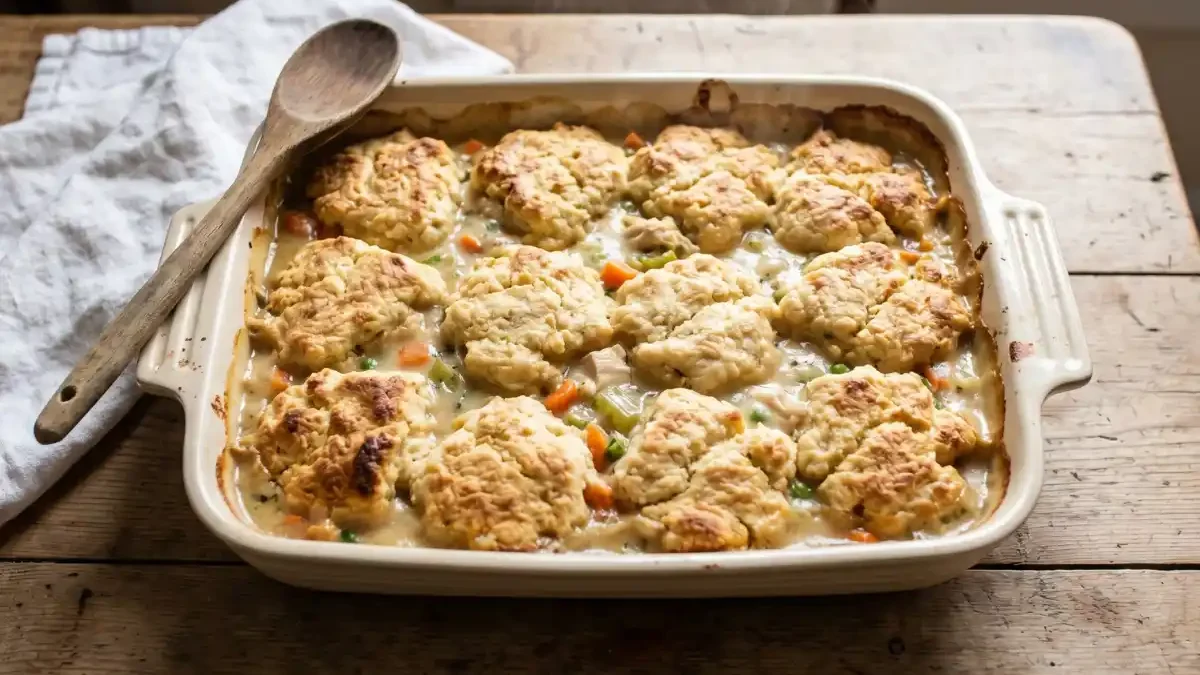
At its heart, Mary Berry Chicken Cobbler Recipe this is a baked dish that brings together tender chicken in a creamy sauce topped with a savoury scones layer instead of the traditional pastry substitute—think of it as the cobbler version of a chicken pie that feels both refined and genuinely homey. The magic is in how it works: you’ve got that bubbling sauce underneath getting rich and flavourful while the golden topping sits above it, the risen scones staying soft and fluffy rather than soggy because they bake on top rather than sinking in. The scone topping is specifically designed so it absorbs flavour from the creamy sauce without becoming waterlogged—you get that perfect balance where the topping stays light yet picks up all the savouriness from what’s underneath. This is genuinely a simple vegetables and tender chicken situation wrapped in a classic comfort meal that feels oven fresh and tastes like someone’s been cooking all afternoon, even though you’ll have it on the table in just over an hour.
The real brilliance is that this baked dish delivers everything in one go—tender chicken pieces suspended in a creamy sauce that’s non-soggy underneath, topped with scones that rise beautifully golden in the oven. It’s a hearty, satisfying approach to comfort food that sits somewhere between a proper stew and a pie, taking the best bits of both without the heaviness of pastry. The gentle flavours and familiar flavours mean it’s not trying to be fancy or complicated; it’s just genuinely good comforting home-style cooking that tastes like warmth and familiarity on a plate.
Why This Recipe Is Worth Trying
What makes this recipe genuinely worth your time is that it’s filling and comforting but feels lighter than pastry pies—there’s something about the scone topping that makes it feel less heavy and more approachable than a traditional chicken pie, especially on cooler evenings when you want something warm but not weighted down. It’s an all-in-one dish that delivers a complete family meal without the stress, and because everything happens in one ovenproof casserole dish, you’ve got minimal washing up afterwards (honestly, that’s half the appeal for me on weeknight cooking). The clear structure and reliable timing mean this is genuinely a dependable recipe—you follow the clear steps, stick to the balanced recipe, and you’ll get consistent, brilliant results every single time.
The family-friendly flavours are another huge advantage: the sauce is mild and satisfying without being bland, the mushrooms add genuine savouriness without overpowering, and there’s nothing remotely fussy about it. You get that ultimate comfort food feeling—the kind of cosy meals you actually want to cook regularly rather than save for special occasions—with completely reliable results that make everyone happy. This is the sort of satisfying, wholesome dish that becomes a regular rotation because it ticks so many boxes: it’s practical, it soaks up flavour beautifully, and it genuinely tastes like proper home cooking done well.
Essential Ingredients to Make Mary Berry Chicken Cobbler
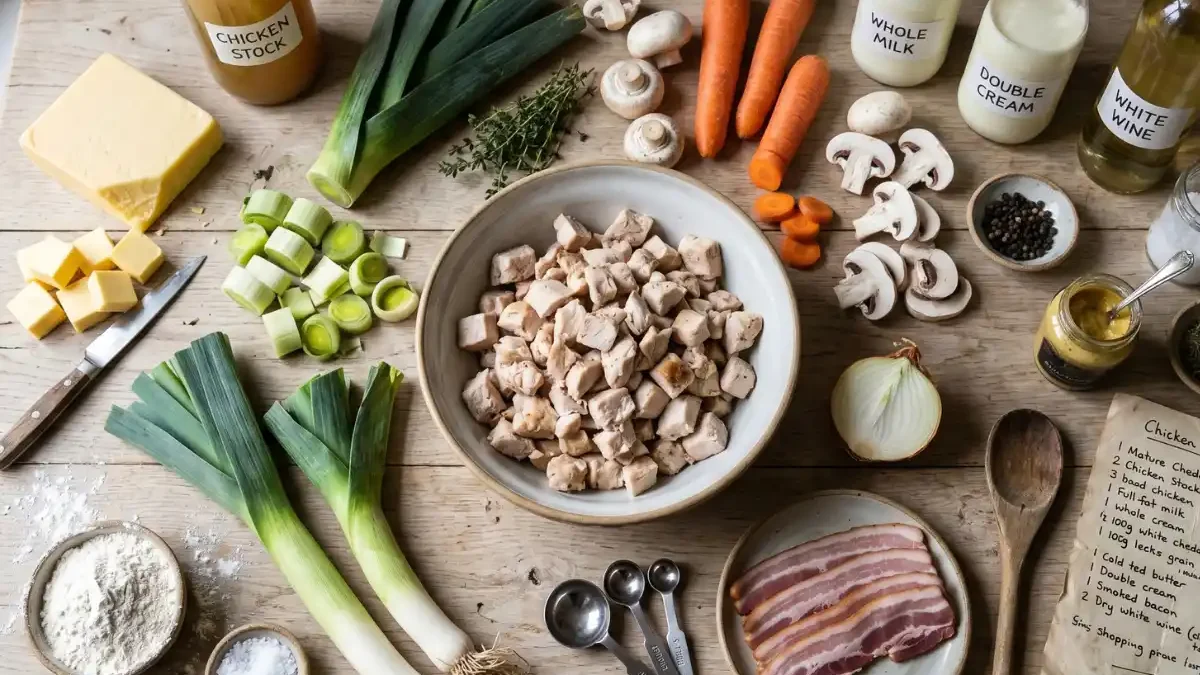
| Category | Ingredients / Details | Notes |
| Oil | Sunflower oil or olive oil (1–2 tbsp) | Use depending on your pan and preference |
| Chicken | Around 500g cooked chicken, skinless boneless chicken breasts, bite-sized pieces, diced chicken, shredded chicken | Rotisserie or leftover cooked chicken works well |
| Bacon | Smoked back bacon rashers | Adds savoury depth and richness |
| Vegetables | Leeks, onion, carrots, button mushrooms, sliced mushrooms | Provide sweetness, colour, texture, and umami flavour |
| Thickener | Plain flour | Thickens the filling and sauce |
| Liquid Base | Chicken stock, full-fat milk, double cream, dry white wine | Creates a rich and creamy sauce with added complexity |
| Seasonings | Dijon mustard, fresh thyme, dried thyme, chopped parsley, salt, freshly ground black pepper | Balances and enhances flavour |
| Cobbler Topping | Self-raising flour, baking powder, cold butter, cubed butter, mature Cheddar cheese, grated cheese, egg, milk | Used to make the scone-style topping and glaze |
| Butter Quantity | Approximately 100g | Includes butter used throughout the recipe |
| Self-Raising Flour | Approximately 175g | Main ingredient for the cobbler topping |
| Mature Cheddar Cheese | 50g–75g | Grated and mixed into or sprinkled over the topping |
| Chicken Stock | Approximately 300ml | Forms the base of the sauce |
| Double Cream | 100ml–120ml | Adds richness and a luxurious texture |
| Milk | Approximately 500ml total | Used for both the sauce and cobbler topping |
| Cooking Technique | Heat oil, melt butter, fry ingredients, soften vegetables, build flavours gradually | Focus on patience and methodical cooking rather than speed |
| Skill Level | Practical, straightforward, no fancy knife work, no temperamental techniques | Uses simple supermarket ingredients and reliable cooking methods |
| Scalability | Quantities can be adjusted based on the number of servings | Easy to scale up or down for different family sizes |
Handy Kitchen Tools for Best Results
Having the right equipment makes this entire process smoother and more enjoyable. You’ll definitely want a large saucepan (or a deep frying pan works brilliantly too) where you can fry chicken, soften leeks, cook your mushrooms, and build your entire sauce without transferring between pans—honestly, a wooden spoon for stirring becomes your best friend here because you’ll be using it constantly. A slotted spoon is genuinely useful for fishing cooked bacon out of the pan and removing cooked chicken pieces without drowning them in oil, and your ovenproof casserole dish or baking dish is non-negotiable—this is where the filling lives during both stovetop simmering and oven baking. A mixing bowl for your scone dough is essential, a pastry cutter or round cutter (about 5cm or 2-inch diameter) helps you cut uniform cobbles, and a lightly floured surface is where you’ll roll dough or pat dough to roughly 2cm or 3/4 inch thickness.
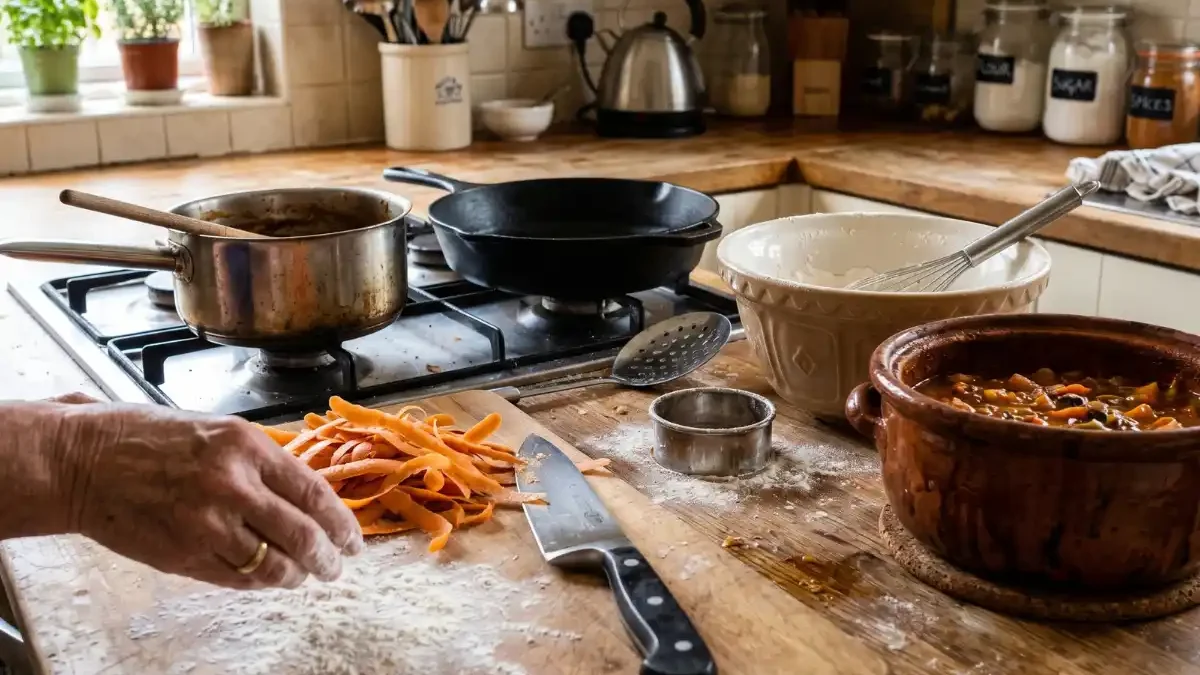
Beyond those basics, having a knife for chopping veg is obvious, but honestly, using your fingertips to rub butter into flour for the scone mixture is genuinely better than any fancy equipment—it keeps the butter cool and separate rather than melting into the flour, which gives you a lighter topping. The tactile element of working with your hands actually connects you to what you’re making in a way that feels proper satisfying, and it’s how these recipes have been made for generations.
How To Make Mary Berry Chicken Cobbler Recipe
Preheat your oven to 200°C (or 180°C fan, 400°F) and prepare your ovenproof dish by giving it a quick grease or non-stick spray. In your large saucepan, heat oil over medium heat, then fry chicken pieces until lightly browned—you’re not cooking them through, just getting colour and flavour—then set aside. In the same pan, fry your bacon strips until crisp, remove and chop, then use the rendered fat to soften leeks, soften onions, and soften carrots without rushing (about 5 minutes gives you sweet, tender veg rather than raw crunch). Add your mushrooms and let them cook and release moisture properly, then add herbs—your fresh thyme or dried thyme at this point adds incredible depth. Sprinkle flour over everything and stir well, cooking for 1 minute to remove that raw flour taste that ruins sauces. Gradually add stock while stirring constantly to avoid lumps, then gradually add milk and whisk constantly until you’ve got a smooth sauce with a beautiful creamy consistency. Add the cooked chicken back in, stir through your chopped bacon, season with salt and pepper, add a splash of dry white wine and a teaspoon of Dijon mustard plus a handful of chopped parsley, then let it simmer gently while you make the topping.
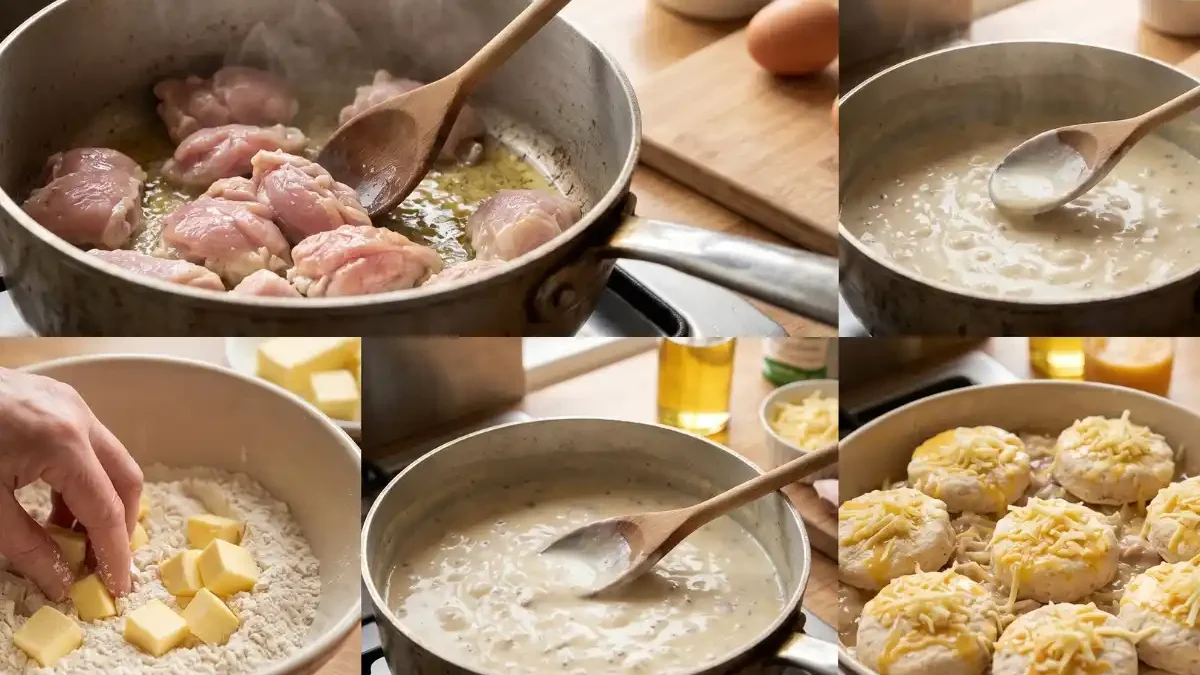
For the cobbles, rub butter into flour (using your fingertips or a pastry cutter works) until it looks like fine breadcrumbs, then stir in your grated cheese, salt, pepper, and baking powder. Add milk gradually until you’ve got a soft dough that’s slightly sticky dough but still holds together—don’t overwork it. Pat dough or roll dough to roughly 2cm thickness on a lightly floured surface, then use your round cutter to cut about 8-10 cobbles. Transfer filling to your ovenproof casserole dish and arrange your rough scones on top, leaving gaps so steam escape properly. Brush beaten egg over each cobble for glazing, sprinkle remaining cheese, and bake for 25-30 minutes until the topping is golden brown and well risen with the bubbling filling just visible at the edges. The filling should be cooked through (the chicken was already cooked, so you’re really heating everything together), and if you rest before serving for a couple of minutes, the sauce will settle and thicken slightly, making it easier to serve without the filling running everywhere.
Recipe Tips
The secret to getting that fluffy cobbler topping is honestly all about having a light touch and genuinely understanding that you need to avoid overworking dough at all costs—don’t overmix, instead embrace gentle mixing and try to handle dough lightly and handle as little as possible to keep everything airy. The soft dough you’re aiming for relies on keeping that airy texture, which comes from fresh self-raising flour or fresh self-rising flour combined with baking powder, so make sure your flour is actually fresh rather than sitting in a cupboard for months. You can absolutely make ahead by preparing the filling in advance: let it cool filling completely, then refrigerate it in the fridge up to 1 day, and when you’re ready to bake, make your fresh topping before baking and pop it straight on the hot filling just before it goes in the oven—this ensures the topping gets the full heat to rise properly and cook properly. The key to avoiding a lumpy sauce is understanding that if liquid added too quickly, you’ll create lumps; instead, gradually add stock and gradually add milk while whisking constantly and stirring constantly to ensure everything absorbed liquid smoothly.
If you notice your sauce seems a bit thin, simmer gently for longer so it develops that bubbling filling you want without boiling off. To avoid soggy cobbles and avoid soggy topping, never put a hot filling directly under cold dough—let the cool dough sit on properly heated filling so it cooks from both sides evenly. Using leftover roast chicken, poached chicken, or even rotisserie chicken (which is my go-to for convenience) works brilliantly, and if you want a thicker sauce, you can always simmer longer or cover your ovenproof dish loosely during cooking to reduce excess liquid. Some people swear by uncovered baking for the final 10 minutes to get an extra crisp topping, and honestly, that’s worth trying if your topping tends to stay pale.
What I Got Wrong (And How I Fixed It)
I’ll be completely honest: my first attempt produced a thin sauce that was honestly disappointing, and I quickly realized I hadn’t cook flour longer enough—that initial minute wasn’t cutting it, and I now spend closer to two minutes cooking out that raw flour taste before adding liquids, which fixed the texture entirely. The problem is rushing: cook flour properly means actually giving it time to cook in the fat until it turns slightly golden and smells toasty rather than floury, and whisk constantly or stir constantly as you gradually add stock and gradually add milk to prevent lumps—I was adding it all at once in my hurry, which created that horrible grainy texture. I also made the cardinal mistake of overworked dough in my scone mixture, thinking more mixing would help, when actually it created heavy dough that turned into a dense topping rather than the fluffy cobbler topping I wanted; the fix was learning gentler mixing and accepting that slightly shaggy dough is what you’re actually after.
The dry scones issue came from having too little milk in my mixture—I was being cautious and discovered you need to add milk gradually while watching the consistency rather than being stingy with it. I also struggled with uneven baking because I wasn’t spacing things properly; evenly spaced scones bake consistently rather than some getting overdone while others stay pale, and honestly, once I fixed that simple spacing issue, my improved results immediately got better. These are genuinely lessons I learned the hard way, and each fix has made this dish consistently brilliant now—there’s something satisfying about finally getting it right after earlier stumbles.
Healthier Version of Mary Berry Chicken Cobbler
If you’re after a lighter version, you can swap the full-fat milk for semi-skimmed milk and reduce cheese significantly without losing flavour—honestly, cutting the cheese by half and using a bit more parsley and herbs instead gives you that lighter topping and reduced richness that feels fresher on the palate. Adding extra vegetables like peas, extra leeks, or courgettes not only added volume for fewer calories but also bumps up the nutrition genuinely, making it feel more vegetable-forward without losing the chicken-focused appeal.
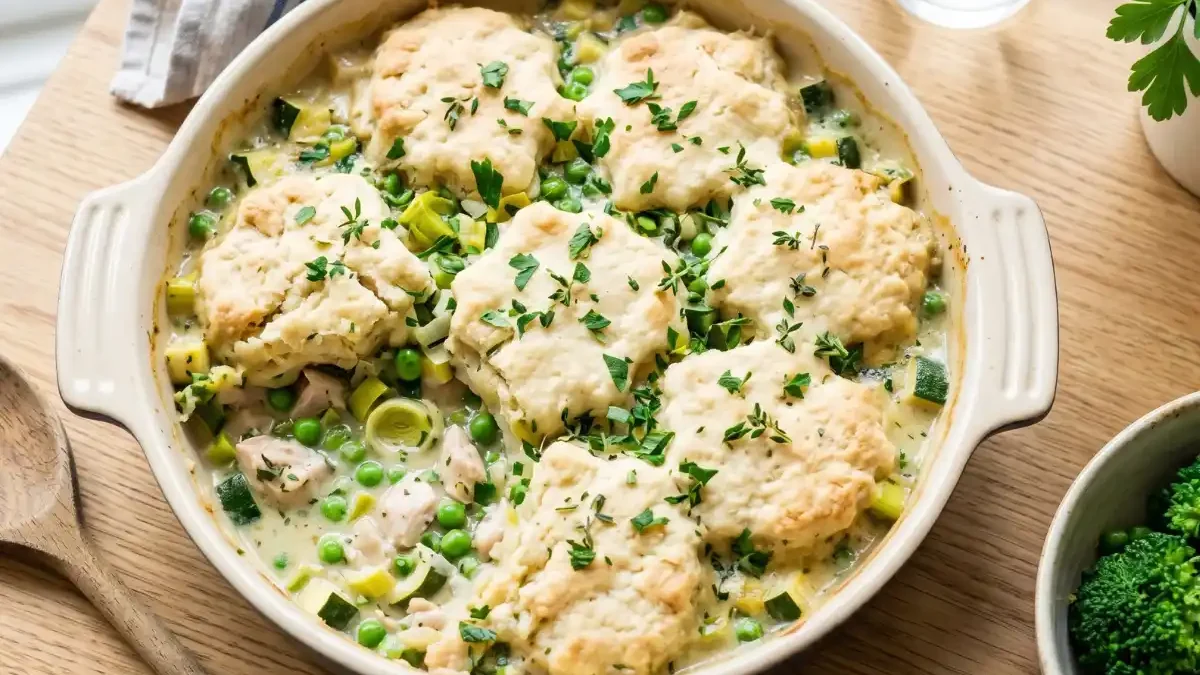
You’ll find this healthier option still feels absolutely satisfying and comforting without that heavy, overstuffed feeling you sometimes get from traditional versions, and honestly, your body appreciates the extra veg doing the work alongside the chicken and sauce.
Ingredient Substitutions for Mary Berry Chicken Cobbler
Your cooked chicken base of 500g is flexible—turkey works brilliantly if you’ve got it, and chicken thighs (either whole or boneless skinless thighs) can replace chicken breasts entirely if you prefer the moisture and flavour they bring. On the cheese front, mature cheddar is traditional, but Red Leicester gives you a slightly nuttier flavour, and mild cheese works if anyone’s sensitive to stronger tastes. Mushrooms aren’t actually non-negotiable: courgette brings a lovely texture, leeks can double down if you love them, and honestly, some people skip them entirely.
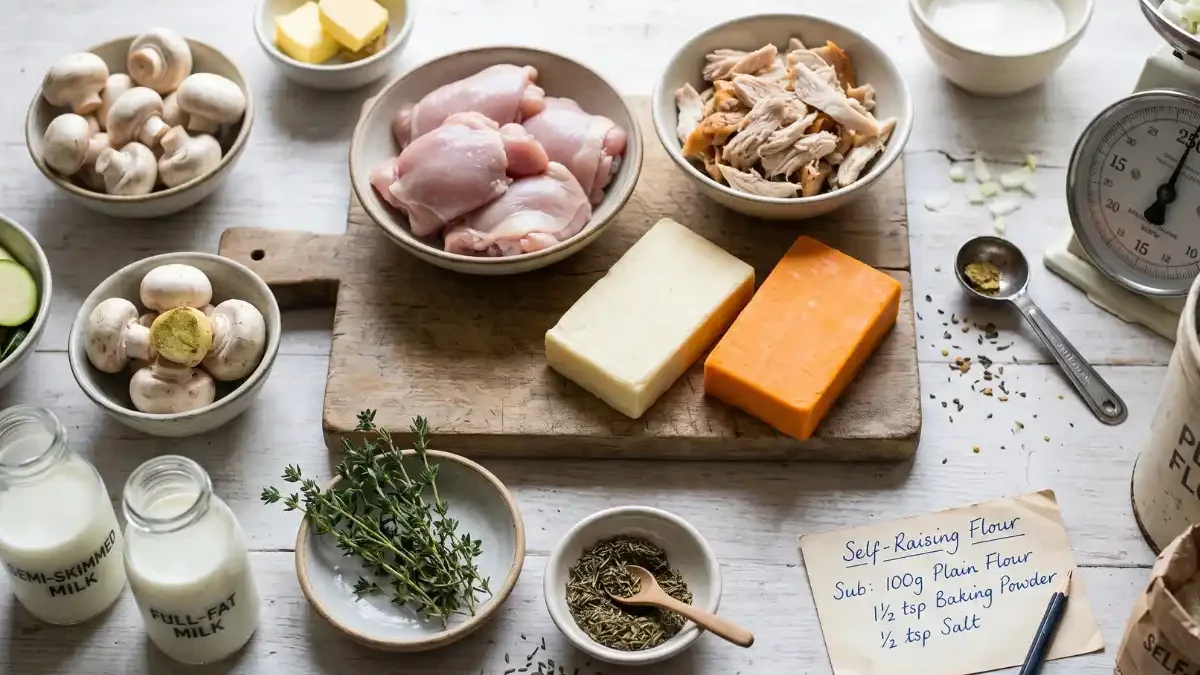
For the liquid component, you can use unsweetened plant milk instead of dairy milk (120ml of either works), and for flour, all-purpose flour can replace plain flour, though you’ll need to add extra baking powder if you’re not using self-raising flour substitute or making homemade self-rising flour by mixing plain flour with baking powder and salt—roughly 1 cup plain flour (or 125g flour) mixed with 1.5 teaspoons baking powder and 1/4 teaspoon salt creates your own self-rising flour substitute.
Pairing Ideas: What to Serve With Chicken Cobbler
The cobbler is genuinely satisfying on its own, but pairing it with something fresh and simple elevates it beautifully: steamed green beans are my go-to because they’re fresh and simple and complements sauce without fighting it, or butter-glazed peas and buttered peas bring sweetness that contrasts nicely. Braised red cabbage adds both colour and acidity that freshness the richness, steamed broccoli or roasted broccoli work if you want something heartier, and kale brings texture and nutrition.
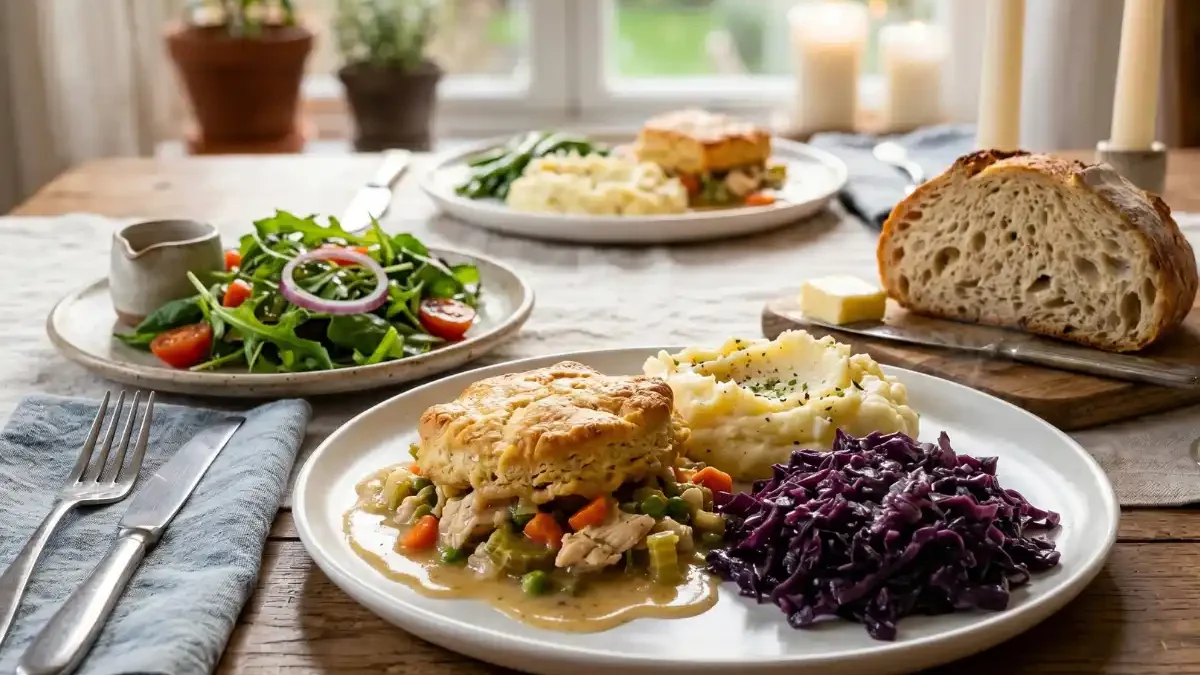
On the carb side, mashed potatoes or buttery mashed potatoes are the classic pairing for maximum extra comfort, though a simple green salad, side salad, or fresh salad with a sharp vinaigrette works brilliantly if you’re after balance. Crusty bread is absolutely worth having on hand to soak up sauce that pools on the plate—honestly, it’s where all the magic happens, and wasting a single drop feels like a crime.
Expert Tips to Make Perfect Mary Berry Chicken Cobbler
Use cooked chicken because it prevent overcooking and drying out; raw chicken will overcook before the sauce even thickens properly. Season well throughout the cooking process rather than just at the end—flavour matters at every stage, and tasting as you build is genuinely important. Keep butter cold when you’re rubbing it into the flour for the topping because that better rise comes from having distinct butter pockets rather than melted butter, so some people even chill their cubed butter in the freezer for 10 minutes first. Handle dough lightly and avoid overmixing to maintain that fluffy topping and softer scones texture—the moment you overwork it, you’ve created gluten development that makes everything tough. Leave gaps between scones for proper even baking and heat circulation, and honestly, rest before serving for at least 5 minutes because the sauce continues to set slightly, giving you improved texture and easier serving.
Creative Ways to Customize Mary Berry Chicken Cobbler
You can shift the entire flavour profile easily: a teaspoon of Dijon mustard adds a subtle mustard note that some people adore, or swap your herbs entirely—use tarragon instead of thyme for a completely different herb swap, and chopped parsley becomes more prominent. Add chilli flakes for a surprising spicy twist that actually works better than you’d think, or go full-on cheesy boost by sprinkle cheese on top of the scones and maybe mixing some through the dough itself for extra cheese throughout. Some people make individual portions in small baking dishes creating cute little mini cobblers that feel special at a dinner party, or you can play with flavour variation by swapping mushrooms for other vegetables, using turkey instead of chicken, or even trying chicken thighs (specifically boneless skinless thighs) for added richness.
How To Store Chicken Cobbler
Once it’s cooled to room temperature (roughly 30 minutes), cool completely before storing to prevent condensation, then refrigerate covered in an airtight container or tightly covered with cling film to maintain moisture—it’ll keep brilliantly in the fridge up to 2 days or honestly even fridge up to 3 days if your fridge runs cold. You can freeze filling only in a freezer-safe container for freeze up to 3 months, which is genuinely handy for batch cooking: thaw overnight in the fridge, then make freshly made dough scones and bake as normal—this genuinely works better than freezing the assembled dish. Avoid freeze the actual topping because the topping texture never quite recovers from freezing and thawing, but the filling is absolutely fine frozen. When you’re ready to eat, reheat either method by warming through in the oven, and serve piping hot for best results.
How to Reheat Mary Berry Chicken Cobbler (If Needed)
Reheat in oven is genuinely the best approach: transfer everything to an ovenproof dish, loosely cover with foil to prevent overbrowning, and warm at 180°C (350°F) for 20–25 minutes until warmed through—heat filling fully and the topping will warm through without drying. Remove foil last 5 minutes if you want to restore some crispier topping and colour, which honestly makes a difference to how nice it looks when serving. Microwave reheating works in a pinch but tends to make the topping soggy rather than crisp, so I reserve the microwave for when I’m genuinely desperate and have 10 minutes instead of 25—it’s functional but not ideal. The key is thoroughly reheated throughout before serving, and piping hot is genuinely how it’s meant to be eaten, especially if the sauce has thickened during storage.
Chicken Cobbler Nutrition Facts (Per Serving)
The approximate values vary depending on your exact portions and whether you’ve made the lighter version or traditional approach, but a standard serving comes in around 420 kcal to 480 kcal, with Protein hovering around 26g to 38g depending on chicken portions and sauce richness. You’re looking at roughly Total Carbohydrate of 28g to 45g (the scones push this higher), Total Fat around 22g to 25g including that crucial Saturated Fat of 11g to 12g from cream and cheese, plus Cholesterol sitting at approximately 135mg. Sodium ranges around 520mg to 810mg depending on whether you use stock cubes or home-made stock and how much seasoning you’ve added, Potassium provides roughly 750mg for heart health, Dietary Fiber contributes about 4g (boosted if you’ve added extra veg), and Sugar or Sugars stays around 6g to 7g mostly from vegetables and stock. These are estimated nutrition based on ingredients used and typical cooking methods, so individual serving values will shift based on your portion sizes and any ingredient swaps you’ve made.
Mary Berry Chicken Cobbler Recipe (FAQ’s)
Can I use raw chicken instead of cooked?
You can, but it’s trickier. You’ll need to fully cook the chicken first by either boiling it briefly or roasting it, as raw chicken won’t cook properly in the time the cobbler takes to bake. It’s much easier to use cooked chicken or a rotisserie chicken to save yourself the extra step.
Can I prepare the filling ahead?
Absolutely. Prepare the filling in advance and refrigerate it overnight or for up to one day. Make the topping fresh and add it just before baking for the best results.
Can I use a different topping?
Yes. You can use herby dumplings, puff pastry for a richer finish, or even a shortcrust pastry base and lid if you want something closer to a traditional chicken pie. However, the classic scone-style cobbler topping gives the best texture and flavour.
Can I freeze it after baking?
Yes, but for the best results, freeze the filling only. Let it cool completely before freezing and avoid freezing the baked topping, as its texture can suffer. Thaw thoroughly and reheat in the oven rather than the microwave.
Why is my sauce runny?
A runny sauce is usually caused by undercooked flour, adding the liquid too quickly, or not simmering the mixture long enough. Cook the flour properly and simmer until the sauce reaches a consistency that coats the back of a spoon.
Why is my topping dense?
The dough has most likely been overmixed. Handle it as little as possible and stop mixing as soon as it comes together to keep the topping light and tender.
Why are my scones dry?
Dry scones are usually the result of using too little milk or overworking the dough. Add the milk gradually until the dough is soft, and use fresh self-raising flour for the best rise.
How do I keep the scones light and fluffy?
Keep the butter cold, handle the dough gently, avoid overmixing, and leave small gaps between the scones so the heat can circulate evenly during baking.
How do I know when it’s properly cooked?
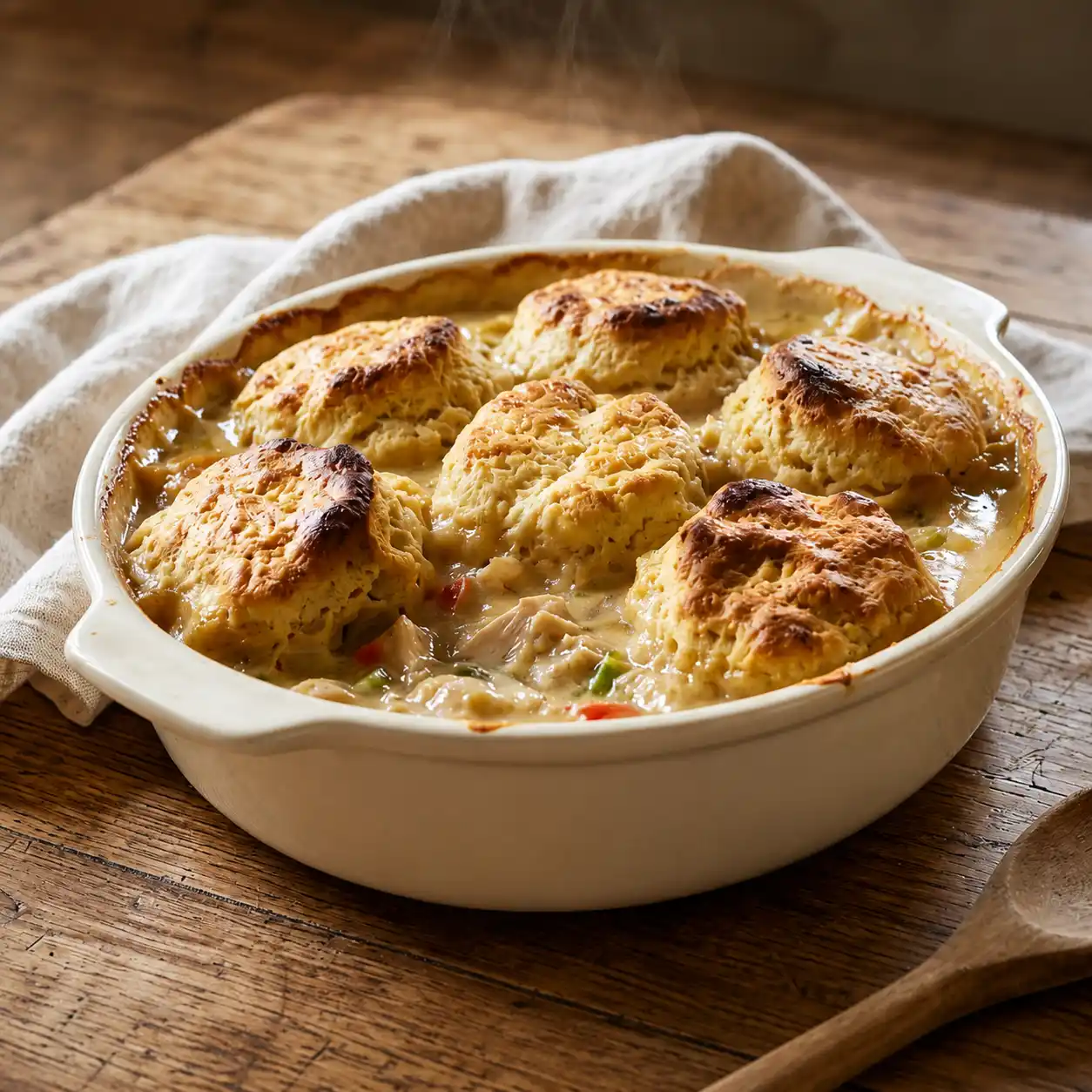
The cobbler is ready when the topping is golden brown and well risen, and the filling is bubbling around the edges. If the topping still looks pale, bake it for a few extra minutes.
What’s the difference between a cobbler and a pie?
A cobbler uses scone-like cobbles or a savoury biscuit topping, while a traditional pie uses a shortcrust or puff pastry base and lid. Cobblers are generally lighter and less pastry-heavy.
Can I use chicken thighs instead of breasts?
Yes. Boneless, skinless chicken thighs work beautifully and stay moister than chicken breasts. Around 1.5 pounds (6–8 thighs) is a good substitute.
How do I make self-rising flour?
Mix 1 cup (125g) of plain flour with 1½ teaspoons of baking powder and ¼ teaspoon of salt. This homemade self-rising flour works perfectly in the recipe.
Try More Recipes
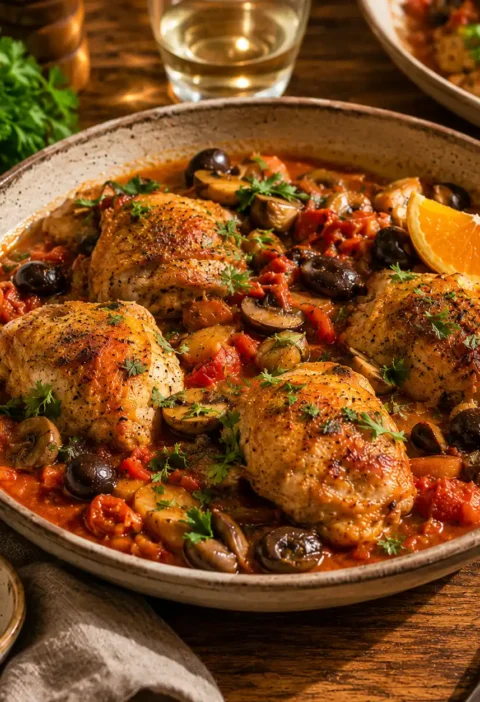
Mary Berry Italian Chicken Recipe
Mary Berry Spanish Chicken Recipe
Mary Berry Chicken And Cashew Nuts Recipe

Mary Berry Chicken Cobbler Recipe
Ingredients
Equipment
Method
- Preheat the oven to 200°C (180°C fan).
- Heat the olive oil in a large pan and cook the bacon until lightly crisp.
- Add the leeks, onion, carrots, and mushrooms and cook until softened.
- Sprinkle over the plain flour and cook for 1–2 minutes.
- Gradually stir in the chicken stock, milk, and white wine until smooth.
- Stir in the double cream, Dijon mustard, thyme, and parsley.
- Add the cooked chicken and simmer gently for 5 minutes.
- Season with salt and black pepper.
- Transfer the filling to an ovenproof baking dish.
- In a bowl, rub the butter into the self-raising flour and baking powder until the mixture resembles breadcrumbs.
- Stir in the grated Cheddar cheese.
- Gradually add the milk to form a soft dough.
- Roll or pat the dough to about 2 cm thickness.
- Cut out 8–10 rounds and place them over the chicken filling.
- Brush with beaten egg and sprinkle with the remaining cheese.
- Bake for 25–30 minutes until golden brown and the filling is bubbling.
- Leave to rest for 5 minutes before serving.