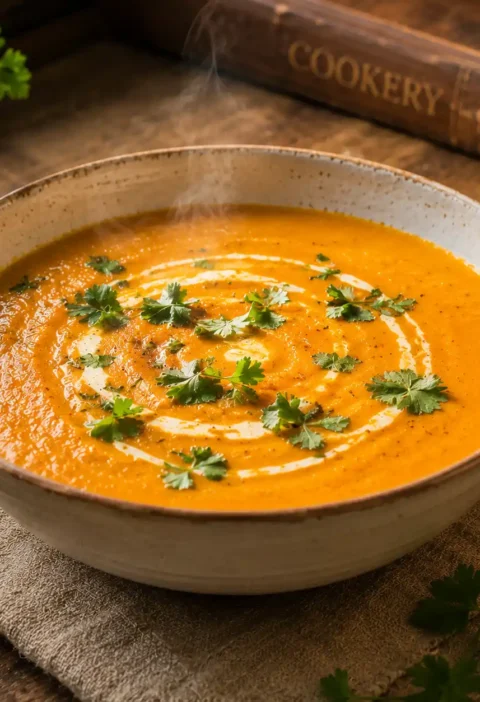
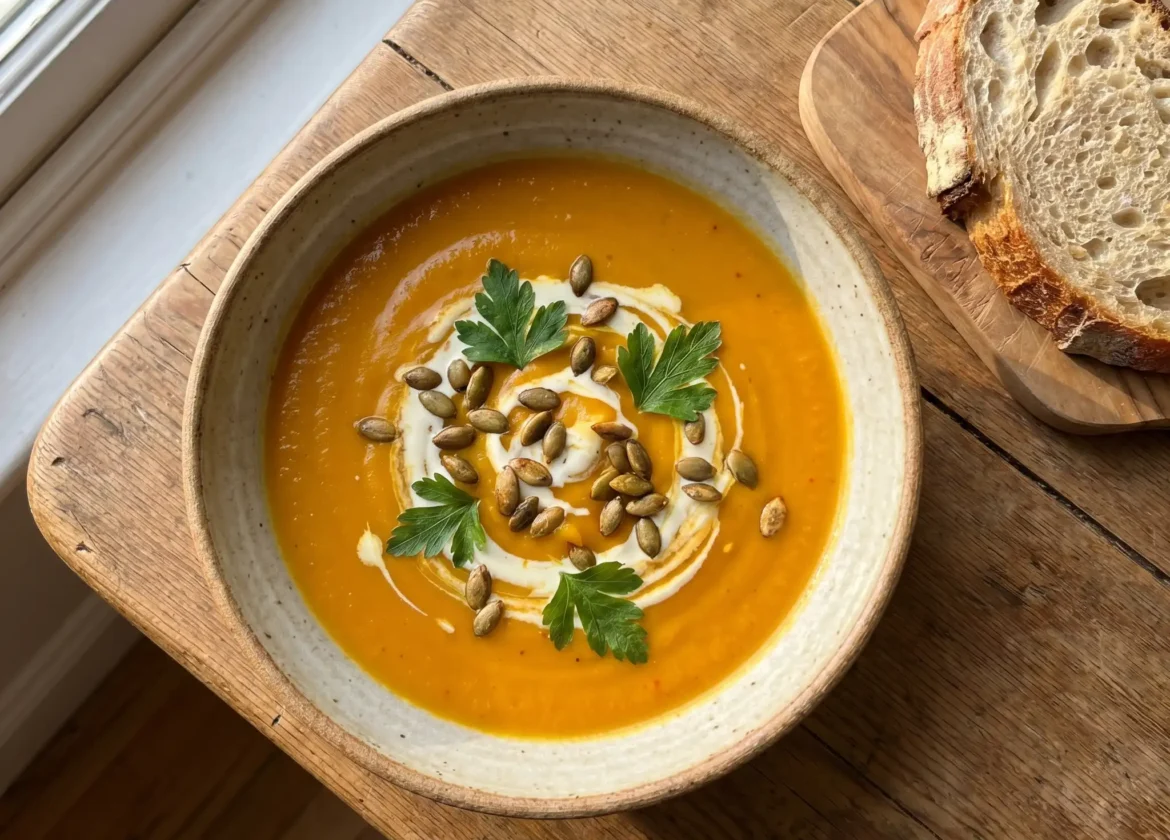
Mary Berry butternut squash and red pepper soup recipe is a silky smooth, velvety soup that delivers rich roasted flavour in every spoonful without asking much of you in the kitchen. Built around sweet butternut squash and roasted red peppers with a touch of fresh root ginger, this homemade soup sits somewhere between a hearty soup and a light soup substantial enough for dinner but clean enough to work as an easy lunch on any day of the week. At just 210 kcal per serving with a total time of 60 minutes, it’s a genuinely beginner-friendly recipe that produces results far beyond what the simplicity of the method would suggest.
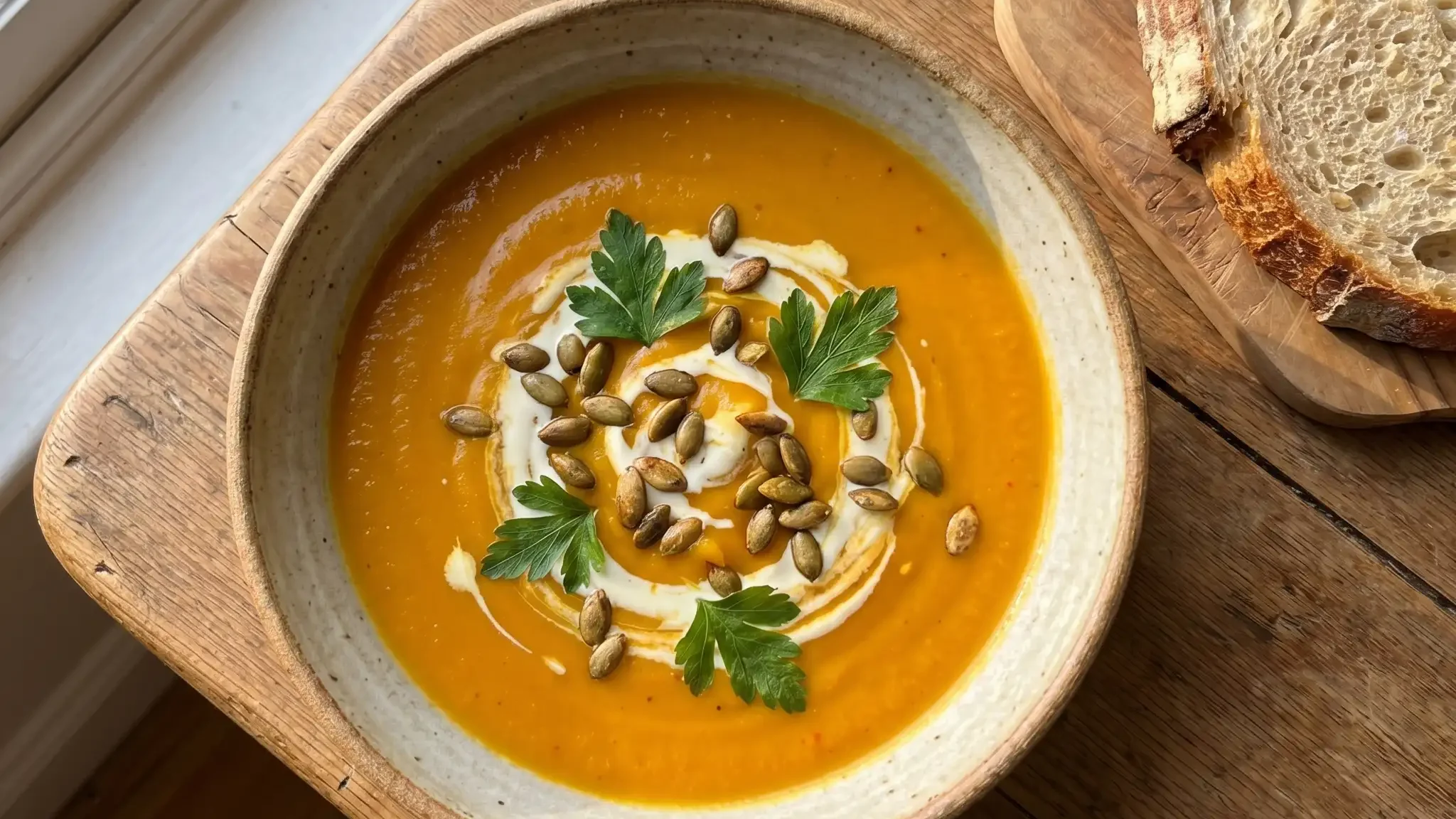
What I love about this recipe is how naturally it fits into batch cooking routines make a full pot on a Sunday and you have 6 servings of something genuinely nourishing ready for the week ahead. The roasted vegetables fill the kitchen with an incredible delicious aroma that makes the whole house smell like proper British-style cooking, and the finished soup has a creamy, flavourful depth that’s hard to believe comes from such simple everyday ingredients. It works just as well as a dairy-free soup or vegan soup with a simple swap, and because butternut squash is a pumpkin alternative available year-round, this isn’t limited to colder months it earns its place in the rotation all year. A recipe by Milli Rose, this one truly delivers.
Ingredients
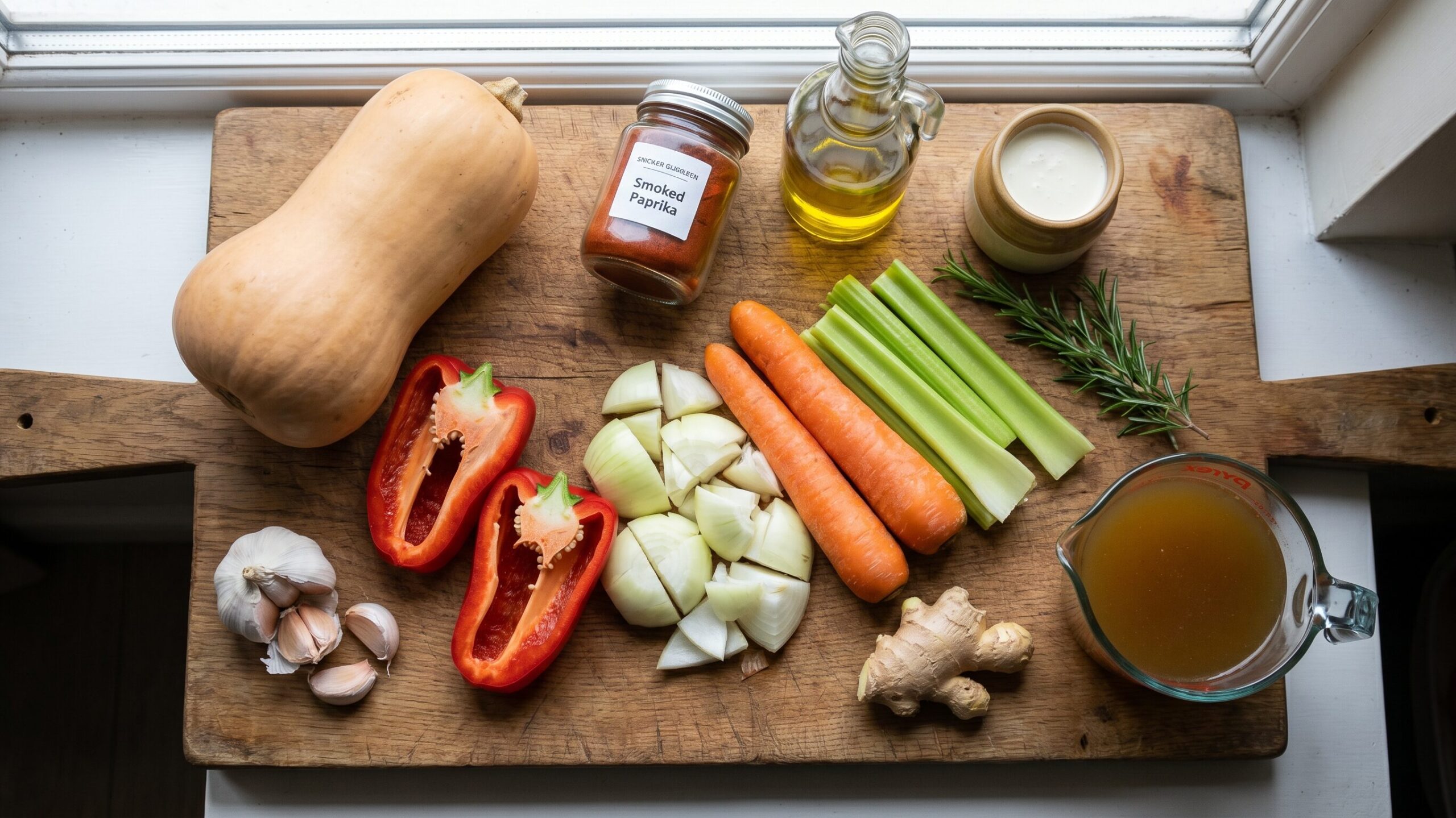
| Category | Ingredient | Quantity | Preparation / Notes |
|---|---|---|---|
| Main Ingredient | Butternut squash | 1 medium (1.5–1.6kg / 3lb 5oz–3½lb) | Peeled, deseeded, and cut into 3cm cubes |
| Vegetables | Red peppers | 2 | Deseeded and roughly cubed |
| Vegetables | Onion | 1 large | Roughly chopped |
| Vegetables | Carrots | 2 large | Peeled and chopped |
| Vegetables | Celery sticks | 2 large | Sliced |
| Vegetables | Garlic cloves | 3 | Crushed |
| Roasting & Seasoning | Olive oil | 4 tbsp | For roasting vegetables |
| Roasting & Seasoning | Smoked paprika | 1 tsp | Adds smoky flavour |
| Roasting & Seasoning | Nutmeg | To taste | Freshly grated |
| Roasting & Seasoning | Salt | To taste | For seasoning |
| Roasting & Seasoning | Freshly ground black pepper | To taste | For seasoning |
| Liquid Base | Vegetable stock or chicken stock | 1–1.5 litres (about 2–2½ pints) | Use according to preferred consistency |
| Liquid Base | Double cream | 100ml | Adds richness and creaminess |
| Additional Flavourings | Honey (optional) | 1 tbsp | Enhances natural sweetness |
| Additional Flavourings | Root ginger | 5cm piece | Grated |
| Additional Flavourings | Butter | 25g | Adds richness |
| Additional Flavourings | Fresh rosemary or dried rosemary | 1 sprig fresh or 1 tsp dried | For aromatic flavour |
| Garnish | Fresh parsley | Handful | Chopped and sprinkled before serving |
| Serving Suggestion | Crusty bread or toasted sourdough | As desired | Serve alongside the soup |
For the Soup
The soup itself is built on a foundation of roasted butternut squash, roasted red peppers, onion, garlic cloves, celery, and carrots — all brought together with vegetable stock, butter, olive oil, smoked paprika, rosemary, and a touch of root ginger for warmth. Each ingredient contributes something specific: the squash brings body and sweet orange flesh, the peppers add a subtle smokiness, the ginger lifts everything with gentle heat, and the double cream added at the end gives the finished bowl its signature smooth texture.
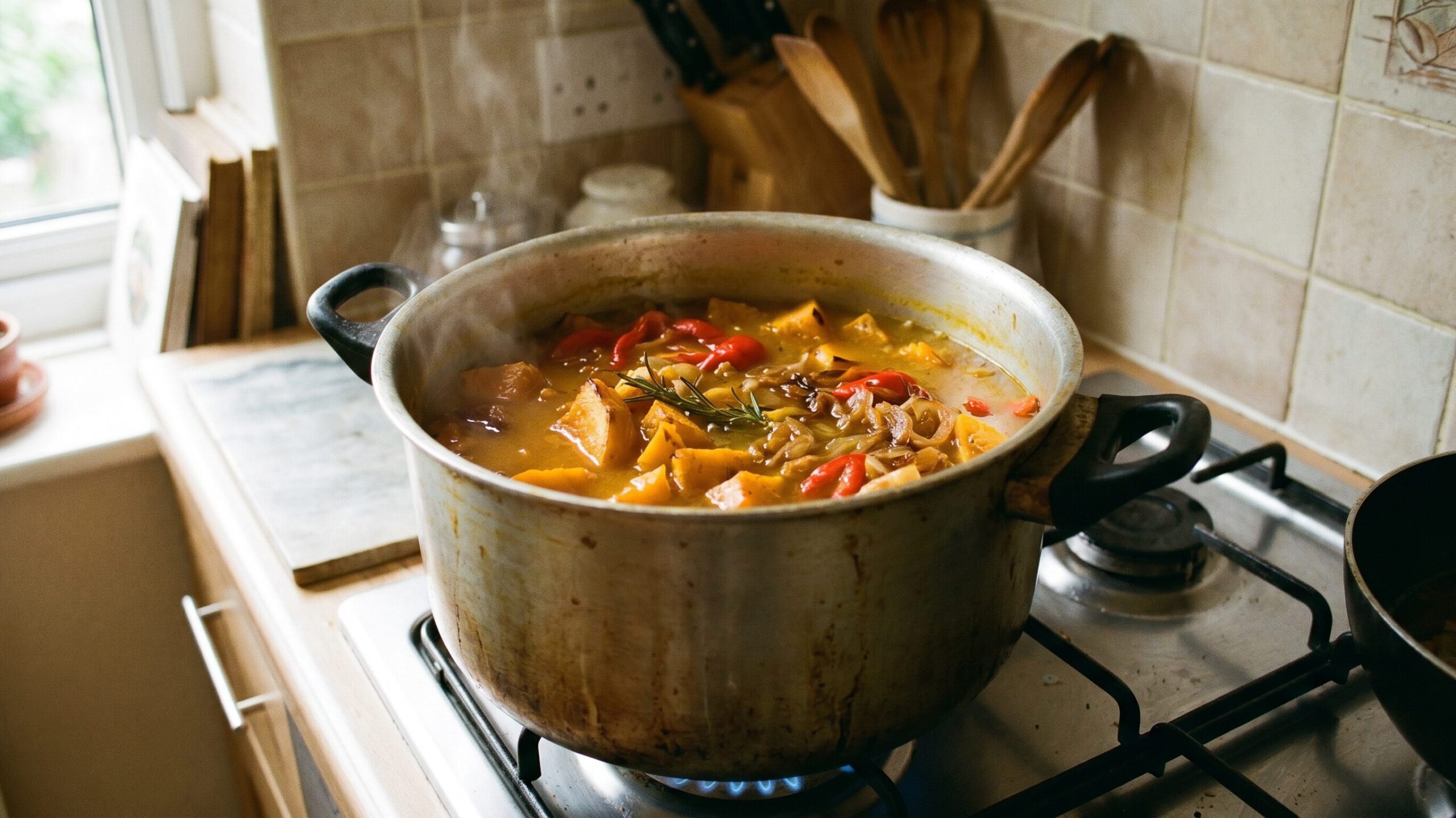
What makes this more than just a basic vegetable soup is the layering of those flavourful ingredients before anything gets blended. The roasted vegetables carry a caramelised depth that no amount of boiling can replicate, and once they hit the blender with warm stock, the result is a warming soup with a richness that tastes slow-cooked even though it comes together in an hour. A little honey drizzled over the tray in the final minutes of roasting is the kind of small detail that makes a real difference to the final bowl.
For Serving
A simple cream swirl dragged across the surface with a spoon is the most effortless way to finish the bowl visually and adds a touch of richness that complements the velvety soup beautifully. Scattered toasted pumpkin seeds give a welcome crunchy topping that contrasts the smooth texture, while a few leaves of fresh parsley or chopped parsley add colour and a clean herby note to finish.

For soup accompaniments, warm crusty bread remains the classic pairing perfect for scooping up every last drop of the thick, flavourful base. Garlic toast or toasted sourdough work just as well for a slightly more substantial feel, and a grilled cheese sandwich alongside makes this a proper satisfying lunch pairing or light dinner pairing. A fresh green salad on the side keeps things balanced if you’re serving this as a main these flexible side dishes and serving ideas mean the soup works for almost any occasion without overthinking it.
How to Make Mary Berry Butternut Squash and Red Pepper Soup
Start by preheating your oven to 200°C (180°C fan, Gas 6) and lining a roasting tray or baking tray with baking parchment. Prepare vegetables by halving the squash, using a metal spoon to scoop seeds and discard seeds, then cutting into 3cm cubes. Add the cubed squash, chopped red peppers, onion, carrots, celery, and garlic to a large bowl or resealable freezer bag, drizzle over the olive oil, and sprinkle with smoked paprika, freshly grated nutmeg, salt, and black pepper. Toss vegetables until evenly coated, spread in a single layer on the prepared tray, and roast 40 to 45 minutes until lightly golden with caramelised edges and tender squash. In the final 5 minutes, drizzle honey over the tray for added depth.
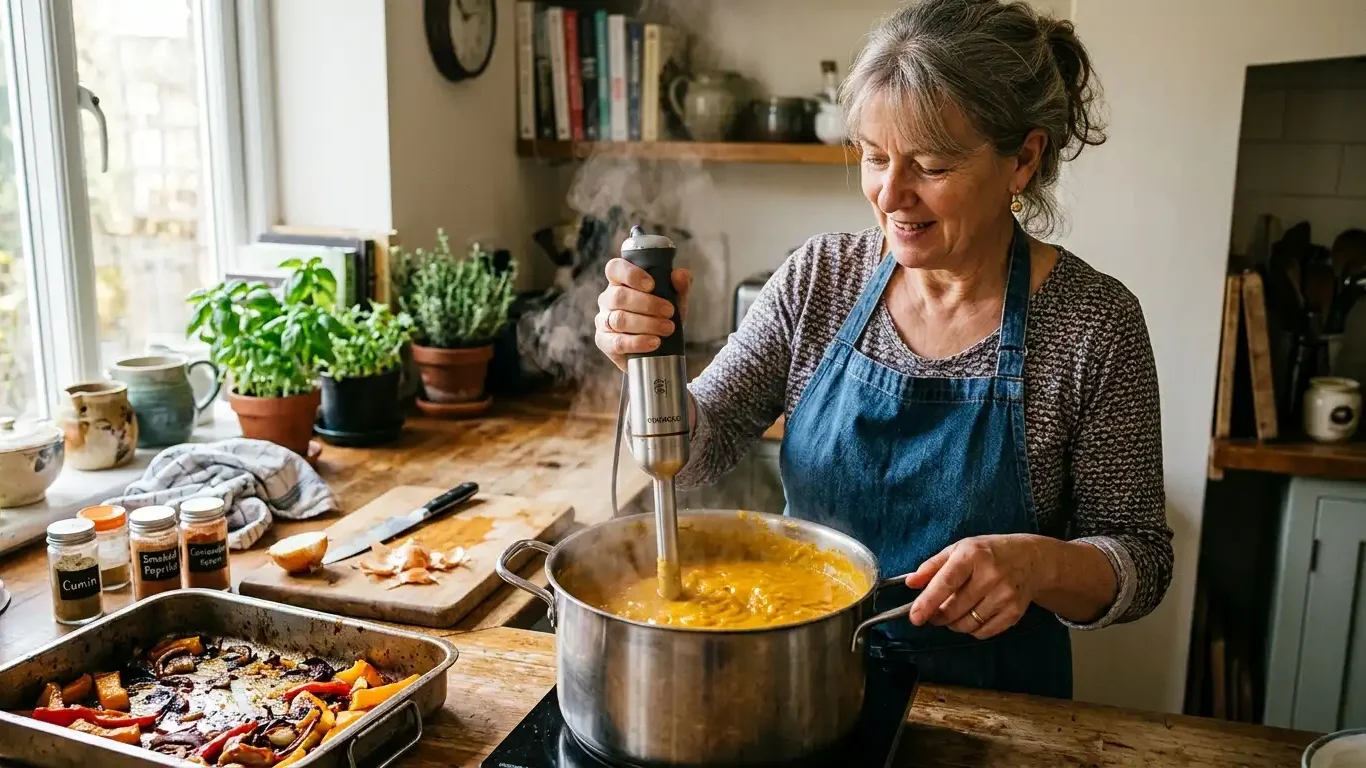
Once roasted, transfer to a large saucepan or deep-sided saucepan over medium heat. Pour in the vegetable stock, add the fresh ginger and rosemary, then bring to boil and simmer gently for around 10 minutes to allow flavours to blend. Remove the rosemary sprig, then use a hand blender or countertop blender to blend until smooth work in batches if using a liquidiser or food processor for safety. Stir in the double cream, season to taste, and warm through for 2 minutes without boiling. Ladle into bowls, finish with chopped parsley, and serve hot with crusty bread alongside.
Tips for the Best Butternut Squash and Red Pepper Soup
For an extra creamy soup with a genuinely silky texture, simply blend longer than you think necessary an extra minute in the blender makes a noticeable difference to the final smooth consistency. Adding double cream towards the end rather than during cooking also helps preserve its richness and gives the soup a more polished creamy finish. For a dairy-free version, coconut milk is the most effective dairy-free cream alternative it adds body and a very subtle sweetness that works surprisingly well with the roasted squash and pepper base.
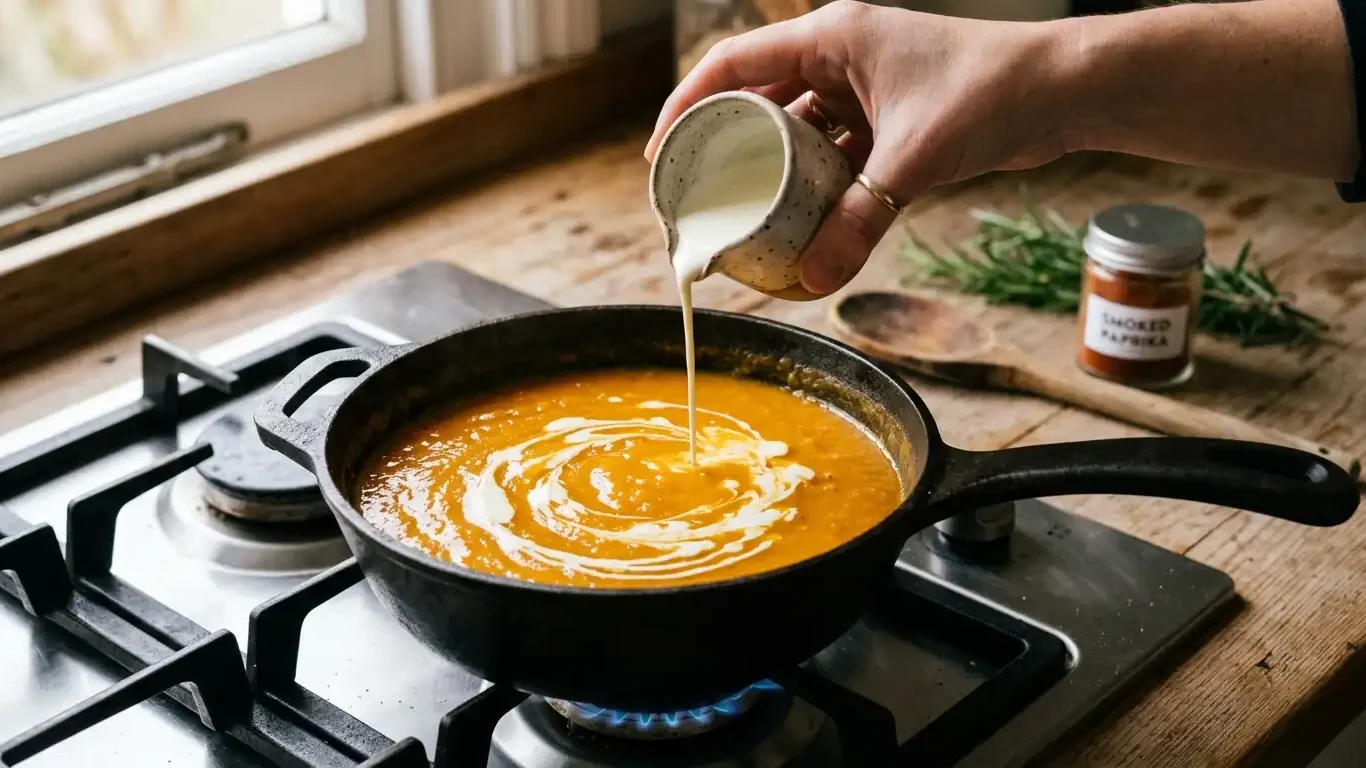
Never skip the roasting vegetables step in favour of boiling them roasting is what unlocks the natural sweetness of the butternut squash and red peppers and creates that caramelisation and flavour development that makes this soup taste genuinely special. If you find the finished soup too thick, just add a splash more stock and stir through. For a thin soup that needs thickening, simmer uncovered for several minutes to allow reduced liquid and a naturally thicker consistency no flour or cornstarch needed. These small soup tips add up to a noticeably better bowl every time.
How do I make the soup extra creamy?
The key to an extra creamy result is twofold blend longer than feels necessary, and don’t rush the blending stage. Most home blenders reach a genuinely silky texture after about two full minutes of processing, and stopping too early leaves a slightly grainy finish that affects the overall smooth consistency of the bowl.
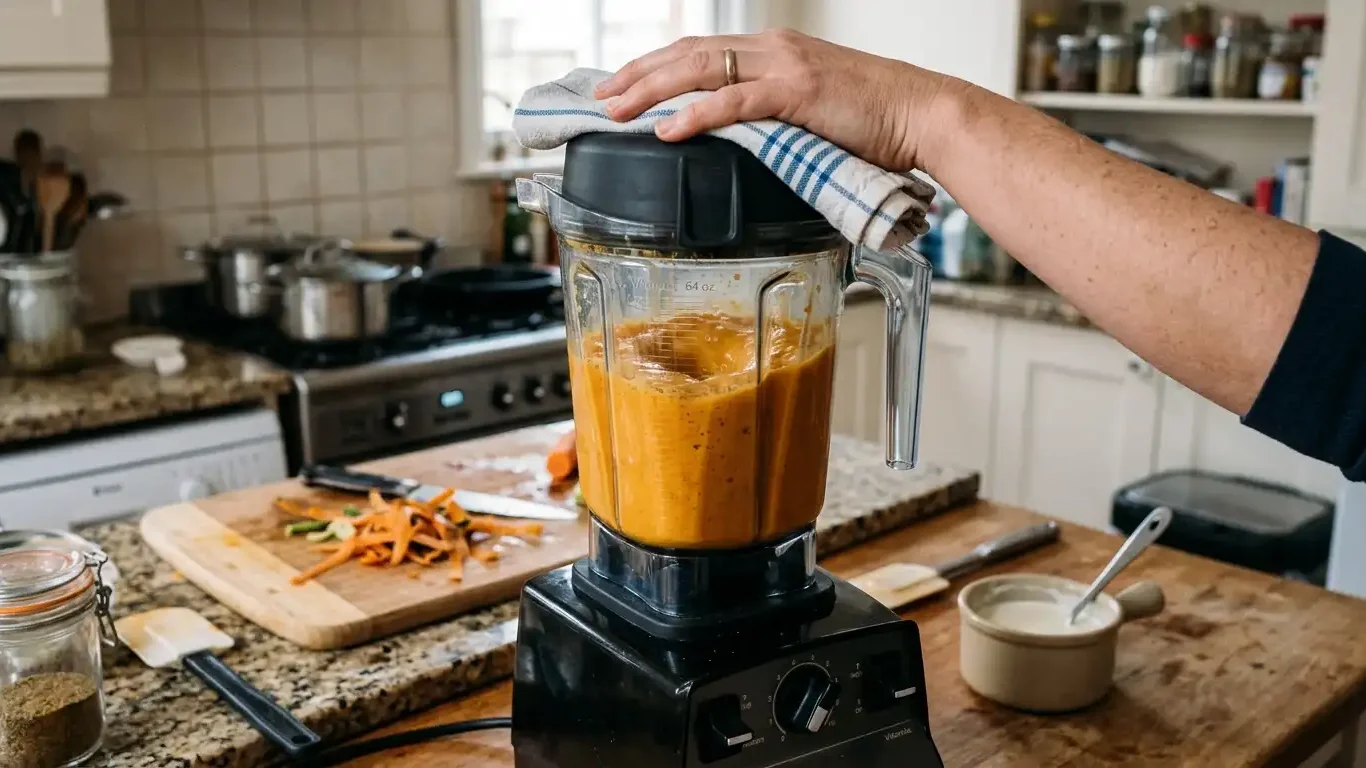
Stirring in double cream at the very end, after blending, gives a far better creamy finish than adding it earlier. It folds into the warm soup without breaking or separating and improves the soup texture immediately. If you want maximum creaminess without the dairy, full-fat coconut milk added at the same stage delivers a very similar result with a slightly different but equally enjoyable character.
Can I make this soup dairy-free?
Yes, this is one of the easier soups to make dairy-free without losing anything significant from the finished bowl. The most straightforward swap is replacing the double cream with coconut milk it acts as an effective cream substitute, adds a gentle richness, and keeps the soup feeling indulgent rather than stripped back. It’s a genuinely vegan-friendly option that I’ve served to people who didn’t even notice the swap.
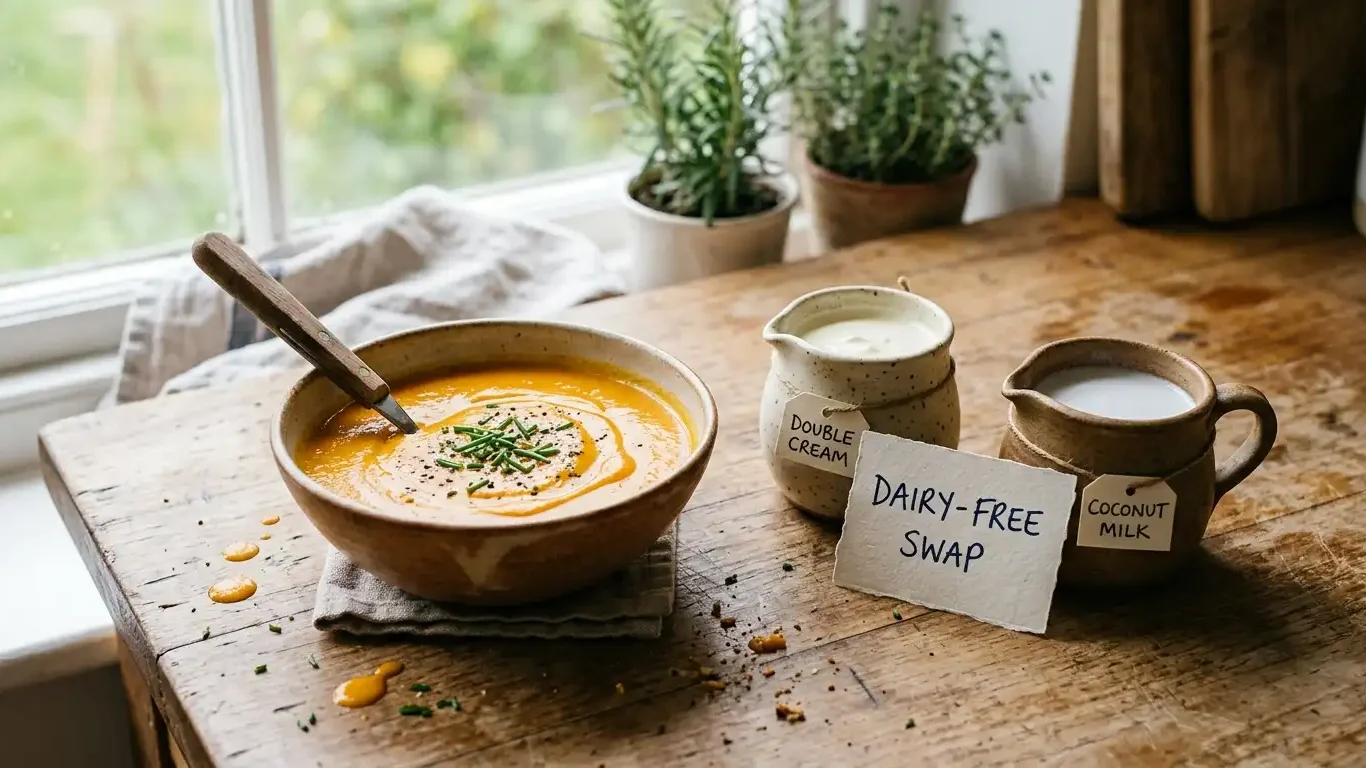
Other dairy-free cream alternatives work well too oat cream or soy cream both blend in smoothly and produce a comparable result without the coconut flavour. Remember to also leave out the butter used in the base and replace it with a little extra olive oil to keep the recipe fully dairy-free throughout. With these simple changes, the soup becomes a plant-based option that loses none of its vegan-friendly warmth or depth.
Why should I roast the vegetables first?
Roasting vegetables before blending is the single step that separates a flat, forgettable soup from one with genuine character. When butternut squash and red peppers go into a hot oven, their natural sugars concentrate and caramelise at the edges this caramelisation and flavour development creates a deeper flavour and roasted taste that boiling simply cannot produce.
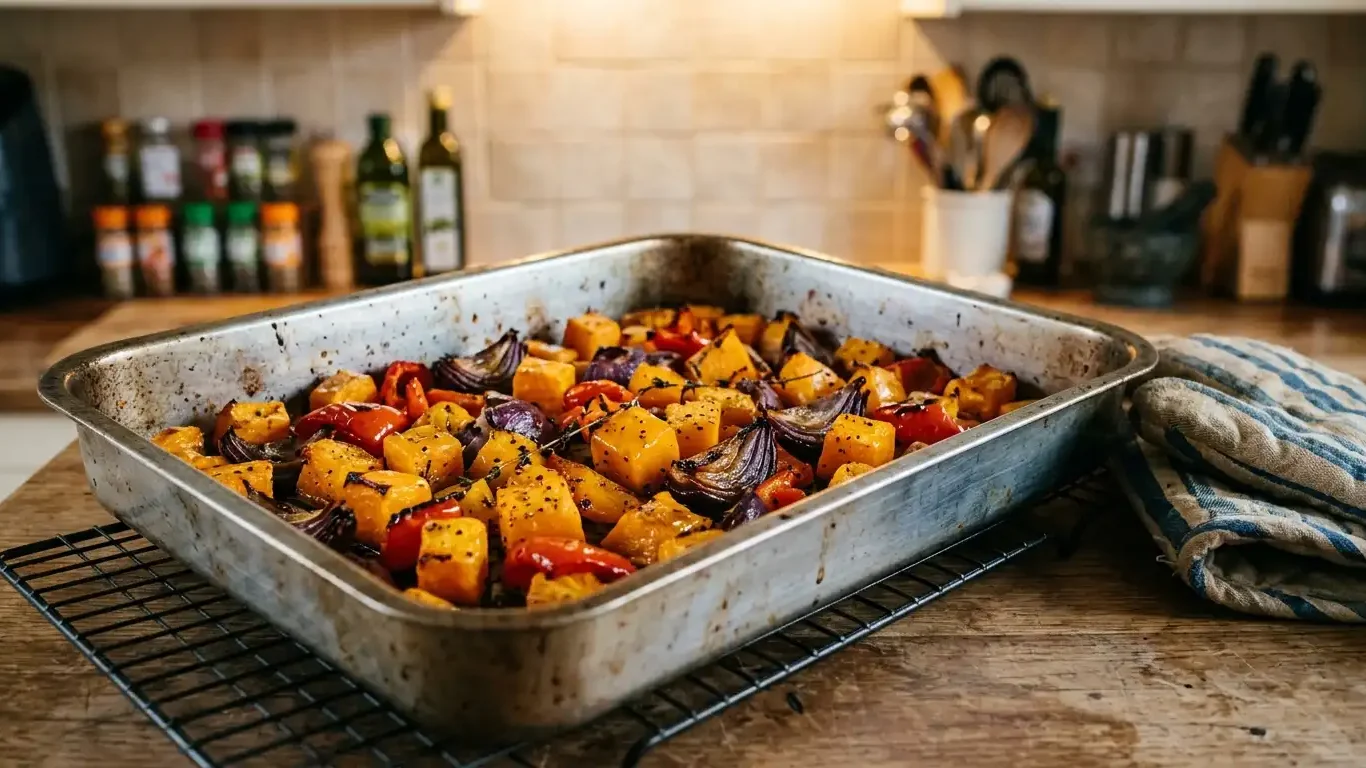
The difference in the final bowl is immediately obvious roasted vegetables bring a rich flavour and slight smokiness that gives the soup its distinctive warmth and complexity. I learned this the hard way the first time I tried to shortcut the method by softening everything in a pan instead. The soup was fine, but it tasted noticeably thinner in flavour despite using identical ingredients. Roasting is not optional if you want the real result.
How do I thicken the soup?
If your soup looks too loose after blending, the simplest fix is to return it to a deep-sided saucepan and simmer uncovered over medium heat for 10 to 15 minutes. The reduced liquid naturally concentrates the flavours and brings the soup to a thicker consistency without needing any additional thickening agents — just patience and a gentle heat.

The soup reduction method also improves the overall depth of flavour as it thickens, so it’s genuinely a win either way. If you find the soup still too thin after simmering, check whether you added more stock than the recipe calls for this is the most common cause. A thickened soup achieved through natural reduction always tastes better and cleaner than one thickened with flour or starch.
Storage
Allow the soup to cool to room temperature before storing never put hot soup directly into the fridge as this raises the internal temperature of the refrigerator and affects food safety. Transfer to airtight containers and refrigerate promptly. In the fridge, the chilled soup keeps well for up to 4 days and reheats beautifully, making it one of the more reliable make-ahead soup options for busy weeks.
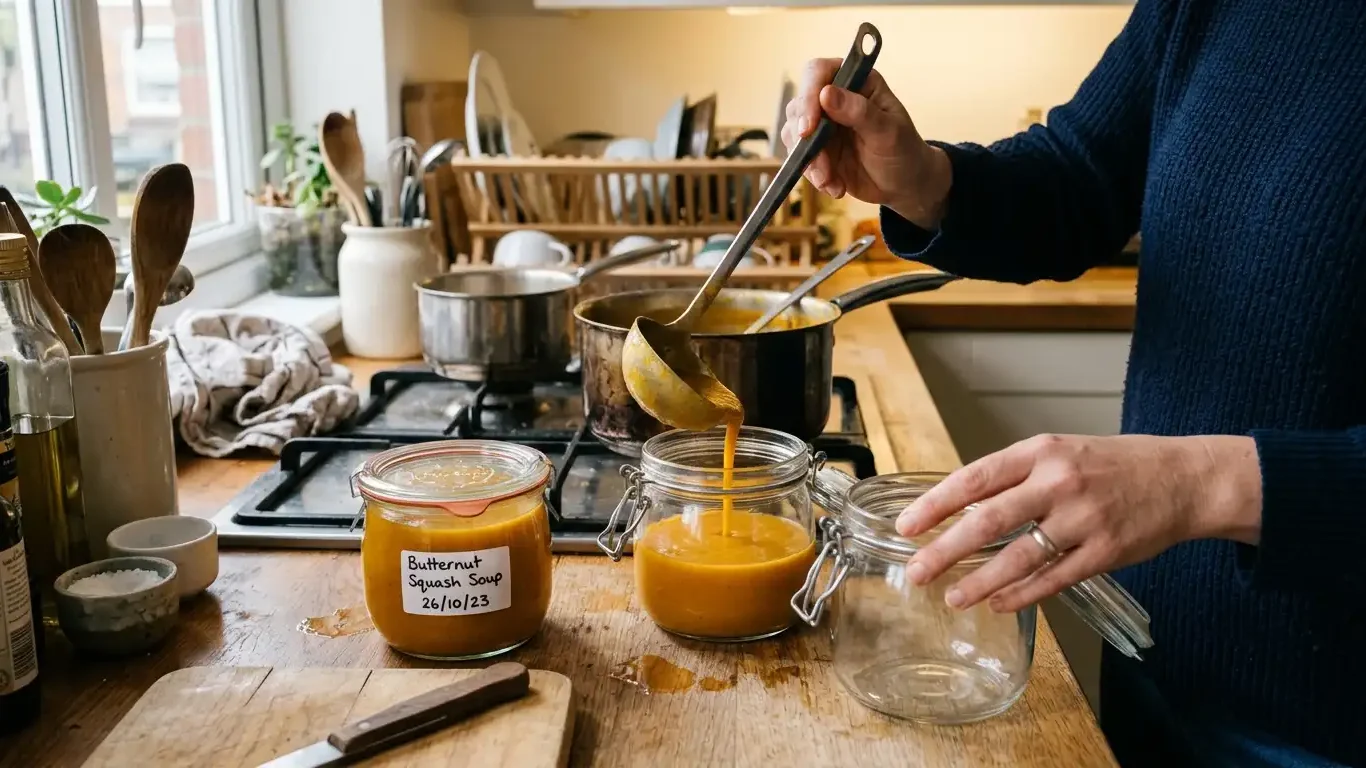
For long-term storage, freeze soup in freezer-safe containers or a freezer-proof bag for up to 3 months. Always label with the date and portion size before freezing so reheating is straightforward. This is a genuinely batch cooking-friendly recip the soup preservation process is simple, and the flavour holds well through freezing and thawing without any noticeable loss of quality.
Room Temperature
Never leave the soup sitting out for more than 1 hour at room temperature beyond this point, food safety becomes a concern as bacteria can begin to develop in warm, protein-rich liquids. The goal is to move from cool soup to refrigerator or freezer as quickly as practically possible, ideally within that one-hour window.
If you’ve made a large batch and need it to cool faster, divide it into smaller portions in separate containers rather than leaving one large pot to cool slowly. This speeds up the process considerably and is better for both storage safety and maintaining the quality of the soup before it goes into fridge storage or the freezer.
Refrigerator
Transfer the cooled soup into a clean airtight container and store in the refrigerator it will keep well in fridge storage for up to 4 days without any significant change in flavour or texture. If anything, the refrigerated soup tastes slightly better after a day as the flavours settle and deepen overnight, which makes this a genuinely good chilled soup option for meal prep.
To reheat gently, warm the soup in a pan over low to medium heat on the hob, stirring occasionally hob reheating gives the most even result. A microwave reheating option works perfectly fine for single portions heated in short bursts with a stir between each. Always make sure the soup is piping hot all the way through before serving regardless of which method you use.
Freezing
To freeze soup, allow it to cool completely first, then pack and freeze in freezer-proof containers or a freezer-proof bag, portioned into sensible serving sizes. Stored this way, the soup keeps well for up to 3 months with no meaningful loss of flavour it’s one of the better soups for long-term storage because the blended texture holds up through freezing and thawing without separating badly.
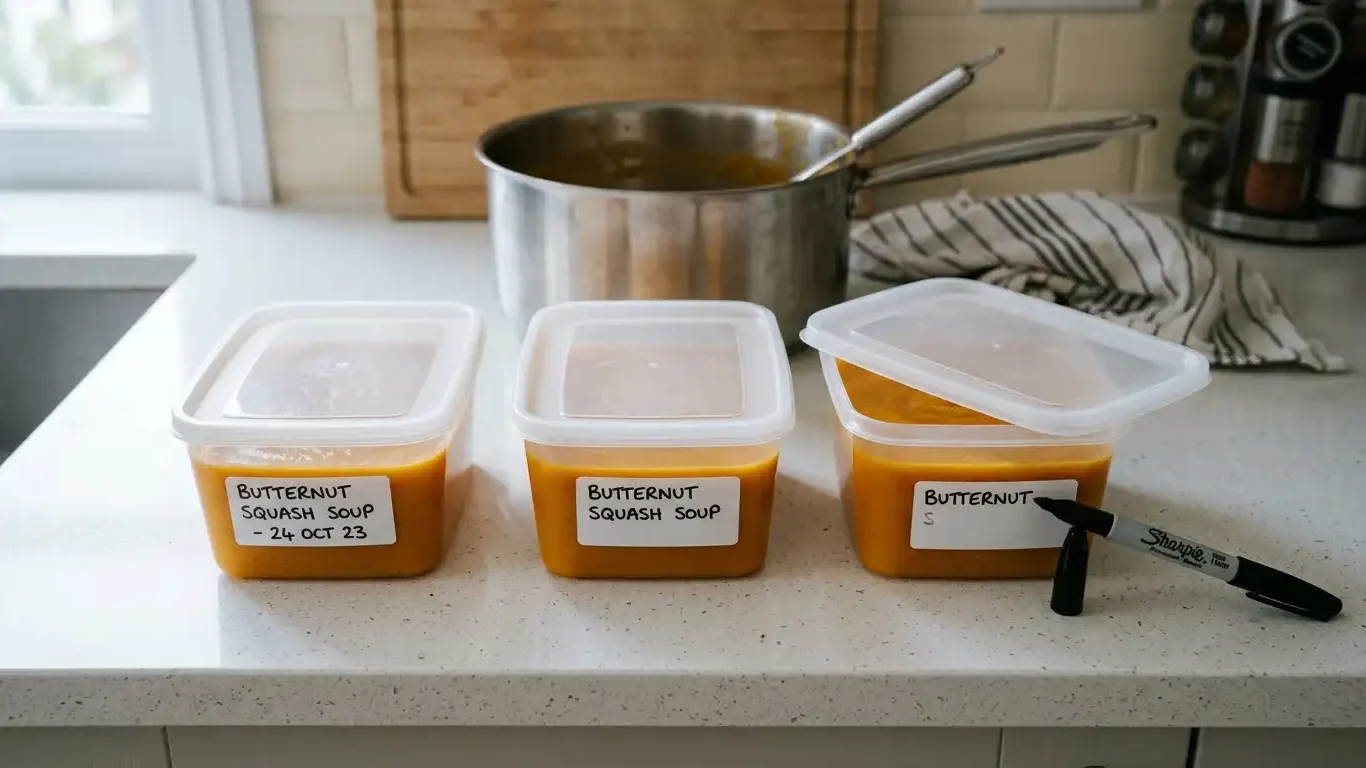
When ready to eat, thaw overnight in the fridge using fridge thawing for the safest result, or leave at room temperature for around 8 hours if you need it slightly faster. Once thawed, reheat the frozen soup thoroughly in a pan over gentle heat until piping hot before serving. The freezer storage method makes this recipe an excellent candidate for Sunday batch cooking a few labelled portions in the freezer means a proper home-cooked bowl of soup is always within reach.
Nutrition
Each serving of this soup comes in at approximately 210 kcal (or 128 kcal in a lighter version depending on ingredient variation), making it one of the more sensible choices for a warming meal that still feels satisfying. Carbohydrates sit at around 18g (or 12.1g in the lighter version), Protein at 4g (or 1.7g), and Fat at 14g (or 7.4g), with Saturated Fat at 5g (Saturates 1.1g in the lighter build).
Sugars come in at 11.4g — largely from the natural sweetness of the squash and peppers with Fibre at a solid 3.2g per portion. Sodium sits at approximately 620mg (Salt 0.49g), which is reasonable for a flavoured soup. These nutrition values are estimates based on standard dietary information and will vary slightly depending on which stock, cream, and squash variety you use treat them as a reliable guide rather than exact nutritional information.
Recipe Tips
If you’re short on time, ready-prepared butternut squash from most supermarket produce sections cuts the prep stage down considerably and makes this genuinely quick to put together on a weeknight. To keep the recipe vegan-friendly, simply leave out the honey or replace it with a vegan-friendly sweetener the soup works beautifully without it, though the honey does add a lovely subtle note worth keeping if it suits your diet.
This soup freezes well and is worth making in double batches specifically for freezer-proof storage portion into containers once cooled and you have ready-to-go lunches and dinners for weeks. For fridge storage, keep covered in a suitable container for up to 3 days. The storage tips for this recipe are straightforward, and the meal prep potential is genuinely one of its strongest selling points alongside the flavour.
To Prepare Ahead
This soup is one of the most practical make-ahead soup options you can keep in regular rotation. Allow to cool fully after cooking, transfer to a suitable container, cover securely, and place in fridge storage where it will keep for up to 3 days without any loss of quality.
When ready to serve, simply reheat thoroughly in a pan over gentle heat until piping hot, adjusting the consistency with a small splash of stock if needed. The refrigerated soup actually benefits from being made ahead the flavours mellow and deepen overnight, and the reheated version often tastes better than the freshly made bowl. These simple storage instructions make it a reliable option for busy households.
To Freeze
Once the soup has cooled completely, pack and freeze in appropriately sized freezer-safe containers or freezer-proof bags portioning before freezing makes reheating far more practical. The soup holds well in freezer storage for up to 3 months with no significant change in texture or flavour once properly thawed and reheated.
To use from frozen, thaw either at room temperature for approximately 8 hours or overnight using fridge thawing for a safer, more gradual defrost. Once fully thawed, reheat the frozen soup gently on the hob until piping hot throughout. The blended nature of this soup makes it particularly well-suited to freezing there’s no risk of vegetables turning mushy or separating badly because everything has already been fully processed.
To Cook in the AGA
For AGA cooking, place the prepared vegetables in a roasting tin and position on the second set of runners in the roasting oven for approximately 1 hour until the squash is fully tender and the edges are lightly caramelised. The intense, even heat of the AGA produces excellent roasting results with less monitoring than a conventional oven.
Once the vegetables are done, melt butter in a large pan on the boiling plate and add the onion, carrot, celery, and ginger. Cook for 5 to 10 minutes, stirring occasionally, until softened. Pour stock into the pan, add rosemary, season, and bring to boil on the boiling plate for around 4 minutes, then cover and transfer to the simmering oven for 20 minutes. Add the roasted vegetables and continue recipe as normal blend, add cream, and serve. The AGA method gives a beautifully deep flavour with minimal effort once you understand the heat zones.
Mary Berry Butternut Squash and Red Pepper Soup Recipe (FAQs)
Q1. Can I make this butternut squash soup ahead of time?
Yes, this soup is an excellent make-ahead option. Cook it fully, allow it to cool completely, then store in airtight containers in the fridge for up to 3 days. The next day flavour is noticeably better than eating it fresh the ingredients settle overnight and the flavour development that happens during chilling gives the soup a deeper, more rounded taste that makes the extra planning genuinely worthwhile.
Q2. Can I freeze this butternut squash and red pepper soup?
Absolutely. To freeze soup successfully, cool completely first before transferring to airtight containers or freezer-safe bags. Never freeze warm soup as this affects both texture and food safety. Stored correctly, the soup keeps well in the freezer for up to 3 months with no significant loss of flavour or texture once properly thawed and reheated gently on the hob.
Q3. Can I use a double cream substitute in this recipe?
Yes, there are several good options depending on your dietary preference. Coconut milk is the most effective double cream substitute it adds a similar richness and body to the finished soup without any dairy. Crème fraîche also works well if you are not avoiding dairy entirely and want a slightly tangier, creamier finish. Both are reliable dairy-free cream alternatives that blend smoothly into the soup without splitting.
Q4. Is there a vegan-friendly version of this soup?
Yes, the recipe adapts easily for a vegan diet. Simply leave out honey and replace it with a vegan-friendly sweetener if you still want that subtle background sweetness, or omit it entirely the roasted vegetables provide enough natural sweetness on their own. Swap the double cream for coconut milk and use vegetable stock throughout, and the soup becomes fully plant-based without losing any of its warmth or depth.
Q5. How do I peel butternut squash easily?
The easiest method is to cut the squash in half lengthways first, then use a sturdy vegetable peeler to remove the skin in firm downward strokes. The skin is tough, so a sharp peeler makes a significant difference here. Once peeled, scoop out the seeds with a metal spoon, then cut into even cubes for consistent roasting and smooth texture once blended. Even-sized pieces also ensure even blending with no unprocessed chunks in the finished soup.
Q6. How do I get the smoothest possible texture when blending?
For the best smooth texture and even blending, always blend the soup while it is still hot rather than letting it cool first. Use a hand blender directly in the pan and blend in slow circular motions for at least two full minutes, or use a countertop blender in batches if you prefer. The longer you blend, the silkier the result. Passing the blended soup through a fine sieve after blending is an optional extra step that gives an exceptionally refined finish if smooth texture is a priority for your soup preparation.
Q7. Can I use ready-prepared butternut squash from the supermarket?
Yes, and it makes the whole process noticeably quicker. Ready-prepared butternut squash available in most supermarket produce sections comes already peeled, deseeded, and cubed, which cuts the prep stage down considerably. These supermarket ingredients are a practical shortcut that works just as well in the finished soup the roasting results and final flavour are identical to preparing a whole squash yourself, making it a great option for quicker preparation on busy weeknights.
Related Poats
Mary Berry One-Pot Sausage Casserole Recipe
Mary Berry Sausage and Red Pepper Casserole Recipe
Mary Berry Thai Chicken Curry Recipe
Mary Berry Chicken Tagine Recipe
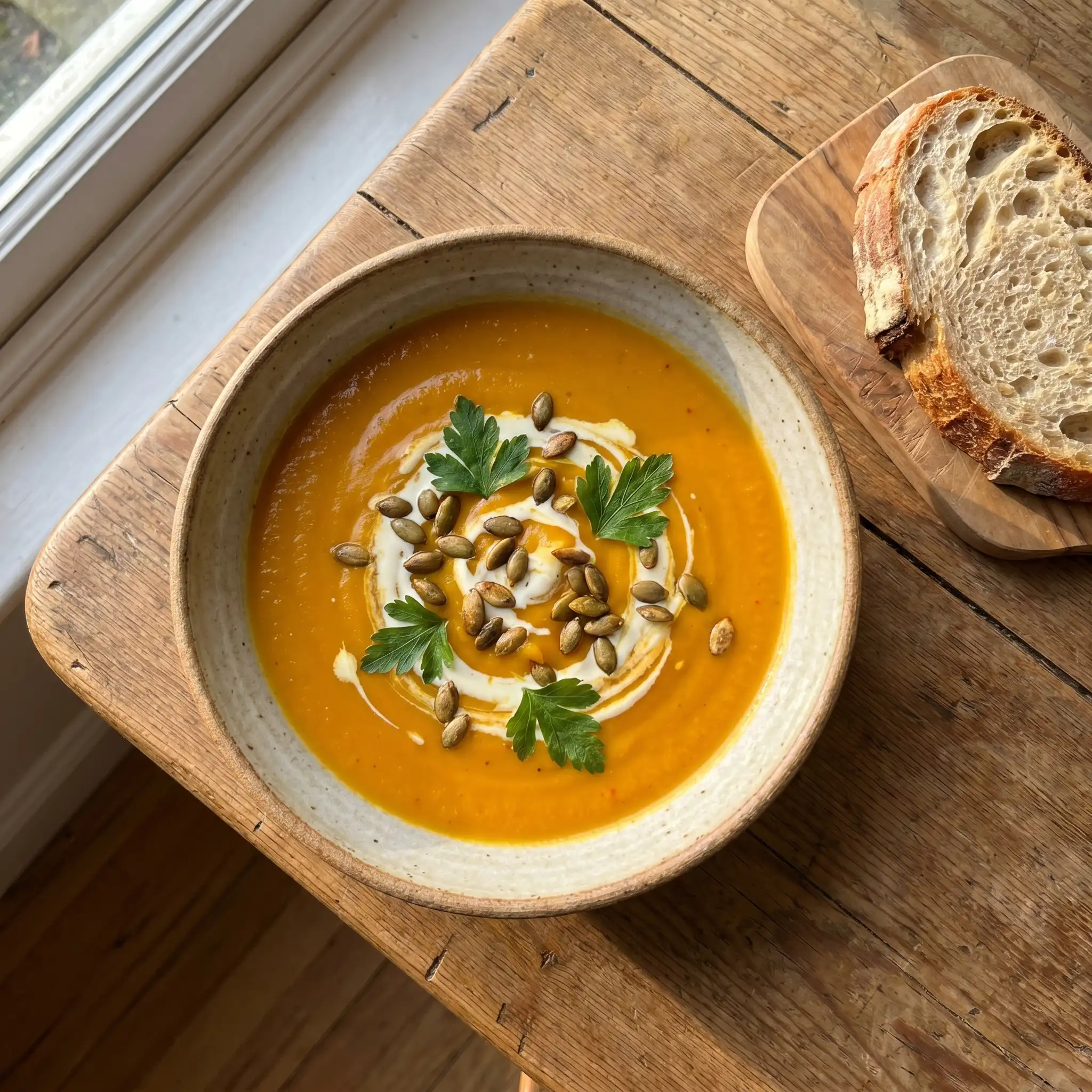

Mary Berry Butternut Squash and Red Pepper Soup
Ingredients
Method
- Preheat the oven to 200°C (180°C Fan/Gas 6).
- Place the butternut squash, red peppers, onion, carrots, celery, and garlic on a roasting tray.
- Drizzle with olive oil and season with smoked paprika, nutmeg, salt, and black pepper.
- Roast for 40–45 minutes until tender and lightly caramelised, adding the honey during the final 5 minutes if using.
- Transfer the roasted vegetables to a large saucepan.
- Add the vegetable stock, grated ginger, and rosemary, then simmer for 10 minutes.
- Remove the rosemary sprig and blend until completely smooth.
- Stir in the double cream and warm gently without boiling.
- Taste and adjust the seasoning if needed.
- Serve hot with chopped parsley and crusty bread.
Notes
- Roasting the vegetables gives the soup a deeper, sweeter flavour.
- Blend for an extra minute for an ultra-silky texture.
- Coconut milk can be used instead of cream for a dairy-free version.
- Simmer uncovered if the soup needs thickening.
- Store in the refrigerator for up to 4 days or freeze for up to 3 months