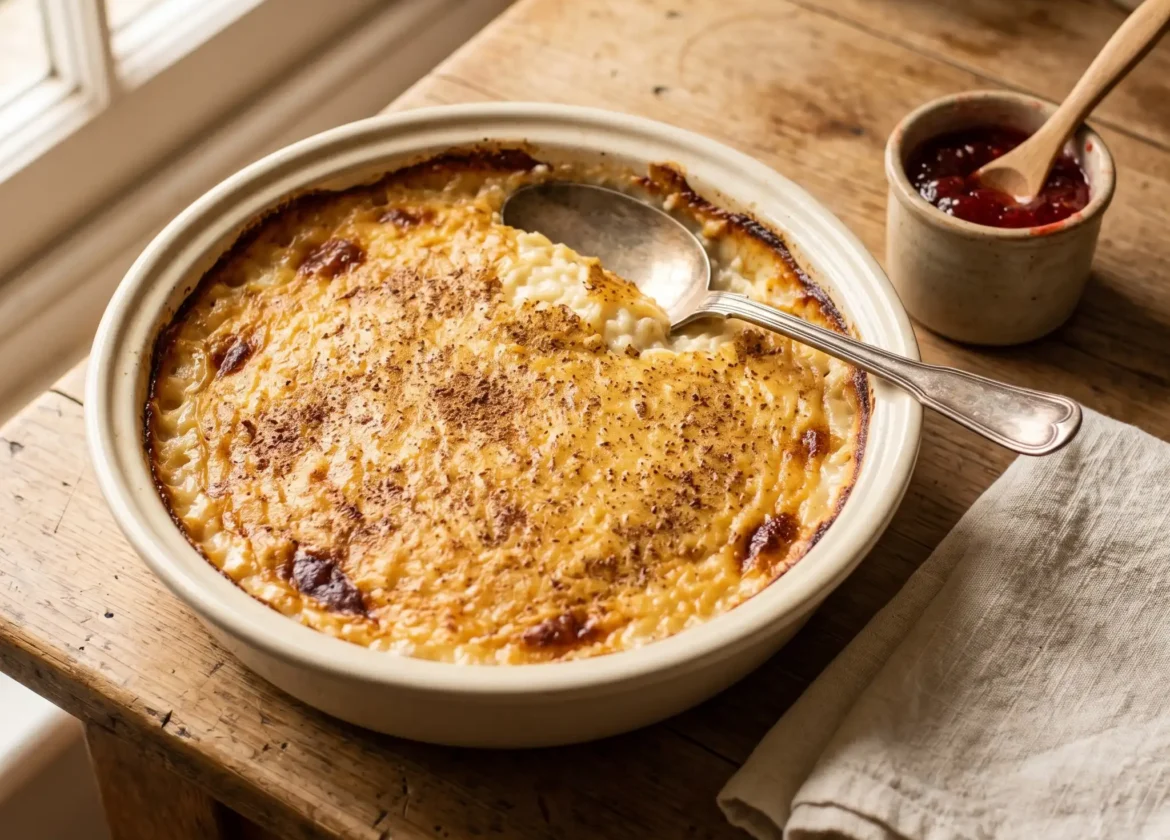
There is something quietly wonderful about a bowl of Mary Berry rice pudding recipe that no other dessert quite matches. It is comforting in the truest British sense simple, deeply nostalgic, and made from ingredients so ordinary you probably have them all right now. The creamy milk soaks slowly into the pudding rice during a long, gentle bake, turning everything thick, rich, and almost velvety in texture, with a golden skin on top that has become one of the most recognisable signatures of traditional British baking. A little sugar, a touch of vanilla, a grating of nutmeg that is genuinely all it takes. I first made this recipe on one of those grey cold evenings where you just need something warm and real, and it has been part of my regular rotation ever since.
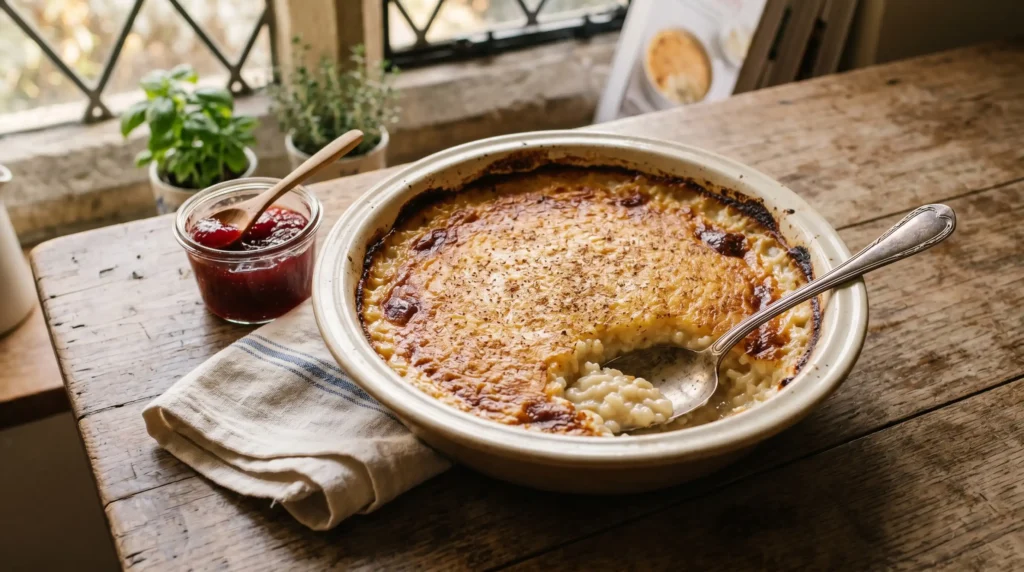
What makes this pudding genuinely special is how little effort it demands for how much it gives back. From start to finish the whole thing takes around 2 hours, and most of that time is the oven doing the work while you get on with your evening. The preparation is about ten minutes at most, and the result soft, beautifully creamy, and deeply satisfying is exactly the kind of thing that earns its place in a repertoire of proper family desserts. It is completely beginner-friendly, which is part of why it has remained so beloved for so long. Whether you are new to baking or just want something honest and dependable, this is the recipe you reach for.
Why This One Works So Well
The reason this pudding turns out so well every time comes down almost entirely to slow baking rather than cooking on the hob. When you rush rice pudding on the stovetop, the starch in the rice releases unevenly, and instead of that silky custard texture you’re after, you end up with something gluey or grainy in patches. The slow oven method lets the rice absorb the milk gradually and the thickening happens naturally gently, evenly, and without any need for constant stirring or watching. The sugar level is kept intentionally low too, which means the sweetness never tips into cloying territory there’s just enough to balance the richness of the milk without overpowering it.
The supporting flavours all earn their place here as well. Nutmeg is the defining old-school spice of British rice pudding it adds warmth and a faintly earthy depth that nothing else quite replicates. A touch of jam or a drizzle of honey on top before serving adds brightness, and a spoonful of cream stirred through just before eating pushes it firmly into indulgent territory. None of these are complicated additions, but together they are what separate a genuinely good bowl from a forgettable one. This recipe understands all of that instinctively, which is exactly why it works so reliably.
Ingredients and Why They Each Matter
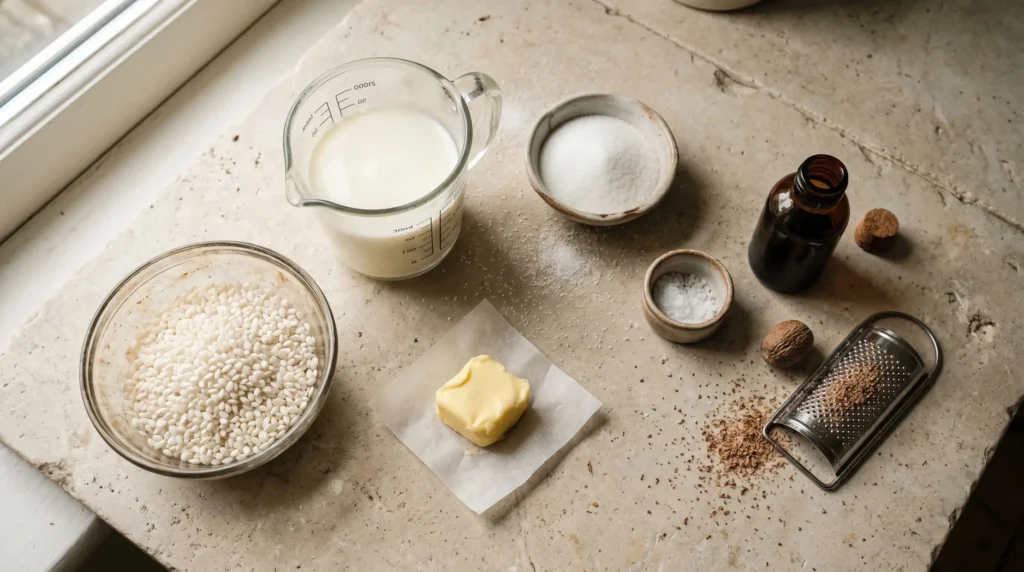
| Ingredient | Quantity | Purpose | Notes |
|---|---|---|---|
| Butter (for greasing) | As needed | Prevents sticking and helps create golden edges | Also makes cleanup easier after baking |
| Pudding rice (short-grain rice) | Around 75g | Provides starch for the creamy texture | Long-grain rice does not absorb milk properly and gives a thinner result |
| Full-fat milk | Roughly 900ml | Adds richness and luxurious texture | Semi-skimmed milk creates a noticeably lighter pudding |
| Caster sugar | 1 heaped tbsp | Gently sweetens the dessert | Dissolves smoothly into the milk without overpowering the flavor |
| Freshly grated nutmeg | Around ½ tsp | Adds classic British baking flavor | Often listed as optional, but strongly recommended for traditional taste |
| Kitchen Staples (combined effect) | — | Work together to create a rich, comforting dessert | Simple ingredients that produce a much deeper flavor and texture when used properly |
Making It Yours Without Losing What Makes It Good
There is real room to personalise this recipe without undermining what makes it work, and a few changes are worth knowing about. A small splash of vanilla extract around ½ tsp adds genuine warmth to the base flavour and works beautifully alongside the nutmeg. Swapping around 200ml of the regular milk for coconut milk introduces a subtle tropical note and a creaminess that feels different but not out of place particularly good in summer. Adding golden raisins or sultanas about 30 minutes into baking gives them just enough time to plump up and absorb some of the surrounding liquid, adding little pockets of sweetness throughout the pudding without disrupting the texture.
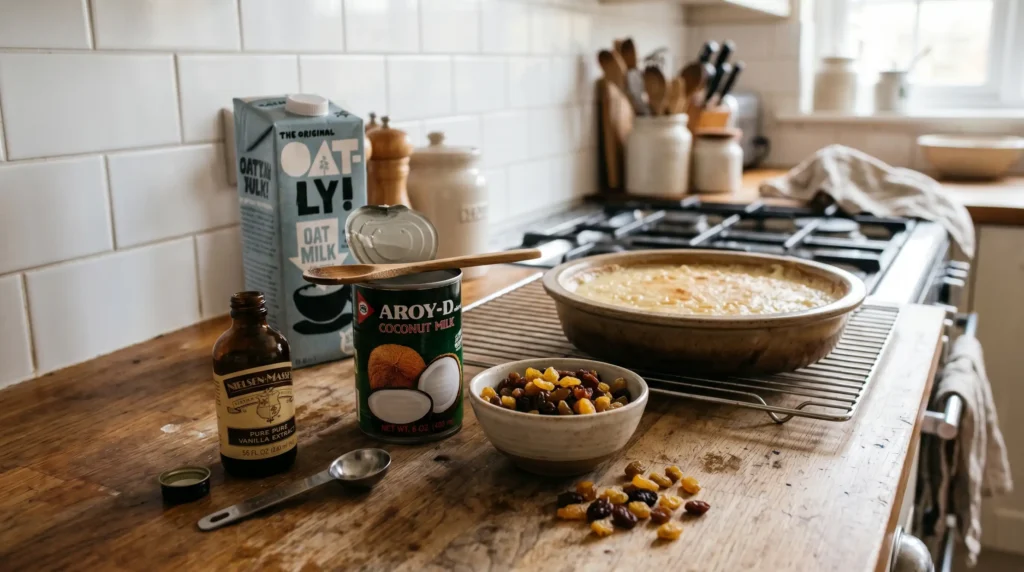
For anyone cooking for a vegan household, replacing the dairy milk with oat milk and the cream with coconut cream works better than most alternatives the coconut cream in particular gives enough fat content to keep the pudding feeling rich and satisfying rather than thin. You will need to bake it slightly longer and stir more attentively since plant milks behave a little differently in the oven, but the result is genuinely good. These adaptations are worth experimenting with once you have made the original a couple of times and understand how the batter should look and behave that experience makes it much easier to judge when a variation is working and when it needs adjusting.
Mistakes I Have Made and How to Avoid Them
The most common mistake is ending up with rice that is still crunchy in the centre and the fix is simpler than most people think. Gently heat milk before adding it to the dish rather than pouring it in cold; this gives the pudding rice a head start and dramatically reduces the risk of undercooked grains. The other issue I ran into early on was a thick, almost stodgy result from leaving it in the oven slightly too long the pudding was overbaked before the skin had properly formed, which sounds contradictory but happens more than you’d expect. The solution is to check it at the suggested time and pull it when the golden top looks set but still has a faint wobble underneath.
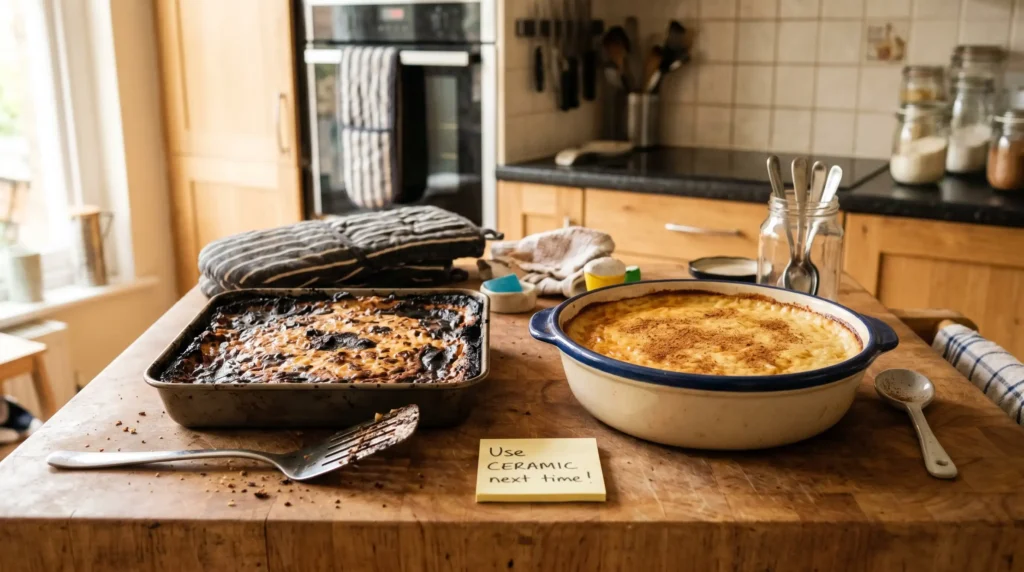
Pan choice matters more than people realise too. A thin tin conducts heat unevenly and tends to produce burnt edges long before the centre is cooked through I learned this the hard way. A ceramic or glass dish with proper depth is far more forgiving and distributes the gentle oven heat evenly throughout the bake. Always use a covered dish for the first part of cooking if you want to avoid the skin forming too early, then uncover for the final stretch to let that golden top develop properly. Getting the low temp right and sticking to it is the single most important thing this is a recipe that rewards patience and punishes rushing.
How to Make Mary Berry Rice Pudding Recipe
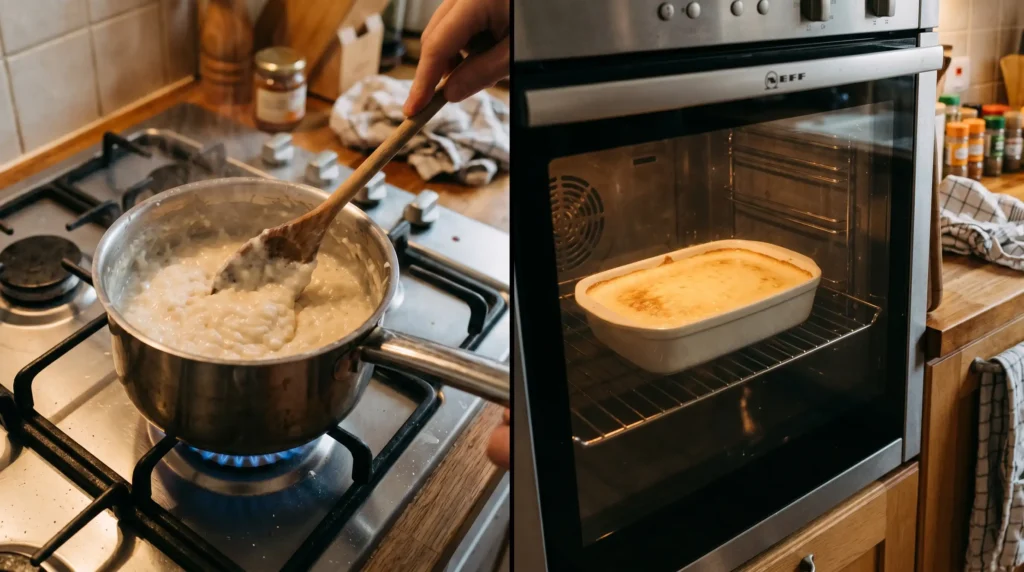
Start by preheating your oven to 160°C / 140°C fan / Gas 3 or for a longer, gentler bake, 150°C / 130°C fan works equally well. Butter a 1.6L ovenproof dish generously, then tip in the pudding rice, sugar, and salt, and pour over the milk and vanilla extract. Stir everything gently to combine, dot the surface with small pieces of butter, and grate nutmeg generously over the top. In a separate approach, some versions call for heating the milk and sugar together in a saucepan until just below boil before pouring it over the rice in the ovenproof baking dish this speeds up the initial absorption and gives you a slightly creamier result from the start.
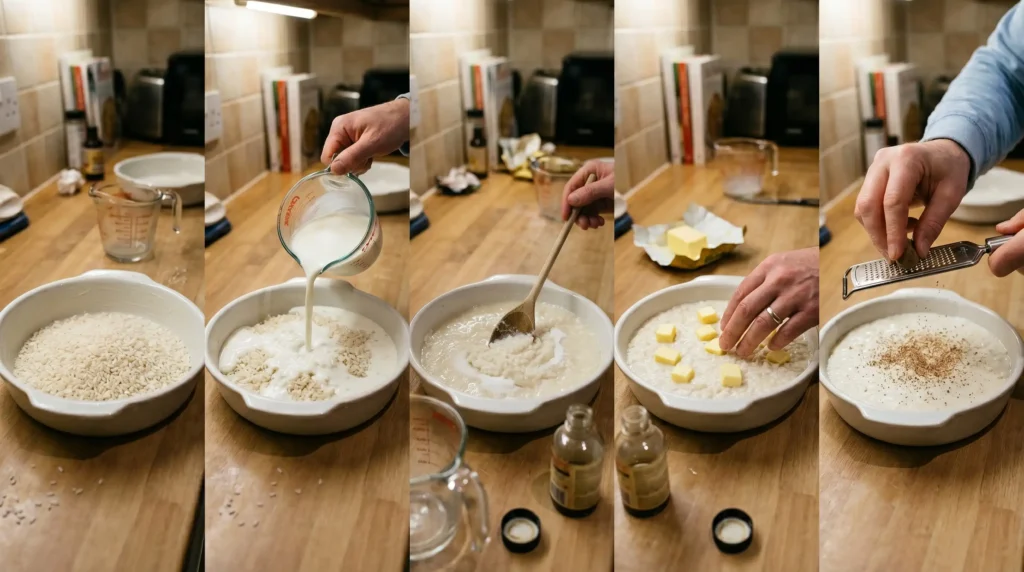
Either way, place on the middle shelf and bake uncovered for the first 30 minutes, then open the oven and give it a careful stir to prevent the rice from sticking to the base. Return it to the oven for a further 1 hour to 1 hour 15 minutes until the rice is completely tender, the pudding is creamy, and the top is a deep golden colour. Remove from the oven and allow it to stand for 10 minutes before serving it thickens noticeably during this resting time and the texture improves significantly. Finish with a spoonful of cream or jam at the table and serve straight from the dish. The whole process from preheat to plate is one of the most satisfying things you can do in a kitchen on a slow afternoon.
Tips for the Best Rice Pudding
If your pudding comes out too thick after baking, the fix is straightforward just stir through a small splash of warm milk before serving to gently loosen the texture back to where it should be. This happens most often when the oven ran slightly hot or the pudding sat for longer than intended before being served, and it is nothing to worry about. Always use proper pudding rice or short-grain rice Arborio is an excellent alternative if you can’t find dedicated pudding rice because the creamy texture is entirely dependent on the starch released by short-grain rice during the slow bake. Long grain varieties simply will not give you the same result no matter how long you cook them.
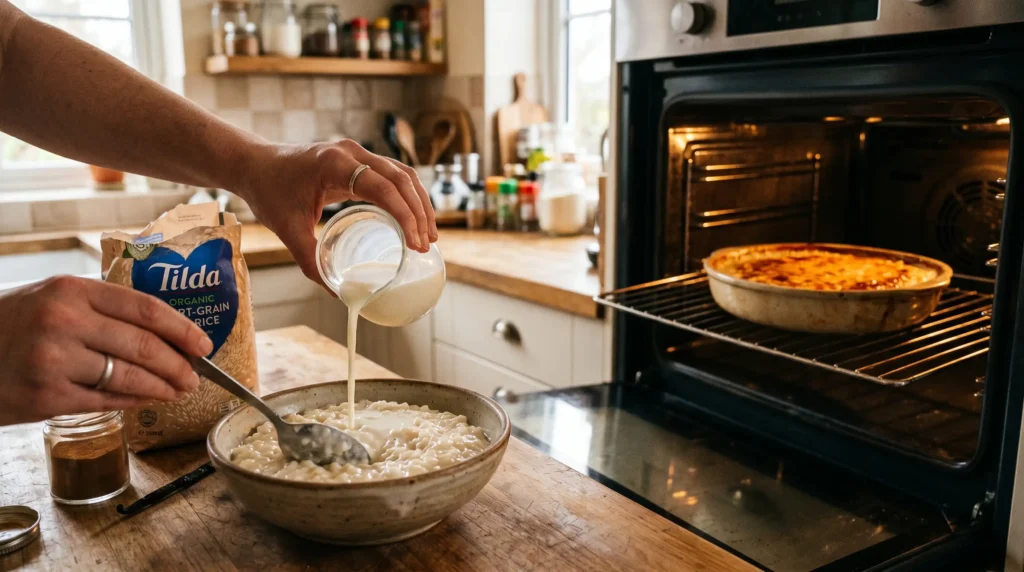
Use full-fat milk without compromise the fat content is what makes the difference between a truly creamy texture and something that tastes thin and unsatisfying. Baking uncovered from the start is what allows the golden skin to form across the surface resist the urge to cover it, even if it looks a little pale in the early stages. Once the top turns golden and firm, check the rice underneath by inserting a spoon if it still needs more time, give it another 10 to 15 minutes with a splash of extra milk added around the edges. These are small habits that make a real difference, and once they become second nature the pudding turns out well every single time.
Tips From My Own Kitchen
One thing that genuinely changed how my rice pudding turns out is using a Pyrex dish rather than a metal tin the way it holds and distributes heat is noticeably more even, and the skin develops far more beautifully across the whole surface rather than just in patches. If you find the skin is forming too quickly before the rice is fully cooked underneath, loosely lay a piece of foil over the top for the middle portion of the bake this slows the surface down without making the pudding gluey in the way a fully sealed lid would.
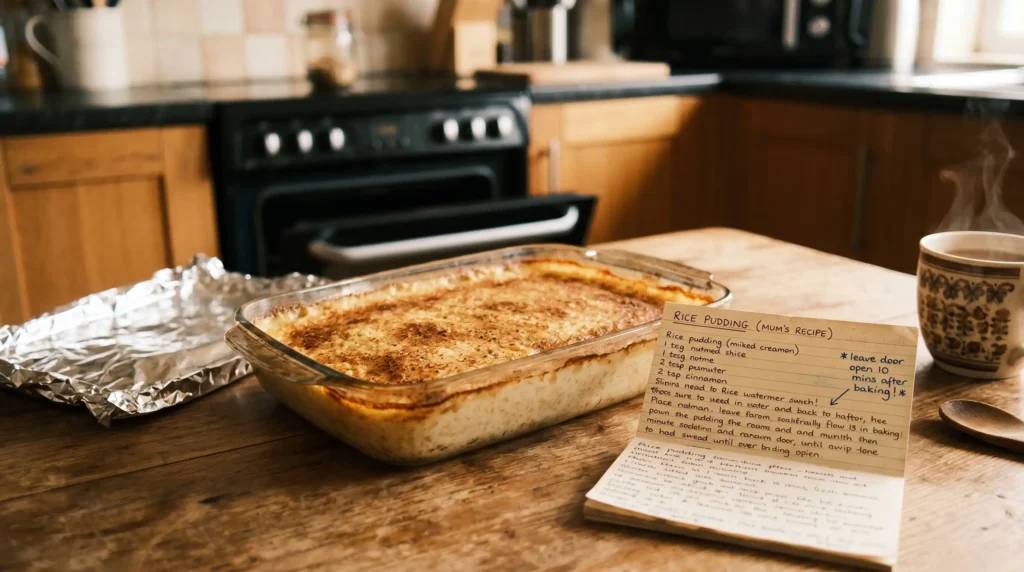
I also always leave mine in the switched-off oven for 10–15 mins with the door ajar after the timer goes this gentle residual heat lets everything settle and finish without any risk of overcooking, and the texture it produces is consistently the best I have managed.
Serving Suggestions
Served warm with a generous spoonful of strawberry jam stirred through the jam bleeding into the cream in dark red ribbons is the version most people in Britain grew up with, and there is a reason it has never been replaced. A handful of fresh berries scattered over the top adds freshness and a little sharpness that cuts through the richness beautifully, making the whole bowl feel lighter without changing what it fundamentally is. For something more autumnal, stewed apples or rhubarb with a pinch of cinnamon spooned alongside turns it into a proper seasonal dessert that feels genuinely considered.
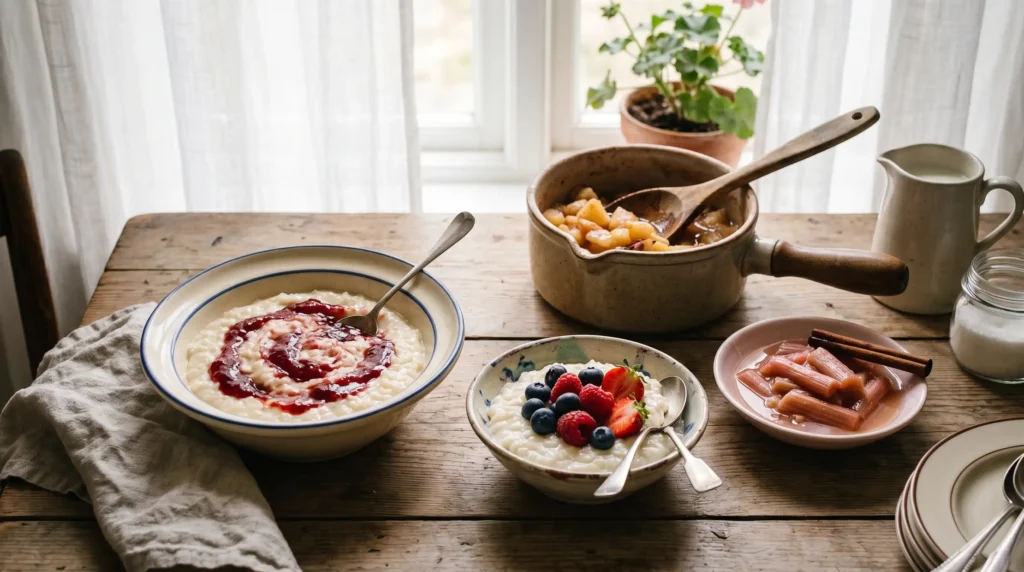
If you prefer a chilled version and plenty of people do the pudding is surprisingly good eaten cold straight from the fridge the next day. It firms up considerably overnight and takes on a denser, more set quality that is very different from the warm version but equally enjoyable in its own way. A drizzle of something sweet over the top honey, syrup, or a simple fruit compote makes the cold dessert feel more intentional. It is a reminder that this traditional recipe has enough character to work in almost any form, warm or cold, dressed up or plain.
Storage and Reheating
Leave the pudding at room temperature for no longer than 2 hours after cooking — after that, move any leftovers into an airtight container and refrigerated properly. Stored in the fridge, it keeps well for up to 4 days and thickens considerably as it sits, which is worth remembering when you come to reheat it. Always add a generous splash of milk before warming — either gently on the hob over a low heat or in the microwave in short bursts — to bring the texture back to something close to how it was fresh from the oven. Both methods work well; the hob gives slightly better control and the microwave is faster for a single portion.
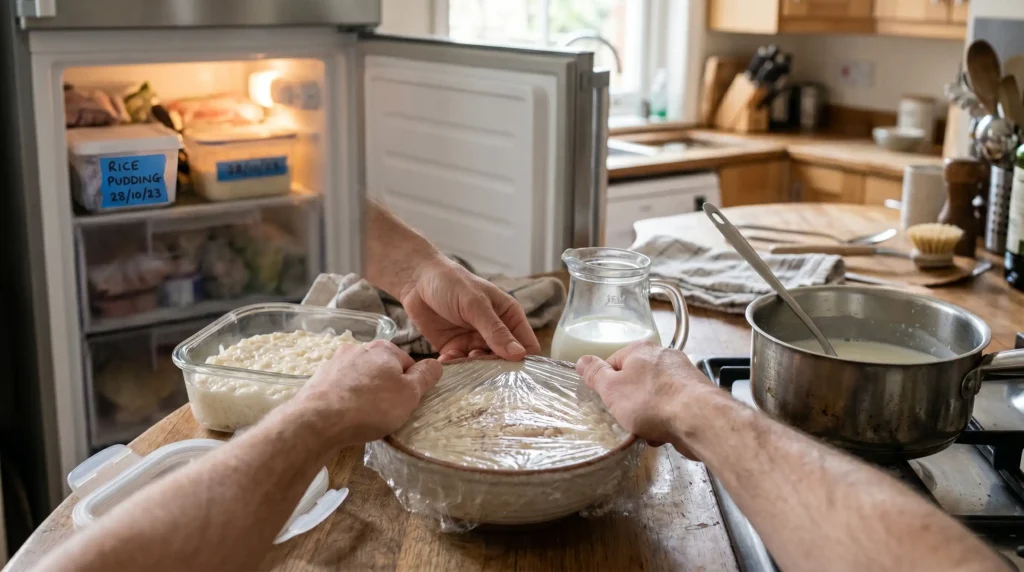
For longer storage, you can freeze the fully cooled rice pudding in freezer-safe containers for up to 2 months though for the best texture, using within 1 month is preferable. Divide into individual portions before freezing so you only thaw what you need leave them to defrost overnight in the refrigerator rather than at room temperature. Once thawed, reheat gently on the hob with a good splash of milk stirred through, or use the microwave on a medium setting. The pudding will never be quite as perfectly creamy as it was on day one, but it is still genuinely good and having portions ready in the freezer for a midweek evening is one of the better small pleasures this recipe offers.
Nutritional Information
Each serving of this pudding comes in at around 310 kcal, which is a reasonable figure for a proper comfort dessert made with full-fat dairy. In terms of macros, a standard portion contains approximately 38g of carbohydrates, 9g of protein, and 13g of fat of which around 8g is saturated fat, reflecting the butter and whole milk used throughout the recipe. Sodium sits at roughly 120mg per serving, which is low given that only a pinch of salt goes into the batter. These are solid numbers for a dessert that feels genuinely indulgent, and they hold up well against most shop-bought alternatives.
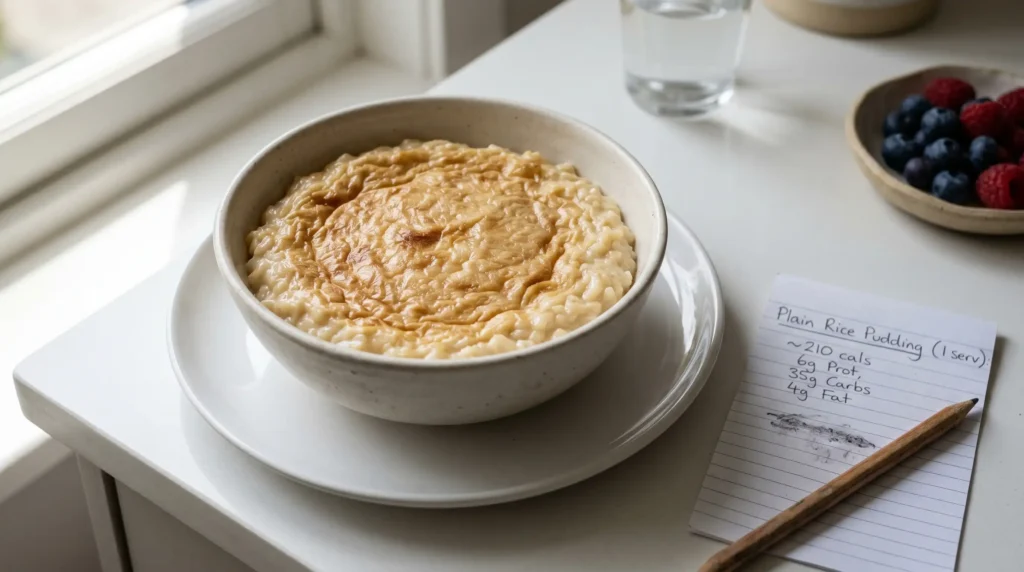
It is worth noting that all of these are estimates and will naturally vary depending on exact ingredients used the type of milk, whether you add cream, and how generous your portions are will all shift the figures slightly. Using semi-skimmed milk instead of full-fat will reduce the fat and calorie count meaningfully, while adding a spoonful of cream or jam at the table will push it up again. As a general guide though, these numbers give you a fair and honest picture of what a properly made bowl of this pudding looks like nutritionally, and for a dessert this satisfying, the calorie count is genuinely reasonable.
Frequently Asked Questions
What type of rice should I use?
Always use pudding rice or short-grain rice Arborio rice is the best substitute if pudding rice isn’t available. White rice of the long-grain variety will not give you the right creamy result because it lacks the necessary starch content. This is one of those cases where the specific ingredient genuinely matters and swapping it changes the dish fundamentally.
Can I make this ahead of time?
Yes this pudding is excellent made a day ahead. Cook it fully, cool completely, and store covered in the fridge. When ready to serve, reheat gently with a generous splash of milk to loosen it back up before serving. It reheats beautifully and the flavour is arguably even better the next day.
Why does mine form a skin on top?
The skin is a completely natural result of baking it forms as milk proteins cook and concentrate at the surface. It is a sign the pudding has baked correctly and is a celebrated part of the traditional golden topping in British cooking. If you prefer to avoid it, cover the dish loosely with foil for the final stage of baking.
Can I add different flavours?
Absolutely cinnamon, lemon zest, raisins, and almond extract all work well as variations on the base flavours. These are all traditional additions that fit naturally within the spirit of British baking without straying from what makes the dish work.
Why does Mary Berry use rice pudding so often?
Because it represents everything she values honest, comforting food made from everyday ingredients that brings people together. Her cakes, scones, and family dinners all share that same philosophy, and rice pudding is perhaps its purest expression.
What are the basic recipe details?
This recipe makes 6 servings with a prep time of 10 minutes, a cooking time of 1 hour 45 minutes, and a total time of 115 minutes or 1 hour 55 minutes including the resting period. Each serving is approximately 310 kcal.
Can the skin be made crispy?
The skin naturally softens as the pudding cools and crispy edges are only achievable straight from the oven once stirred the skin breaks down quickly. Avoid the dish being overbaked or the edges can turn gummy rather than golden.
Can I double the recipe?
Yes simply double the recipe into a larger dish and add roughly 20 minutes to the baking time, checking carefully so the edges don’t burn before the centre is fully cooked. Keep the temperature the same and check at regular intervals from the 30 minutes mark onward.
Related posts
Mary Berry Traditional UK Rice Pudding Recipe
Mary Berry Buttermilk Pancakes Recipe
Mary Berry Simple Pancake Mixture Recipe
Mary Berry Rice Pudding Recipe
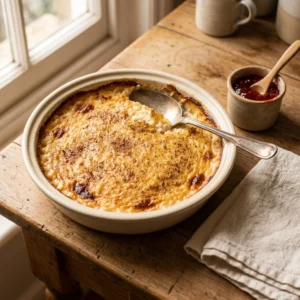
A classic slow-baked British rice pudding by Mary Berry — made with short-grain pudding rice, full-fat milk, caster sugar, unsalted butter, vanilla extract and freshly grated nutmeg for a rich, creamy and golden comfort dessert.
Type: Dessert
Cuisine: British
Keywords: Mary Berry rice pudding, baked rice pudding, creamy rice pudding, British dessert, comfort food, pudding rice
Recipe Yield: 6 servings
Calories: 310 kcal per serving
Preparation Time: 10M
Cooking Time: 1H45M
Total Time: 1H55M
Recipe Ingredients: