
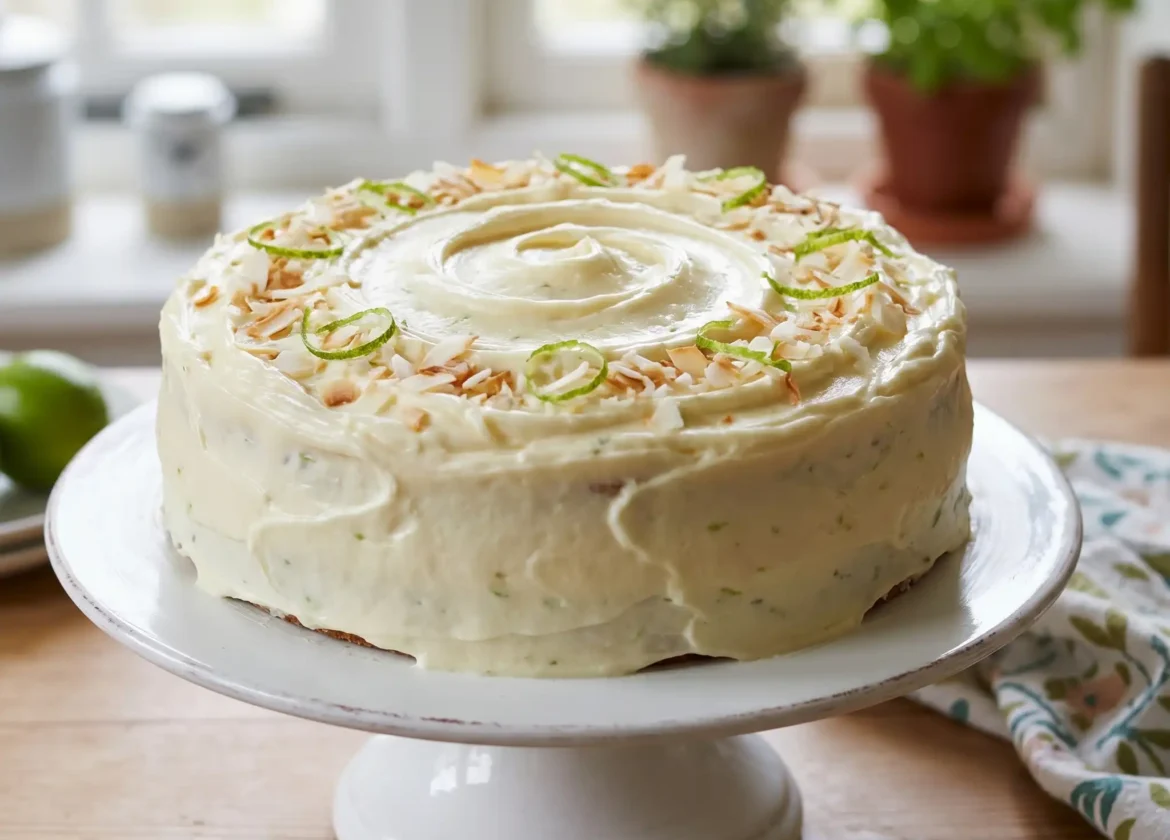
This Mary Berry lime and coconut cake recipe is one of those classic British bakes that feels both elegant and completely approachable. I first made this as a simple weekend project, and honestly it won over every single guest at the table. What makes it special is that zesty, tropical character that fresh citrus kick balanced with a delicate sweetness that never feels heavy. The texture is everything you want: soft, moist, and tender throughout, with a gentle crunch from the desiccated coconut running through every bite. The thick lime cream cheese icing on top, finished with toasted coconut flakes, adds a richness that turns a humble tea loaf into something genuinely special perfect for serving guests or simply treating yourself on a slow afternoon.
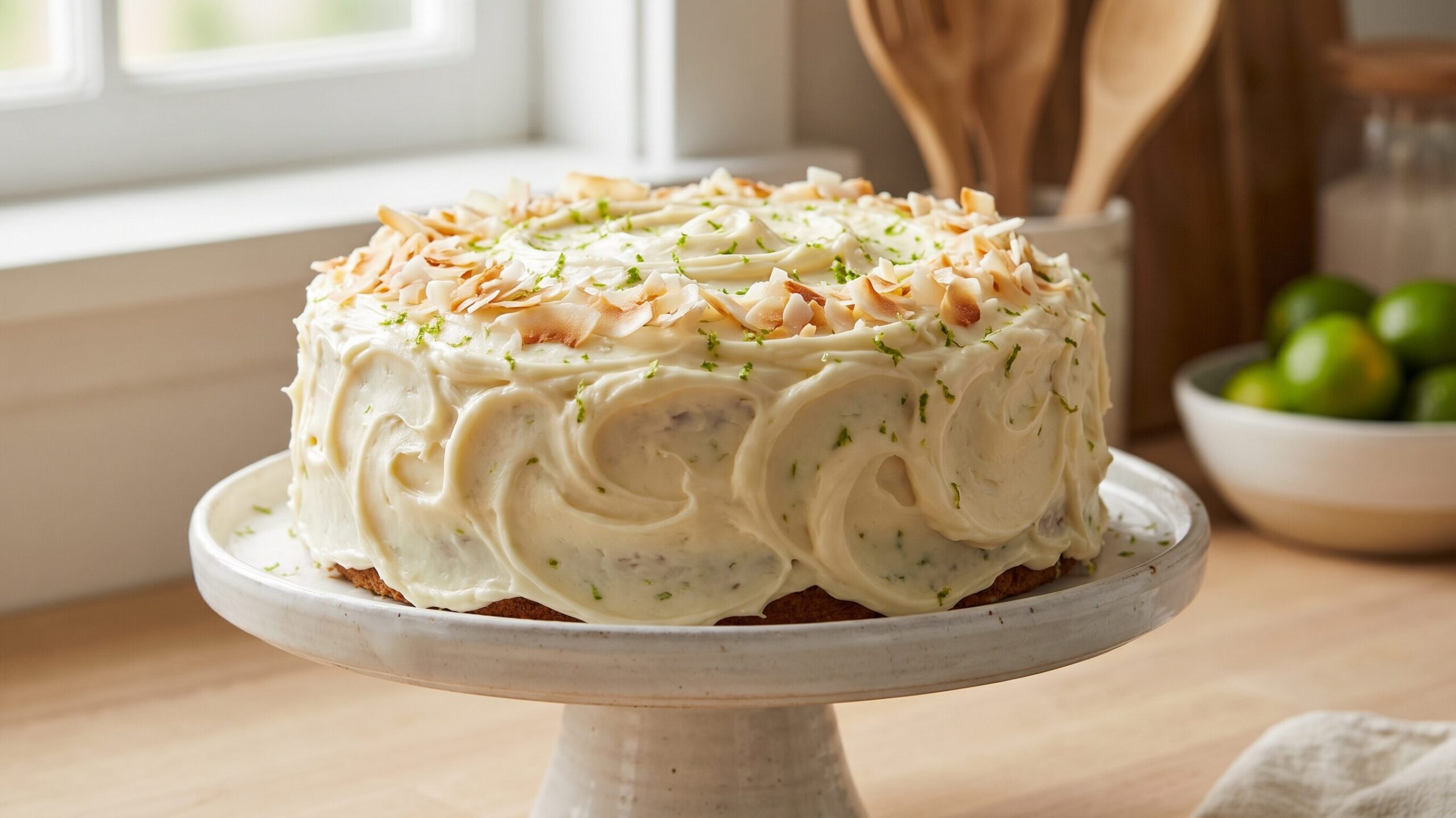
From start to finish, this bake takes around 1 hour and 15 minutes, making it ideal for a relaxed afternoon bake when you are not in a rush. The secret to a smooth batter that rises beautifully is making sure your soft butter is truly soft — never use cold butter here, because it will leave your mix lumpy and the light sponge simply will not rise the way it should. The all-in-one method means everything goes into the bowl together, making it incredibly simple even for beginners. Once baked and cooled, the flat top is ready for that sweet, creamy icing that keeps the cake fresh and indulgent for days.
What Goes Into This Cake
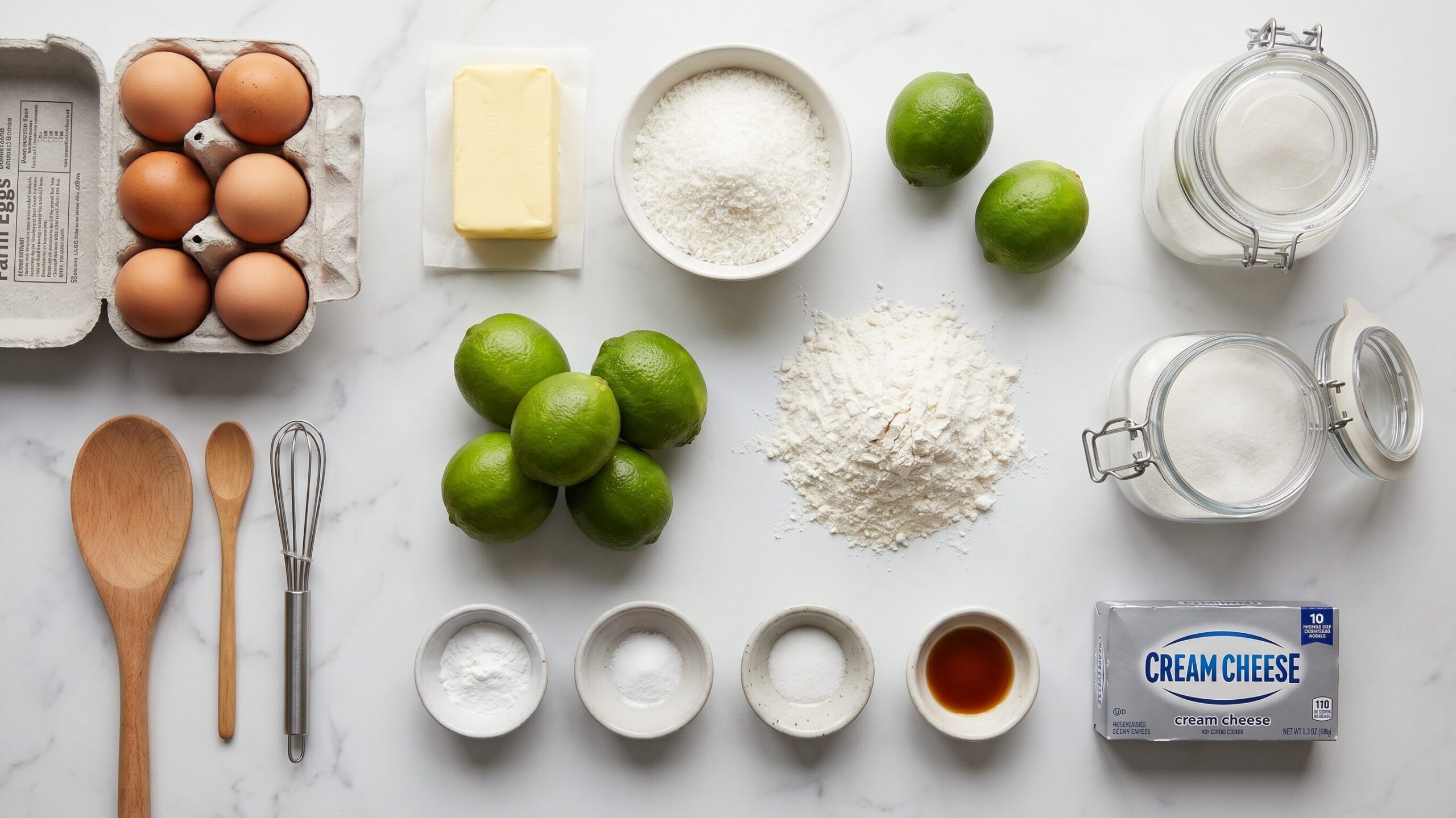
| Ingredient | Quantity |
| Unsalted Butter (Sponge) | 175g / 6oz |
| Caster Sugar | 175g / 6oz |
| Large Eggs | 3 |
| Self-Raising Flour | 175g / 6oz |
| Baking Powder | 1 tsp / 1 level teaspoon |
| Lime Zest | Finely grated zest of 2 limes |
| Lime Juice | 2 tbsp |
| Desiccated Coconut | 75g |
| Full-Fat Milk | 2 tbsp |
| Granulated Sugar (Glaze) | 4 oz / 100g |
| Lime Juice (Glaze/Syrup) | Juice of 2 limes |
| Full-Fat Cream Cheese (Icing) | 100g / 3½ oz |
| Unsalted Butter (Icing) | 50g / 4oz / 115g |
| Icing Sugar (Icing) | 200g / 7oz — sifted |
| Lime Juice (Icing) | 1 tbsp |
| Lime Zest (Icing) | 1 tsp |
| Toasted Coconut Flakes (Topping) | 2 tbsp / 25g |
How To Make This Cake Step by Step Mary Berry Lime and Coconut Cake Recipe
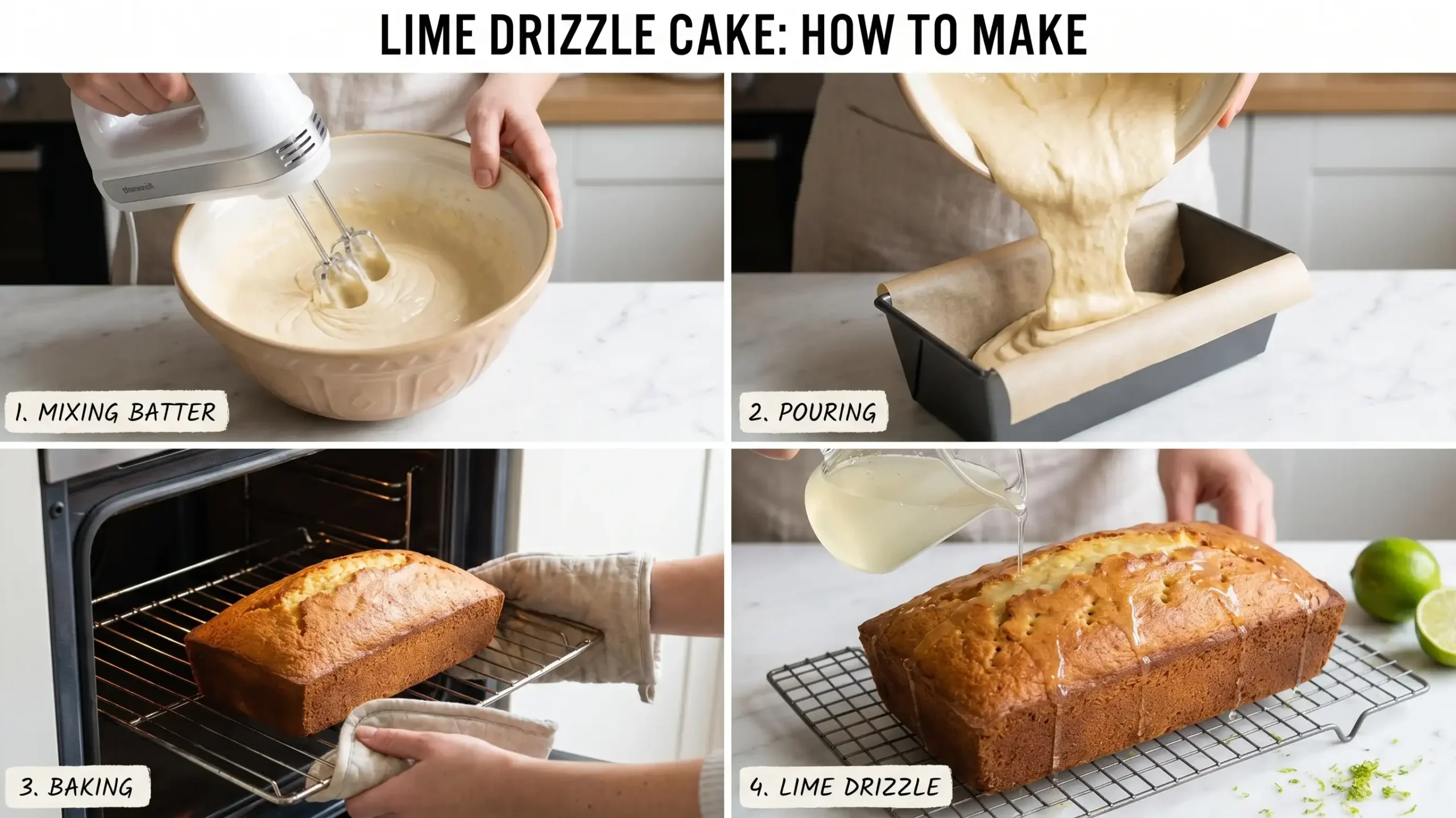
| Step | Action | Details |
| Step 1 | Preheat Oven | Set oven to 180°C / 160°C fan / 325°F / 140°C / gas mark 3 |
| Step 2 | Prepare Tin | Grease a 2lb / 900g loaf tin or 20cm round cake tin, line the base and sides with non-stick baking parchment or greaseproof paper |
| Step 3 | Mix Batter | Add flour, baking powder, baking spread or soft butter, caster sugar, eggs, and milk into a large mixing bowl |
| Step 4 | Beat Ingredients | Use an electric hand whisk or mixer to beat for 1 to 1-2 minutes until smooth and combined do not over-beat |
| Step 5 | Check Consistency | Stop when mix looks pale and creamy with no lumps avoid a heavy cake |
| Step 6 | Add Coconut & Zest | Add desiccated coconut and finely grated zest of 2 limes fold with a metal spoon or spatula until evenly distributed |
| Step 7 | Fill Tin | Spoon thick batter into prepared tin, push into corners, smooth the level surface |
| Step 8 | Bake | Place on middle shelf in center of oven 35-40 minutes (round tin) or 50-60 minutes up to 1 hour 15 minutes (loaf tin) |
| Step 9 | Check Doneness | Cake should be risen, golden brown skewer in deepest part of centre comes out clean and top feels springy |
| Step 10 | Add Syrup | While piping hot, pour warm sugar and lime juice syrup evenly over cake let it soak into sponge for a moist crumb and crisp crust |
| Step 11 | Cool in Tin | Leave in tin for 10 minutes until firm |
| Step 12 | Transfer to Rack | Lift out using paper handles, place on wire rack to cool completely cutting too soon causes crumble from moisture |
| Step 13 | Make Icing | Beat softened cream cheese and butter with a wooden spoon or electric whisk until smooth no butter spots remaining |
| Step 14 | Finish Icing | Stir in sifted icing sugar and lime juice until light and fluffy |
| Step 15 | Frost the Cake | Spread icing over cooled cake using a palette knife smooth the surface evenly |
| Step 16 | Decorate | Scatter lime zest and toasted coconut flakes evenly over the top |
Tips That Actually Make a Difference
One thing I always tell anyone making this Mary Berry lime and coconut cake recipe is that keeping the sponge moist comes down to two non-negotiable habits never overbake it, and always pour the lime syrup over while the cake is still warm so it soaks straight in. If you want a stronger, more intense citrus flavour, just add extra zest without going so far it turns sharp. To stop the cake from sinking, never open the oven door before the 50 minute mark that rush of cold air is almost always the reason a loaf sinks in the middle. Your batter should never be overmixed either; stop the mixer the moment everything is combined or the crumb will turn tough and rubbery. Mary Berry specifically recommends using a baking spread like Stork straight from the fridge because it contains emulsifiers that produce a lighter, fluffier sponge than regular butter and in my experience, that swap genuinely does make a noticeable difference in texture. Also, always choose granulated sugar over caster for the glaze if you want that satisfying crunch on top.
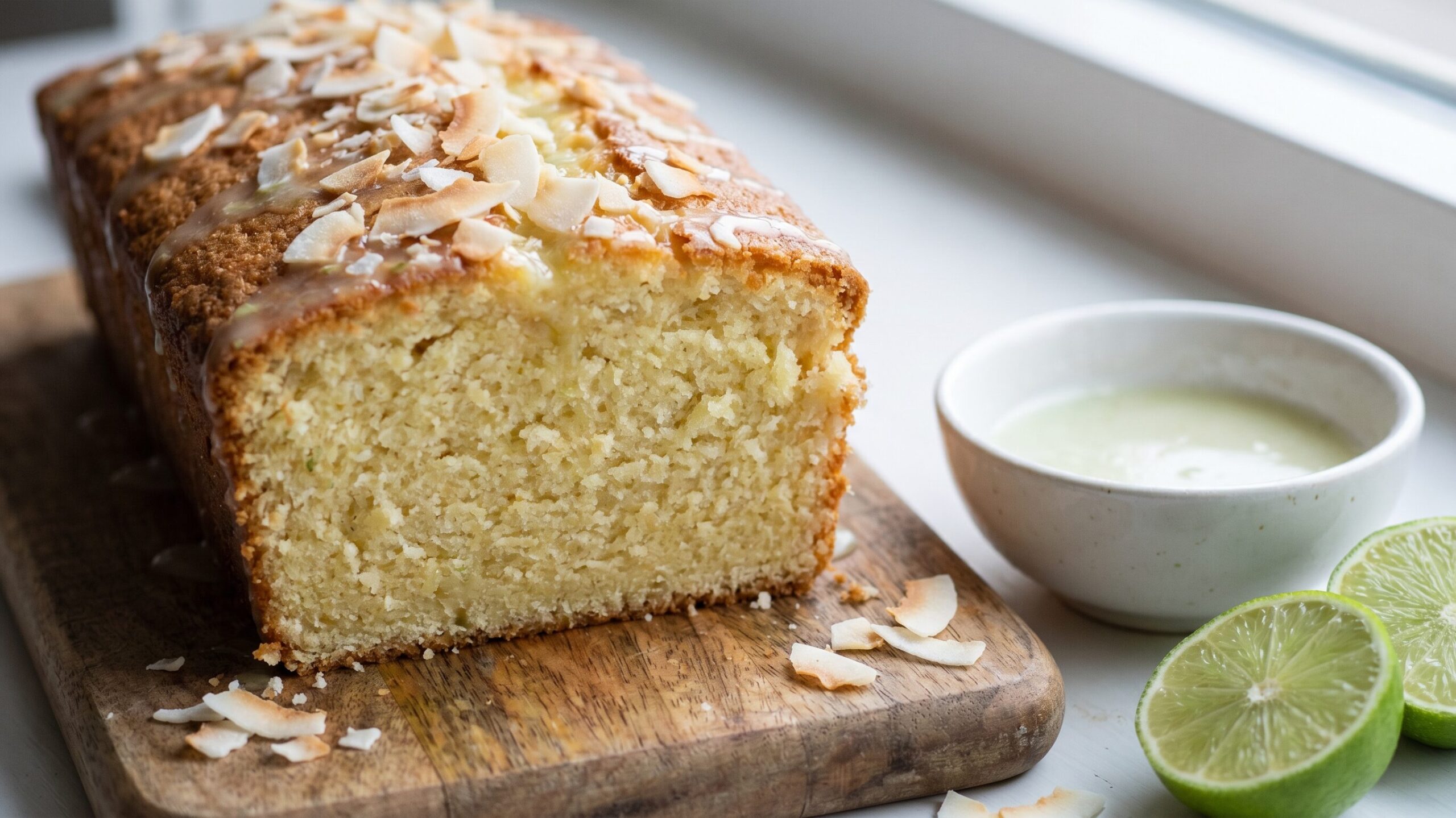
Mary Berry lime and coconut cake recipe When it comes to the desiccated coconut, always use fine, dry shreds rather than coconut flour or large coconut flakes, as they affect batter consistency in completely different ways. Check the freshness of your coconut too a packet that has been sitting in the cupboard too long loses its flavour, so always open a fresh packet for the best result. To enhance that nutty depth, toast the flakes in a dry frying pan over medium heat for about 30 seconds until they turn light brown it takes almost no time but adds real character to the finished bake. Always sift the icing sugar before making the cream cheese frosting because even tiny lumps will show up in the final finish. Stick to full-fat cream cheese at all times low-fat versions carry a higher water content and will make your frosting runny instead of thick and spreadable. Finally, use a level offset palette knife to keep the top of the cake flat and the surface even for a clean, professional-looking bake.
What to Serve Alongside This Cake
This Mary Berry lime and coconut cake recipe loaf is honestly one of the most versatile bakes I know it sits just as comfortably at elevenses as it does as a light summer dessert after dinner. My personal favourite way to serve it is with a properly brewed pot of Earl Grey tea, because those citrus notes in the leaves mirror the lime in the cake in the most natural way. If you are more of a coffee person, a tall glass of iced coffee works beautifully alongside a couple of slices the bitterness cuts through the sweetness of the cream cheese icing without overpowering it. For afternoon tea, arrange the slices on a board and pair them with a bowl of fresh raspberries or a simple fruit salad on the side, and suddenly it feels like a proper spread rather than just a single bake.
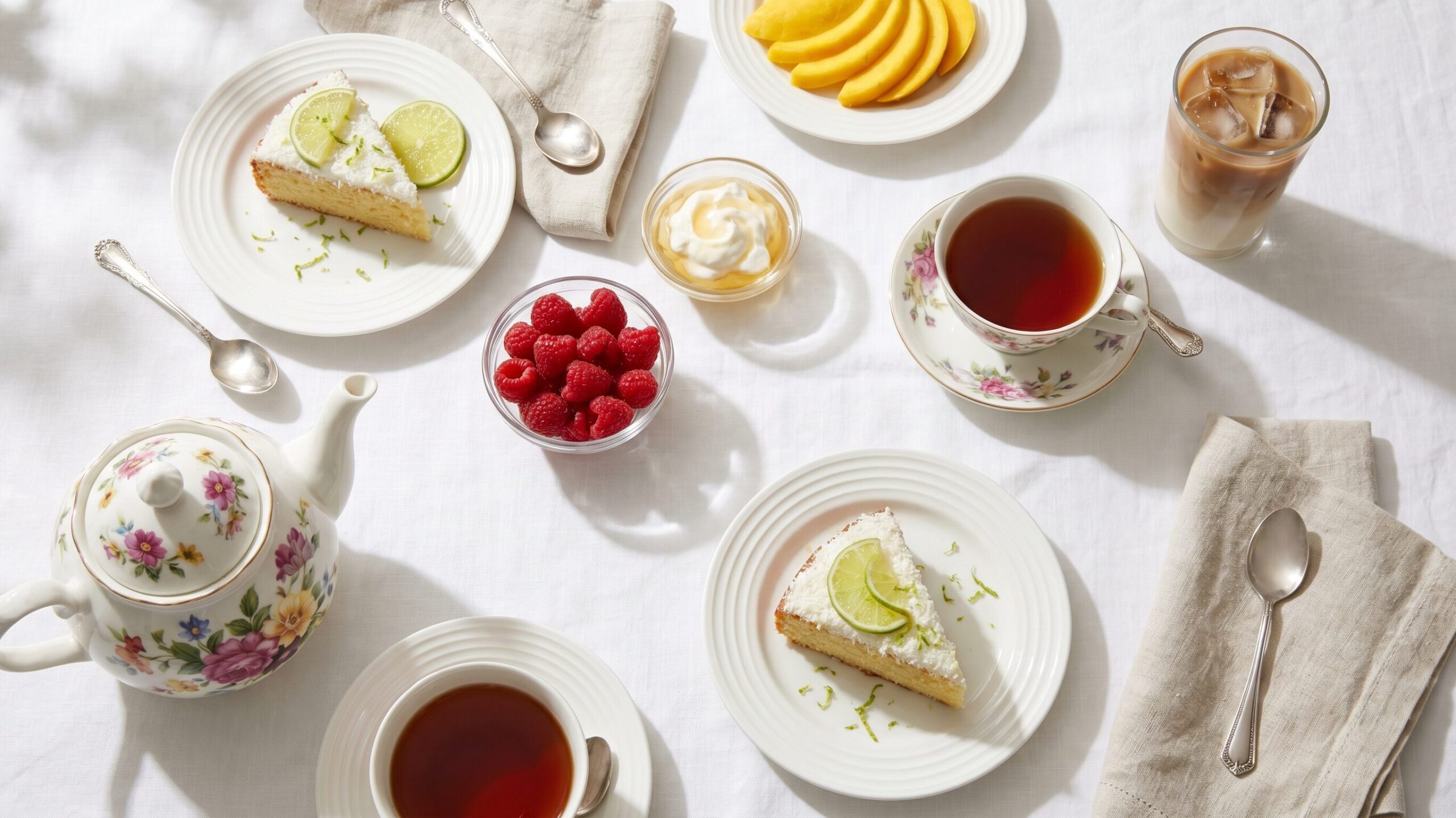
When you want to turn it into something closer to a richer dessert, a dollop of Greek yogurt or yoghurt next to each slice adds a cool, tangy contrast that works really well with the lime citrus notes. A splash of single cream poured over the top is another simple move that makes the whole thing feel a little more indulgent without much effort. For a proper summer occasion, serve sliced mango alongside the loaf slices on a chilled platter the tropical pairing with the coconut in the cake feels completely intentional, almost like the two were made for each other. Mary Berry lime and coconut cake recipe A spoonful of lightly whipped cream on the side never goes wrong either, especially when you have fresh berries scattered around the plate for colour and a little sharpness to balance the perfect sweetness of this bake.
How to Store This Cake the Right Way
Because this Mary Berry lime and coconut cake recipe has a cream cheese topping, it must be kept refrigerated in an airtight container at all times leaving it out too long at room temperature will affect both the frosting and the overall flavor. It stays fresh and perfectly cool in the fridge for up to 5 days, and one thing I have noticed over many bakes is that the flavor actually improves after 24 hours once the lime syrup has fully worked its way through the sponge, deepening the moisture throughout. If you are storing it without the cream cheese topping, it will comfortably keep at room temperature in an airtight container for up to 2 days in a cool spot away from direct heat or sunlight.
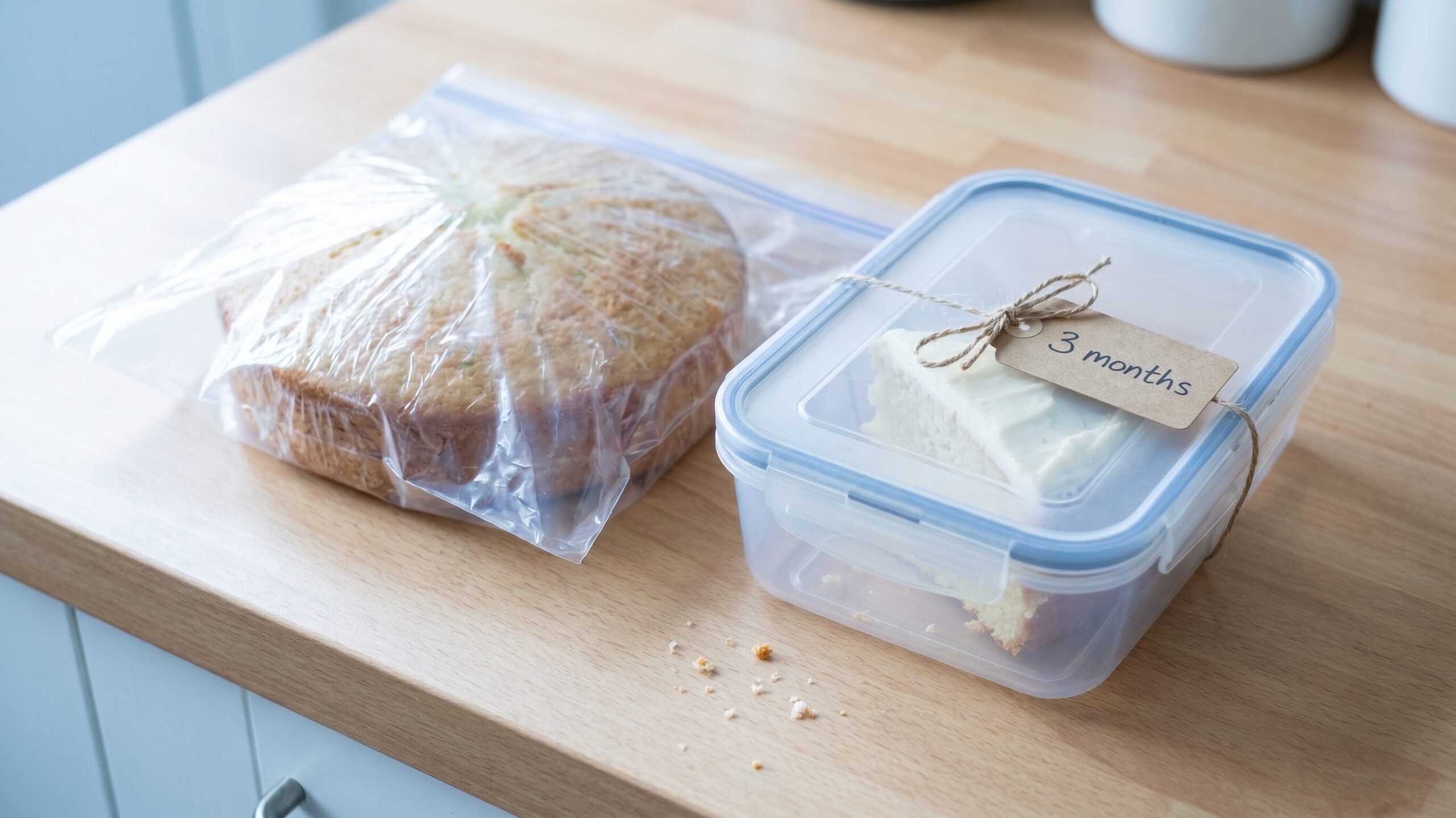
When you want to freeze this cake, the best approach is to store the un-iced sponge only wrap it tightly in clingfilm first, then place it inside a layer of foil and into a freezer bag to protect it fully. It will keep well for up to 3 months this way. If the cake is already iced, flash-freeze it open on a tray for 1 hour before wrapping so the frosting stays intact and does not smear. When you are ready to serve, simply thaw it at room temperature before decorating or slicing. One practical tip I always follow take a slice out of the fridge at least 20 minutes before eating so the butter in the sponge has time to soften and the texture comes back to life properly.
What You Are Taking In Per Slice
The nutrition values for this Mary Berry lime and coconut cake recipe sit at roughly 360 to 412kcal per slice, with most versions landing around 340 to 360 calories depending on the exact ingredients and cooking methods used. Total fat falls between 18g and 22g per serving, with saturated fat coming in at around 10g to 12g which is expected given the butter and full-fat cream cheese in both the sponge and the frosting. Cholesterol sits at approximately 70mg, while sodium ranges between 180mg and 220mg across different recipe versions, with some coming in at 210mg depending on how much baking spread or salted butter is used. These numbers are all estimated and will naturally vary based on your specific ingredients and portion sizes.
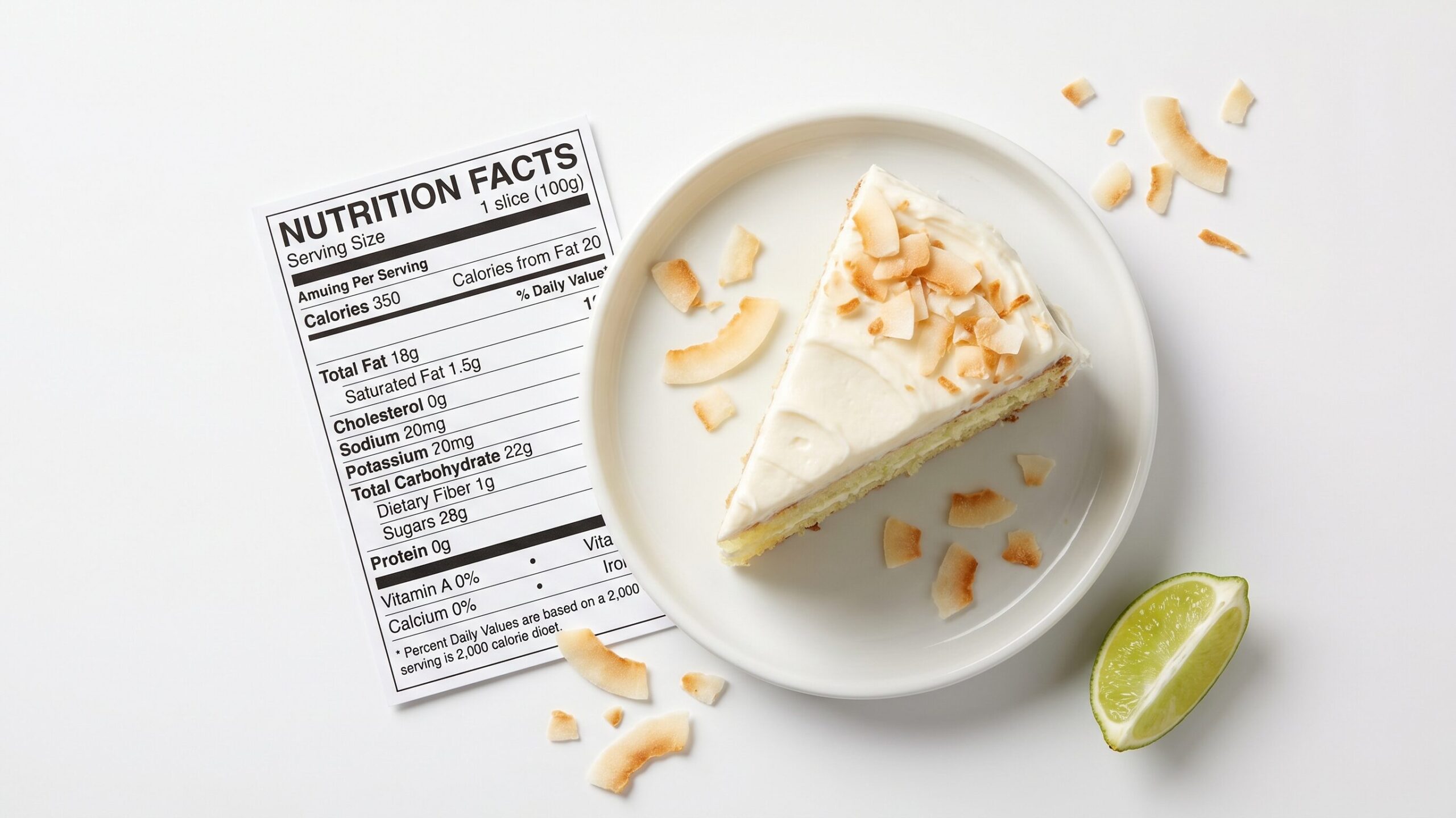
Mary Berry lime and coconut cake recipe On the carb side, total carbohydrates range from 38g to 51g per slice, with 42g being the most common middle figure across the recipes I have tested. Sugar accounts for a significant portion of that, sitting between 26g and 38g per serving again, this shifts depending on whether you use granulated or caster sugar in the glaze. Dietary fiber comes in at around 2g thanks to the desiccated coconut, and protein lands between 4g and 5g per slice. All values are approximate and estimated per serving based on 10 servings cut from the full loaf, so if your slices run thicker or thinner, the numbers will shift accordingly.
Mary Berry lime and coconut cake recipe (FAQ’s)
Can I use bottled lime juice instead of fresh?
Using bottled lime juice is possible in a pinch, but fresh is always recommended for the best flavour the difference is noticeable once the sponge is cut.
Can I bake this cake in advance?
Yes, you can absolutely bake this a day in advance and simply add the topping before serving, which actually works in your favour since the lime glaze has more time to settle into the crumb overnight.
What is a lighter alternative to cream cheese icing?
A simple mix of icing sugar and lime juice makes a clean, sharp glaze that still delivers on flavour and works as a lighter alternative to cream cheese icing.
Can I make this cake gluten-free?
Yes, swap the regular self-raising flour for a gluten-free blend and double-check that all remaining ingredients are suitable.
Can I use a round tin instead of a loaf tin?
An 8 inch / 20cm round tin works perfectly — just reduce the baking time to 35 to 45 minutes and check with a skewer rather than relying on the clock alone.
What do I do if the top is browning too fast?
Loosely tent a sheet of aluminum foil over the tin for the remaining baking time to stop it browning further or burning while the center catches up — especially if it still feels raw or wobbly inside.
Can I use a different citrus fruit?
Yes, swap the lime zest and juice for lemons to make a classic lemon and coconut drizzle cake, or try orange for a warmer citrus fruit loaf with a completely different flavour profile.
Why did my cake sink in the middle?
If your cake tends to sink in the middle, the two most likely reasons are opening the oven door too early or a batter that has been overmixed, trapping too much air inside.
Can I use margarine instead of butter?
Yes, margarine works just as well as butter in the sponge as long as it is a proper baking spread used at room temperature the all-in-one method handles both equally well.



a warm slice is something I have served at casual dinner gatherings and it never fails to impress. Drizzling a little melted chocolate over the top takes it even further into dessert territory without much effort at all. For a lighter
You’re Right