
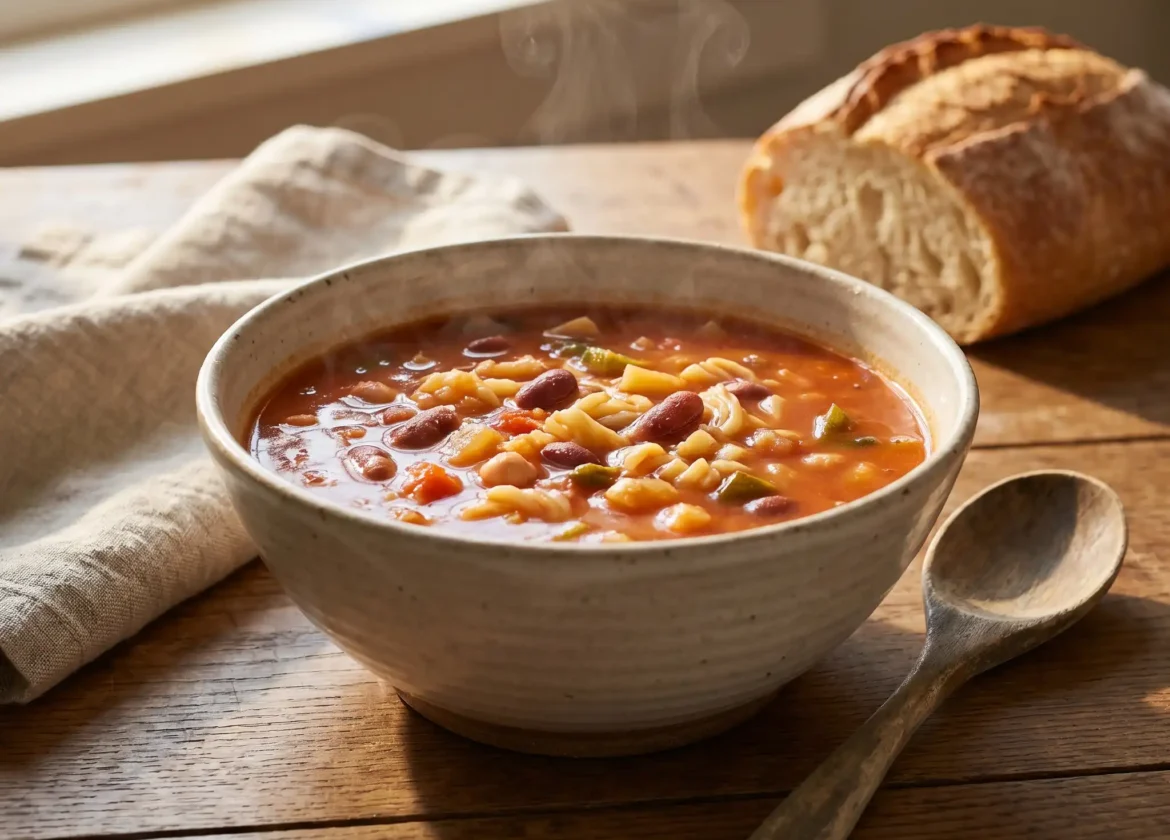
What Is Mary Berry Minestrone Soup?
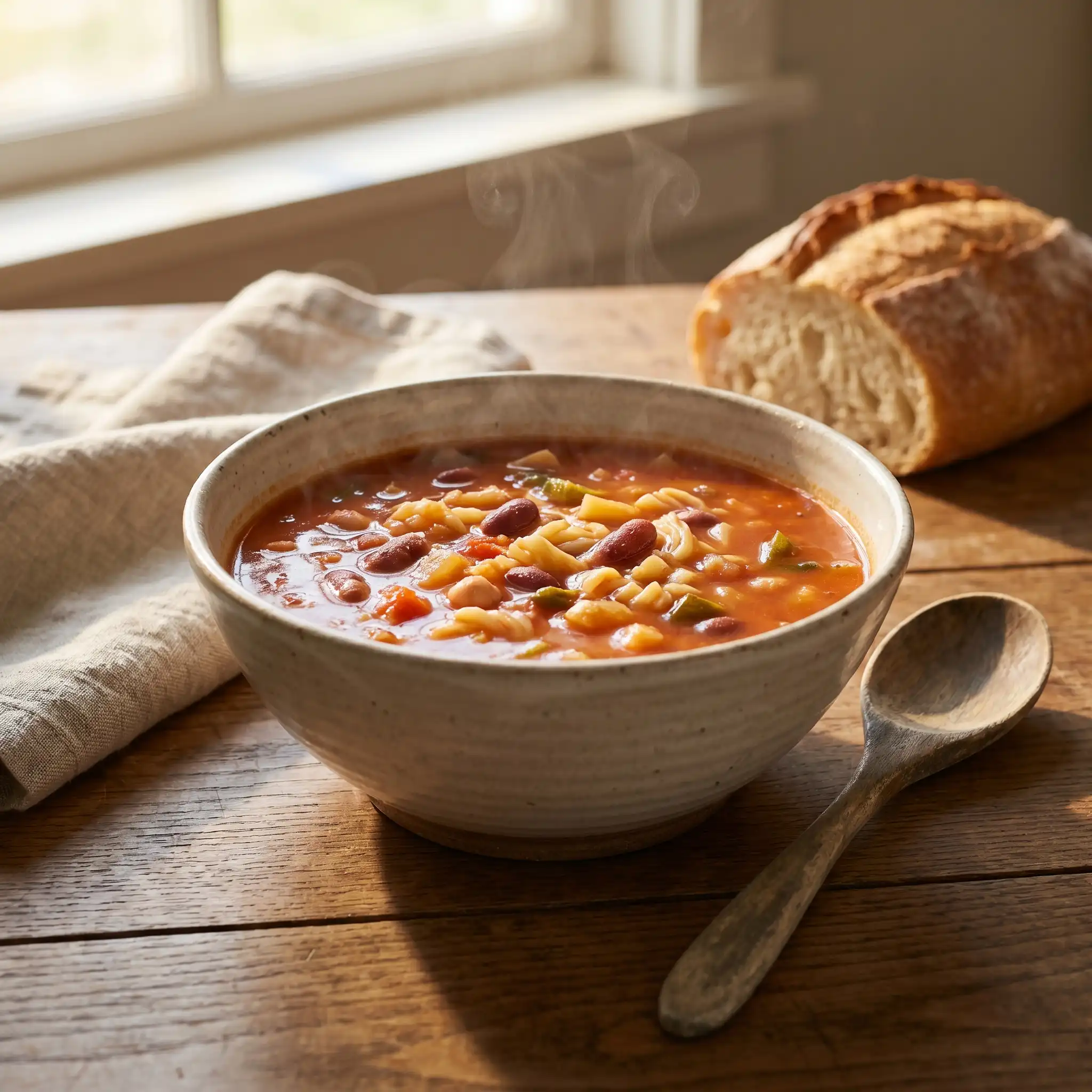
Mary Berry Minestrone Soup recipe is a vegetable-based Italian soup that brings together the best of Italian-style cooking — seasonal vegetables, cannellini beans, small pasta, and a deeply flavourful herb-infused broth built on a tomato broth base. What makes it stand out from other soups is how the thick soup manages to feel both rustic and refined at the same time, the kind of dish that tastes like it has been simmering away on a grandmother’s stove for hours. Finished with a sprinkle of Cheese and a good glug of olive oil, it works beautifully as a hearty starter or even a satisfying light main on a weeknight.
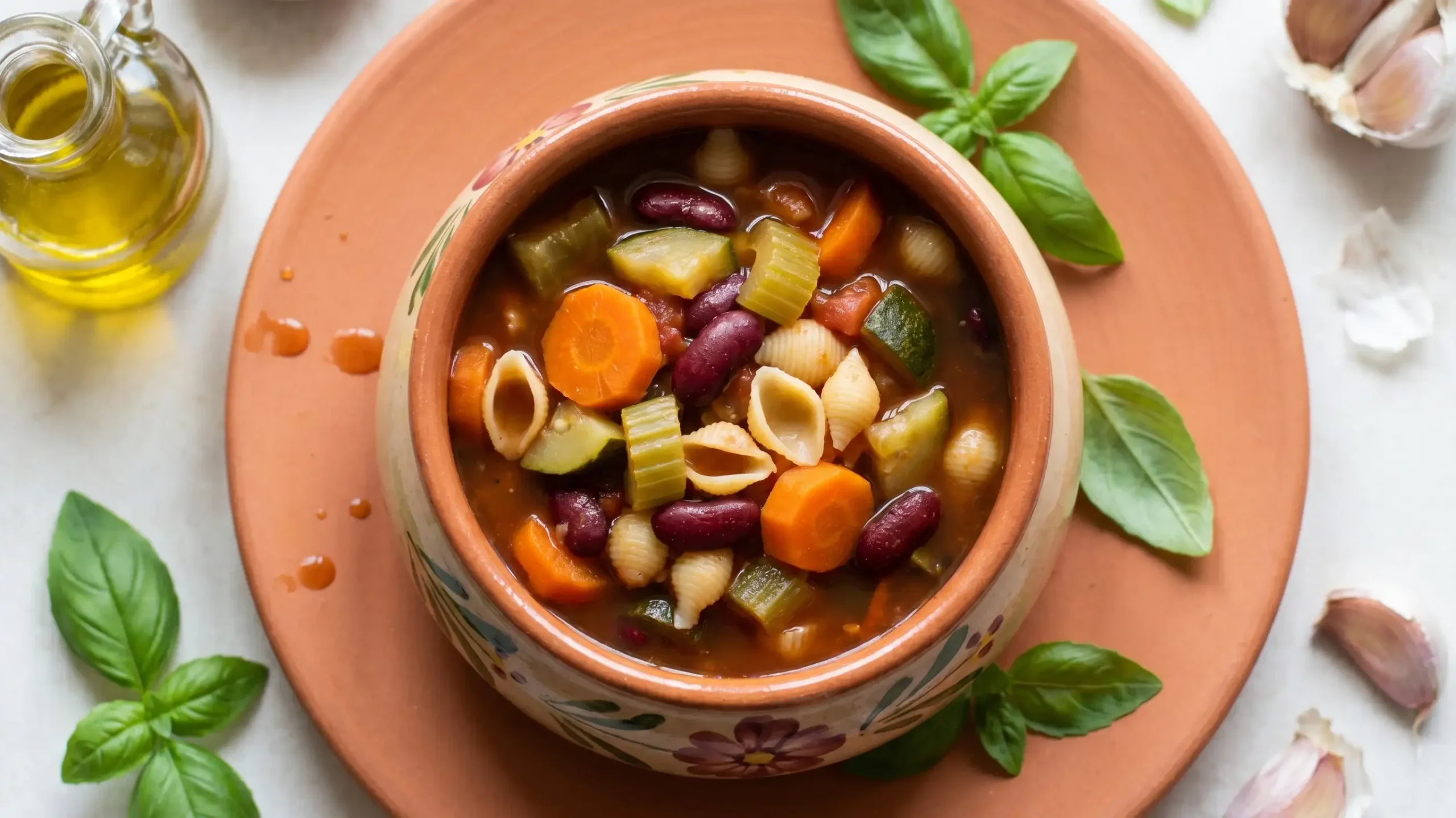
Mary Berry has always had a gift for taking something humble and making it feel special — and this soup is no different. She treats classic Italian cooking with respect, letting honest ingredients do the heavy lifting. The combination of a thick, flavourful soup made from everyday vegetables and a gently seasoned herb-infused broth is proof that you do not need anything fancy to create something truly memorable. The garlic-kissed base, the creamy beans, and the soft pasta all come together in every single spoonful.
Why This Recipe Is Worth Trying
There are plenty of soup recipes out there, but this one earns its place for genuinely good reasons. It is nutrient-rich, loaded with fibre, protein, and vitamins from a generous handful of vegetables, and yet it never feels like health food in a boring sense — it is deeply comforting, filling, and just the thing you want when cool weather rolls in. Whether you are throwing together quick dinners on a Tuesday or doing a proper batch cooking session over the weekend, this soup fits right in.
What I love most about it is how easy to customize it is — you can raid the fridge, swap whatever vegetables you have, and it still turns out well. It is genuinely freezer-friendly, which means you can make a big pot and store portions away for the week ahead, making it a solid choice for meal prep. Both adults and kids tend to enjoy it, which makes it a reliable family favourite that earns its spot in the regular rotation without any complaints.
Essential Ingredients to Make Mary Berry Minestrone Soup
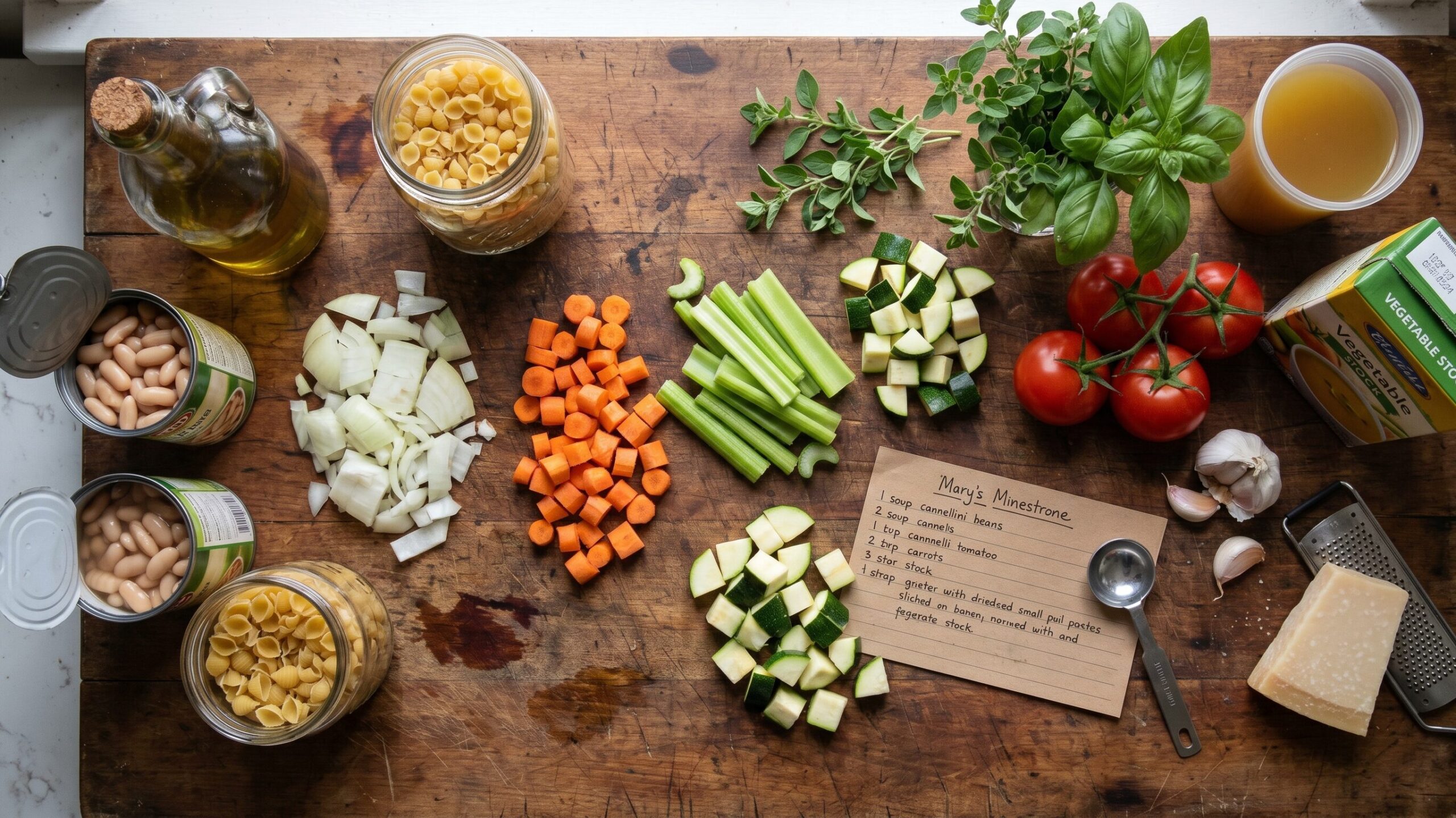
| Ingredient | Quantity | Notes |
| Olive Oil | 2 tbsp | Base for sautéing vegetables |
| Onion | 1 large | Finely chopped |
| Garlic Cloves | 2 | Minced or crushed |
| Celery Sticks | 2 | Diced |
| Carrots | 2 | Roughly diced |
| Courgette | 1 medium | Chopped into small pieces |
| Chopped Tomatoes | 400g tin | Italian chopped tomatoes preferred for richer flavour |
| Tomato Purée | 1 tbsp | Enhances tomato depth |
| Vegetable Stock | 1 litre | Can be used instead of beef stock |
| Beef Stock | 1 litre | Alternative to vegetable stock |
| Cannellini Beans | 400g can | Drained and rinsed |
| Green Beans | 100g | Sliced |
| Small Pasta Shapes | 75g–100g | Ditalini, macaroni, or small shells |
| Dried Oregano | 1 tsp | Alternative to mixed herbs |
| Dried Mixed Herbs | 1 tsp | Alternative to oregano |
| Bay Leaf | 1 | Adds depth of flavour |
| Fresh Basil | 2 tbsp | Chopped just before serving |
| Savoy Cabbage | 150g | Finely shredded |
| Spinach | 150g | Alternative to savoy cabbage |
| Salt | To taste | For seasoning |
| Freshly Ground Black Pepper | To taste | For seasoning |
| Grated Parmesan Cheese | For serving | Optional, omit for dairy-free version |
| Crusty Bread | For serving | Served alongside the soup |
Handy Kitchen Tools for Best Results
You do not need a kitchen full of gadgets to pull this off, but having the right basics makes the whole process much smoother. A large saucepan or soup pot is essential — you need enough room for all those vegetables and 1 litre of stock to bubble away comfortably without anything spilling over. A sturdy wooden spoon for stirring, a reliable ladle for serving, a sharp knife, and a solid chopping board will handle most of the prep work without any fuss.
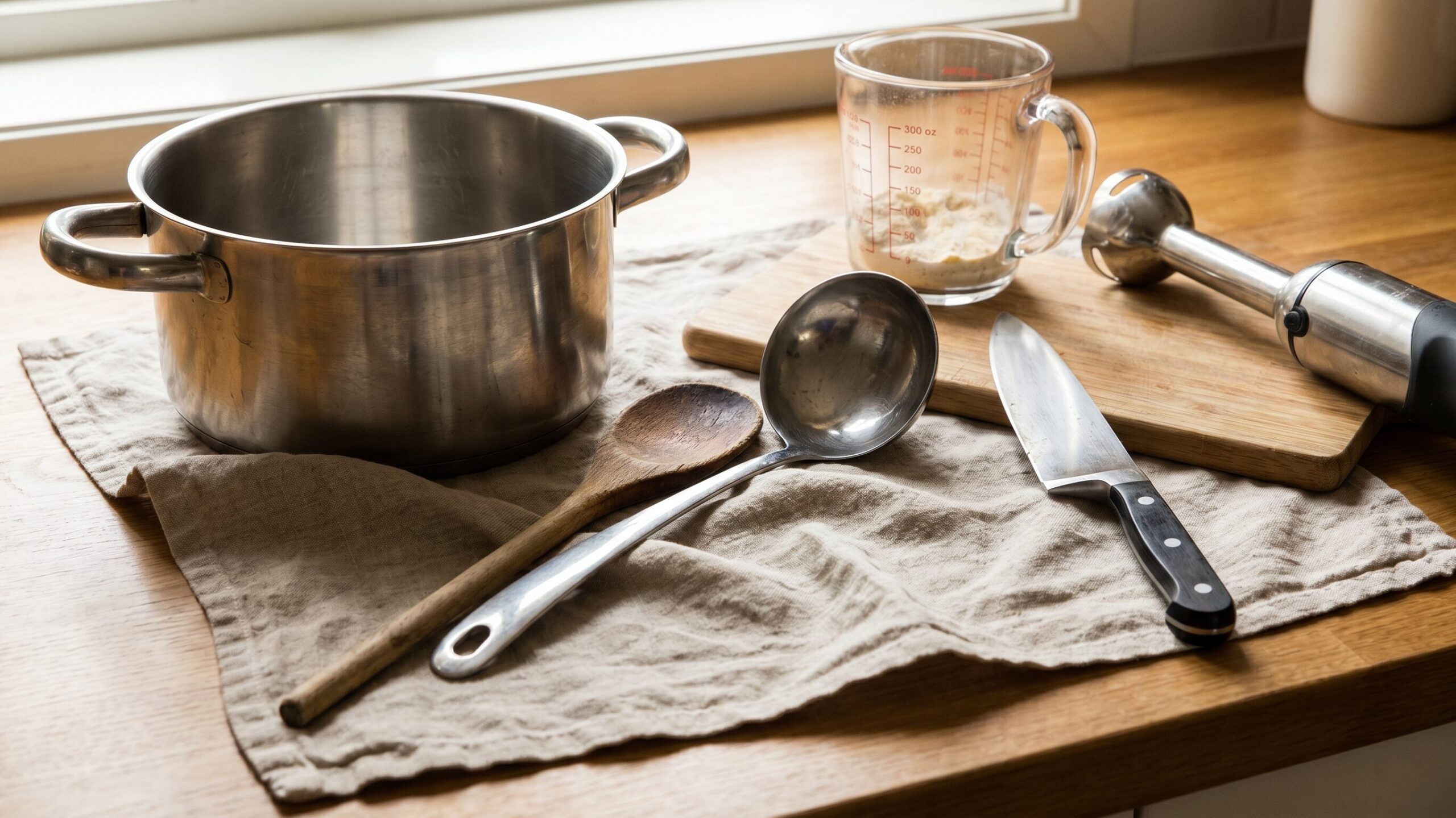
If you prefer a smoother texture in parts of your soup, a handheld blender lets you partially blitz the base before adding the pasta and beans, which creates a lovely body without losing all the chunky vegetable pieces. A measuring jug is also handy for getting your stock quantities right, especially when adjusting consistency during cooking. These are all tools most home cooks already own, which is part of what makes this recipe so accessible.
Step-by-Step Guide to Making Mary Berry Minestrone Soup
Following a clear step-by-step guide to making minestrone soup makes the whole process feel less daunting, especially if you are attempting it for the first time. The method moves in a logical sequence — you prepare the base, then add tomatoes and stock, followed by the vegetables and beans, then the pasta, and finally the greens and herbs before you serve hot. Each stage builds on the last, so the flavours have time to develop properly rather than everything being thrown in at once.
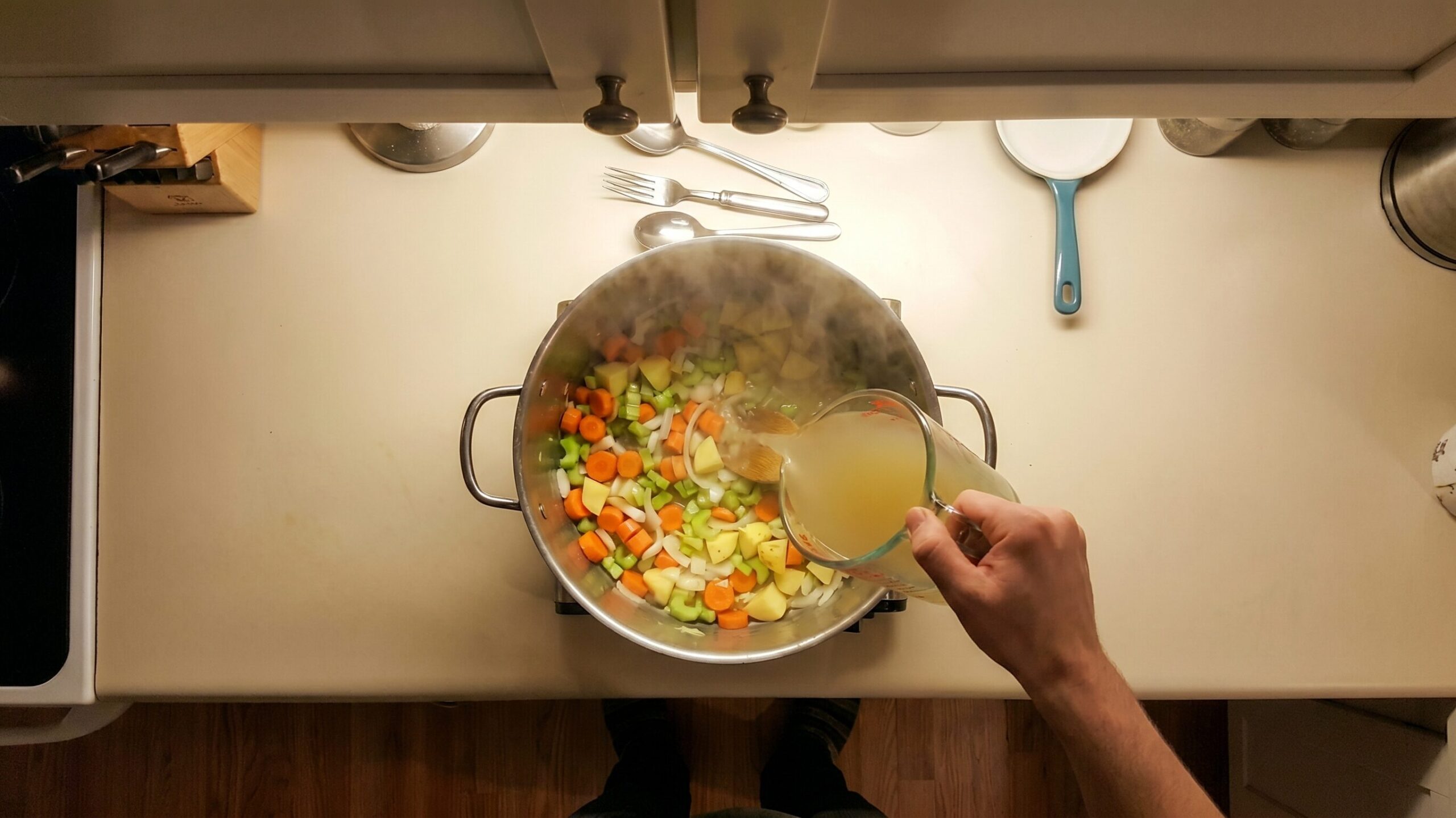
What I find helpful is doing all the chopping before the heat goes on — it keeps things calm and means you are never scrambling to dice a courgette while something is catching on the bottom of the pan. Once you get into the rhythm of the recipe, it moves quickly and confidently, and the kitchen starts smelling absolutely wonderful about halfway through.
Step 1: Prepare the Base
To begin, heat olive oil in a large pan over a medium heat — some cooks also add a small knob of butter here for extra richness, and it works beautifully. Add the onion, garlic, carrots, and celery, then cook gently for around 5–7 minutes, stirring occasionally until everything is softened and just starting to soften around the edges. You are not looking for colour here — avoid letting things get browned too quickly, as a gentle sweat brings out sweetness rather than bitterness.
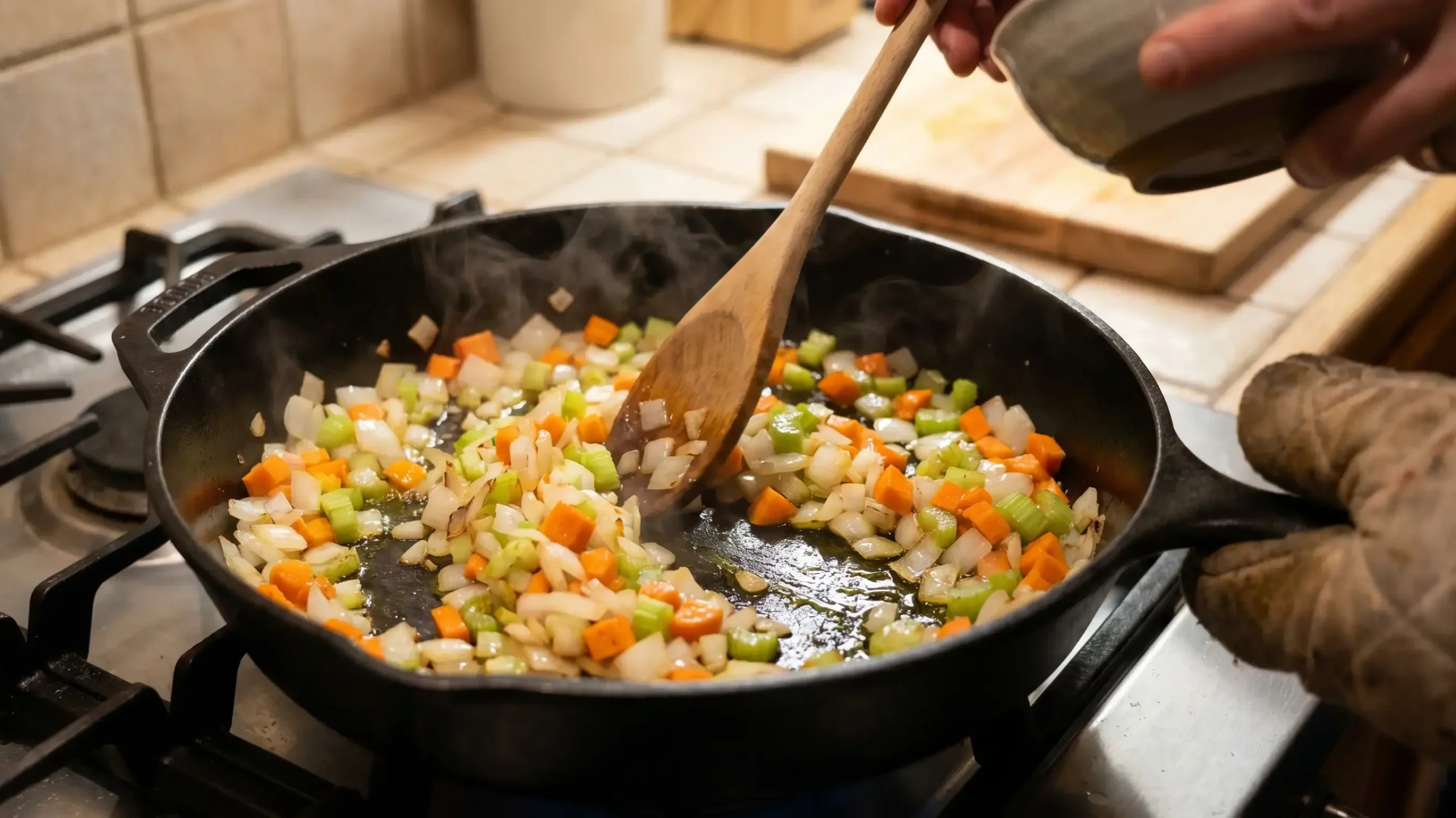
If you are following a version closer to Mary Berry’s original, you might also add a leek and some potatoes at this stage, which add body and a gentle creaminess to the finished soup. I personally love the leek addition — it gives the base a subtle sweetness that pairs really well with the tomatoes later on. Keep the heat steady and resist the urge to rush this step; the flavour you build here carries through the entire bowl.
Step 2: Add the Tomatoes and Stock
Once your vegetables have softened nicely, it is time to add the tinned tomatoes — use Italian chopped tomatoes if you can find them, as they tend to be richer and less watery than standard supermarket varieties. Stir in the tomato purée, then pour stock directly into the pan, whether that is vegetable stock or beef stock depending on your preference. Add your mixed herbs and give everything a good stir before bringing it up to a gentle boil.
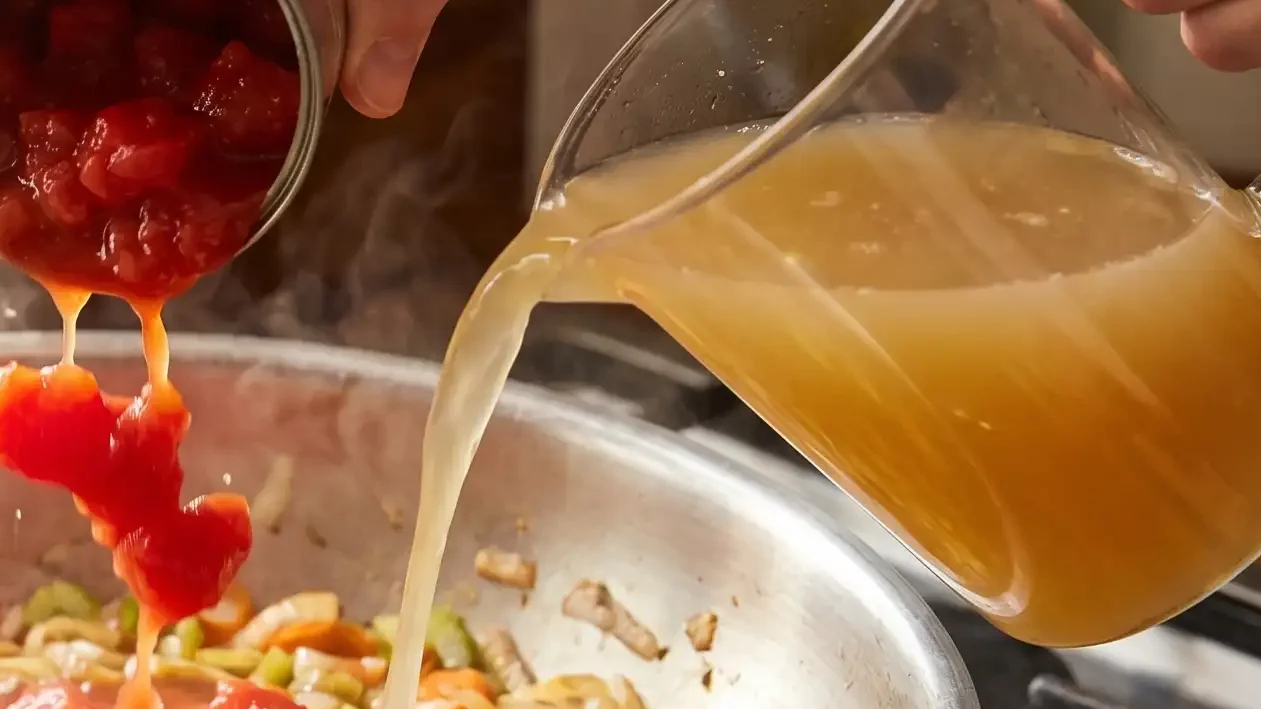
Once it reaches a boil, reduce heat and let the soup simmer for around 10 minutes to allow the tomatoes and stock to meld together into that deeply satisfying base. This is the stage where the kitchen starts to smell genuinely incredible — the herbs bloom in the heat and the tomato base thickens just slightly. Do not rush the simmer; those 10 minutes make a real difference to the overall depth of flavour in the finished soup.
Step 3: Add Vegetables and Beans
With the tomato base now well developed, add in the courgette along with your drained and rinsed cannellini beans. Stir everything together gently so the beans do not break apart, then allow the soup to simmer for another 10 minutes until the vegetables are tender but still holding their shape. Overcooked vegetables at this stage will turn mushy by the time the soup is done, so keep an eye on the texture.
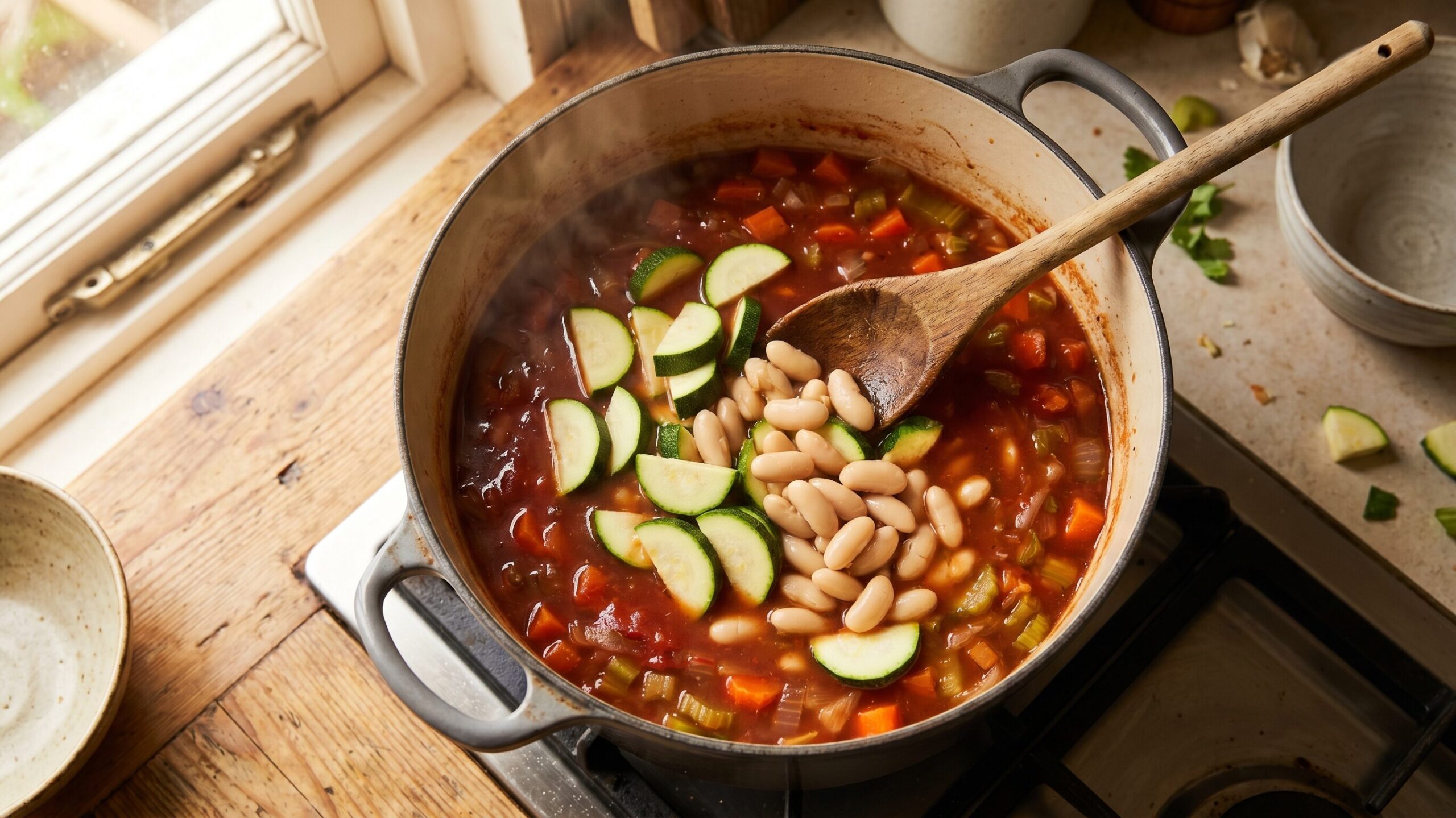
The beans do something really lovely here — they begin to release a little of their starchy creaminess into the broth, naturally thickening it and giving the soup a more substantial feel. I have made the mistake before of adding them too late, and the difference in texture is noticeable. Getting them in at this stage means they absorb all those herby, tomatoey flavours and become a proper part of the dish rather than an afterthought.
Step 4: Add the Pasta
Now add your chosen small pasta or pasta shapes — macaroni, ditalini, or small shells all work well here. Season with salt and pepper at this point, then let the soup simmer for another 8–10 minutes until the pasta is cooked through but still has a little bite. Keep in mind that pasta absorbs liquid as it cooks, so if the soup looks too thick, add a splash of extra stock or water to loosen it back to the consistency you like.
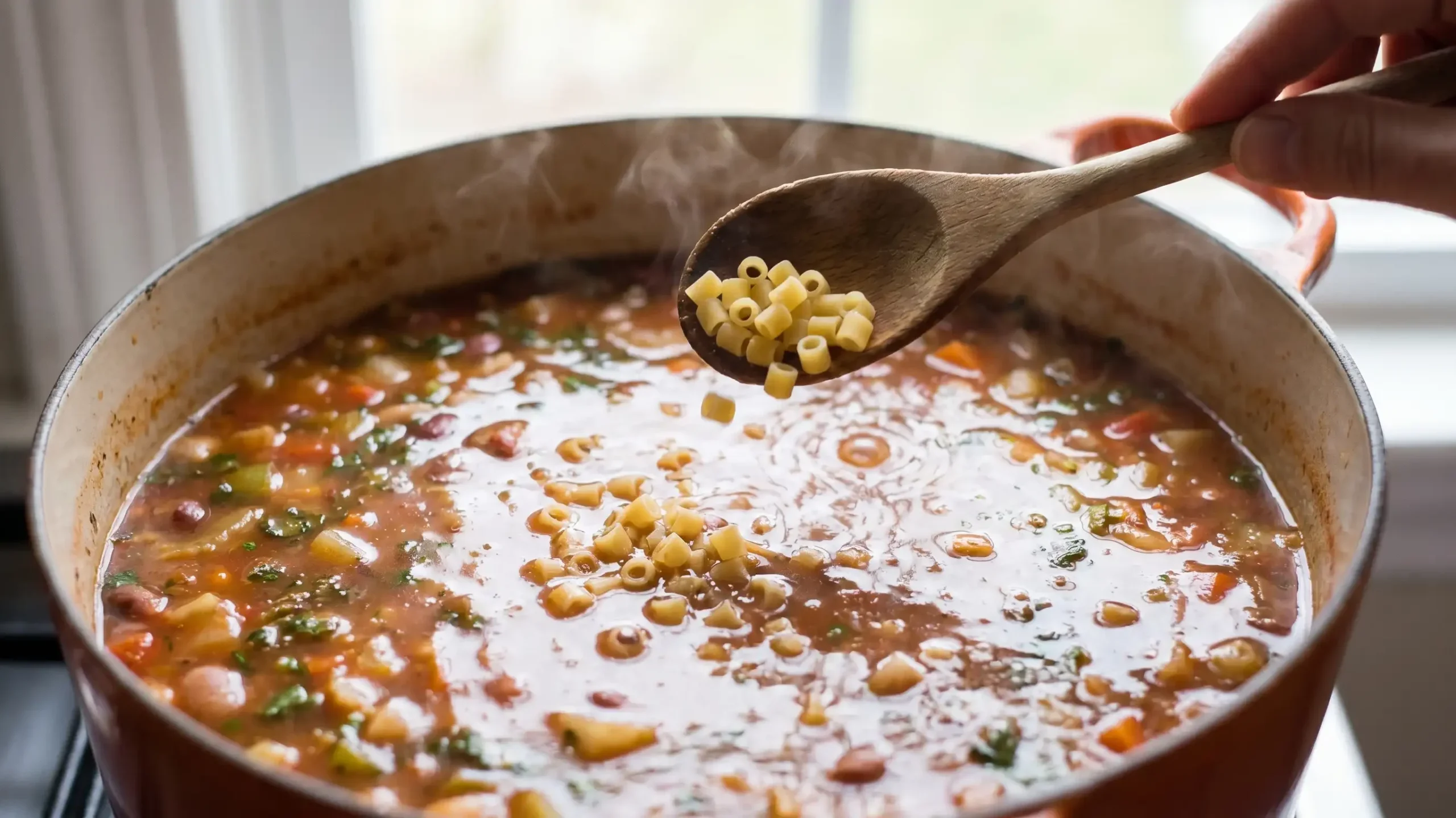
One tip I would genuinely stand by — taste the seasoning again once the pasta is in, because the pasta itself can dull things down slightly. A little extra salt or a twist more of pepper at this stage can lift the whole pot. Also, if you are making this ahead, it is worth cooking the pasta slightly less than you think it needs, since it will continue to soften as the soup sits and is reheated.
Step 5: Finish with Greens and Herbs
In the final couple of minutes, stir in your cabbage or spinach and let it wilt gently in the hot broth — this only takes around 2 minutes and you do not want to overcook it, as the greens add both colour and a freshness that lifts the whole soup. Scatter in the fresh basil right at the end for that fragrant finish that makes the soup smell as good as it tastes.
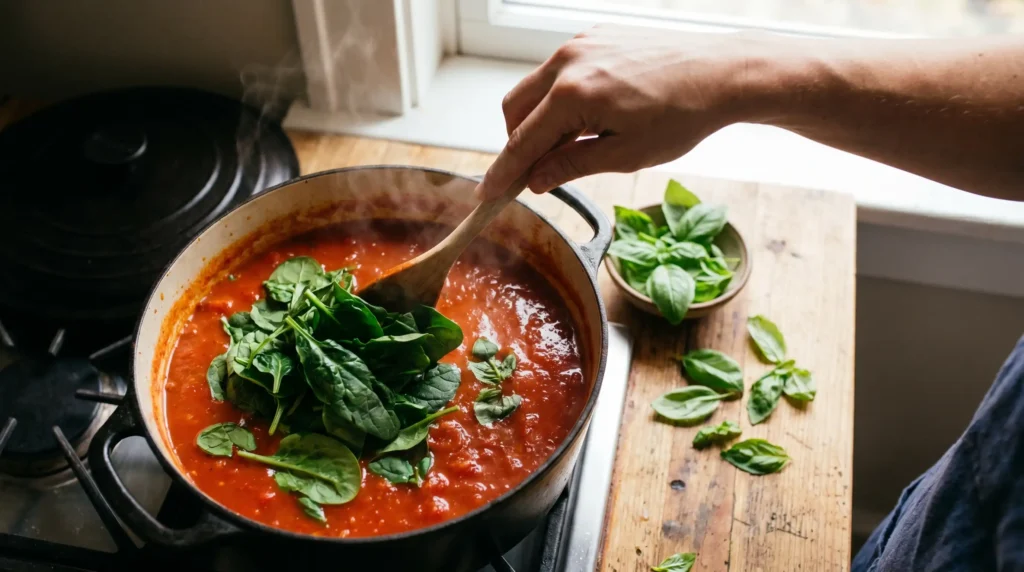
This last step is where the soup really comes alive visually — the green leaves brighten everything up and remind you that this is, at its heart, a vegetable dish built on colour and freshness. I always add the basil off the heat so it keeps its flavour and does not turn dark and bitter. It is a small thing, but it genuinely makes a difference to both the look and the taste of the finished bowl.
Step 6: Serve Hot
Using a ladle, portion the soup into warmed bowls and finish with a generous sprinkle of grated Parmesan and a light drizzle of olive oil over the top. Serve alongside crusty bread for a truly satisfying meal — the bread is non-negotiable in my house, mostly because the broth is too good not to mop up completely.
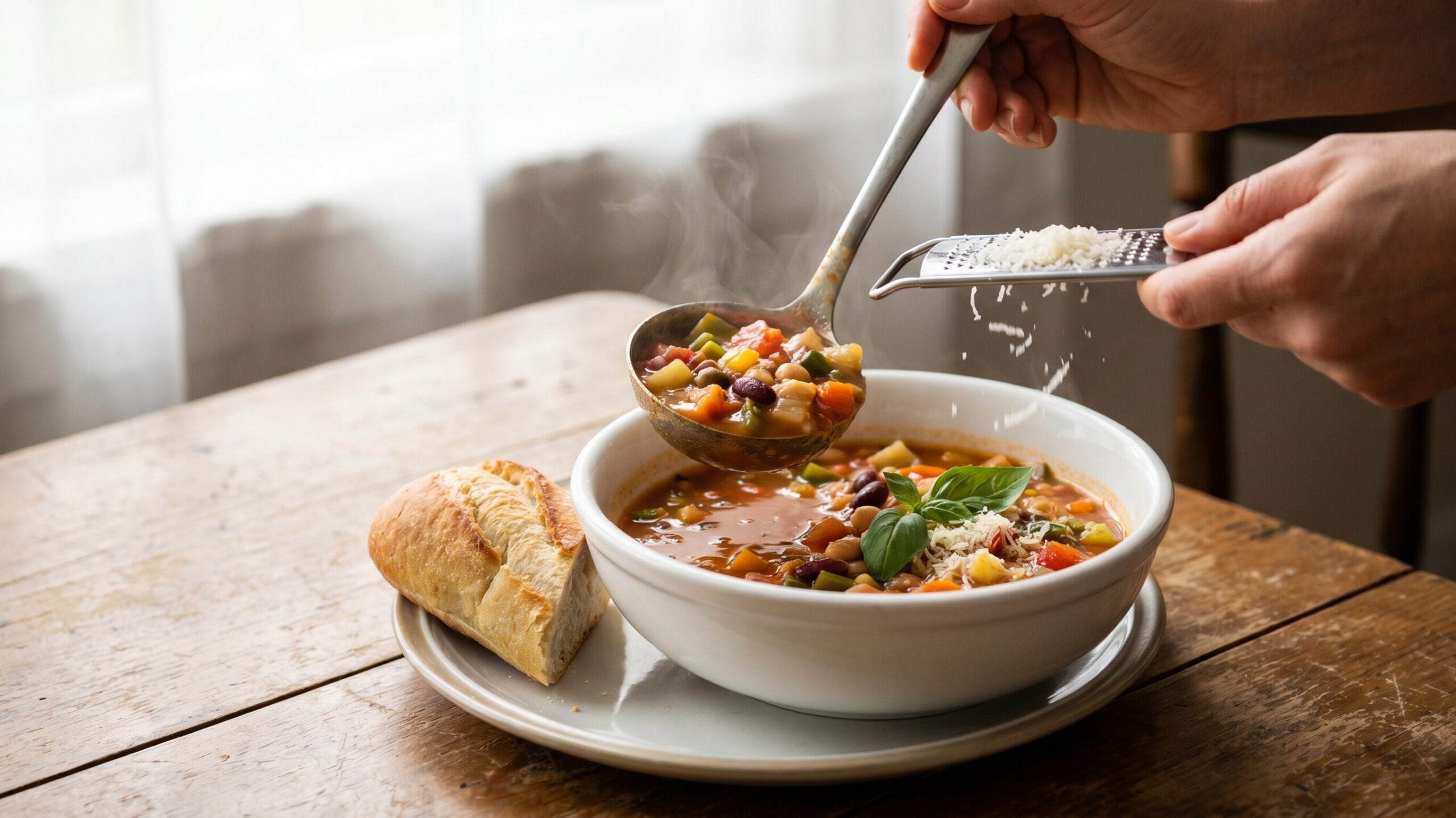
Serving it hot is key; minestrone loses something when it sits too long in the bowl before being eaten. If you are serving a crowd, keep the pot on the lowest heat with a lid on and ladle to order. That moment when someone takes their first spoonful and goes quiet for a second — that is exactly what this soup is supposed to do.
How to Make Mary Berry Minestrone Soup Recipe
Start by taking time to properly prepare vegetables — finely chop the onion, carrots, celery, and garlic, and cut the courgette into small even pieces so everything cooks evenly and you get a balanced texture throughout the bowl. Then cook base vegetables by heating olive oil in a large saucepan over medium heat until everything is softened and fragrant without browning. Once the base is ready, add tomatoes, your chosen herbs — oregano and a bay leaf — and let the flavours develop for a few minutes before you pour stock in and bring it to a gentle boil, then reduce heat and simmer.
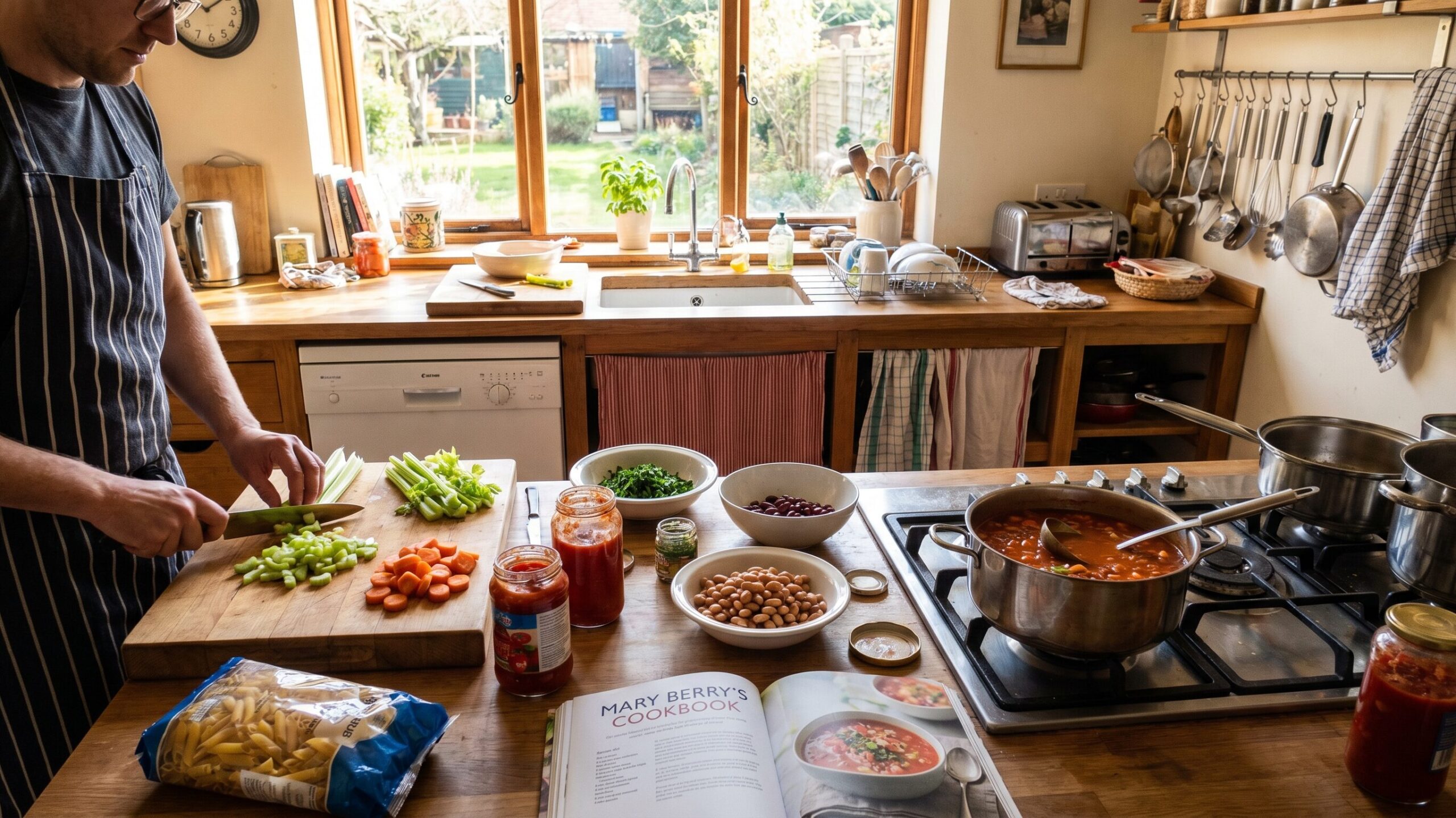
Next, add your green beans and continue simmering until you have genuinely tender vegetables with good body. Stir in the cannellini beans and pasta shapes and let the pasta cook until it is tender but absolutely not overcooked — this is the step that trips most people up the first time. Before serving, remove the bay leaf, then season generously with salt and freshly ground black pepper. Serve hot, ladle into deep bowls, and finish with chopped parsley or grated Parmesan cheese for a proper, satisfying finish.
Tips for the Best Minestrone Soup
One of the most common problems people run into is pasta becoming too soft by the time the soup is ready to eat — the fix is either to cook pasta separately and add it just before serving, or to pull the pot off the heat while the pasta still has a little firmness. If you are making ahead, always stir before serving and expect to add a splash of stock because the pasta will have absorbed quite a bit of liquid overnight. For a thicker soup, try giving some of the beans a rough mash against the side of the pot, or simmer uncovered for a few extra minutes to let the broth thicken naturally.
Do not underestimate the power of add-ins either — leeks, spinach, cabbage, peas, and potatoes all work beautifully depending on what is in season or sitting in the vegetable drawer. My personal favourite trick is dropping a Parmesan rind into the pot while the soup simmers — it adds an incredible richness and depth that is hard to replicate any other way. Just remove before serving and no one will ever know it was there, though you will absolutely taste the difference.
What I Got Wrong (And How I Fixed It)
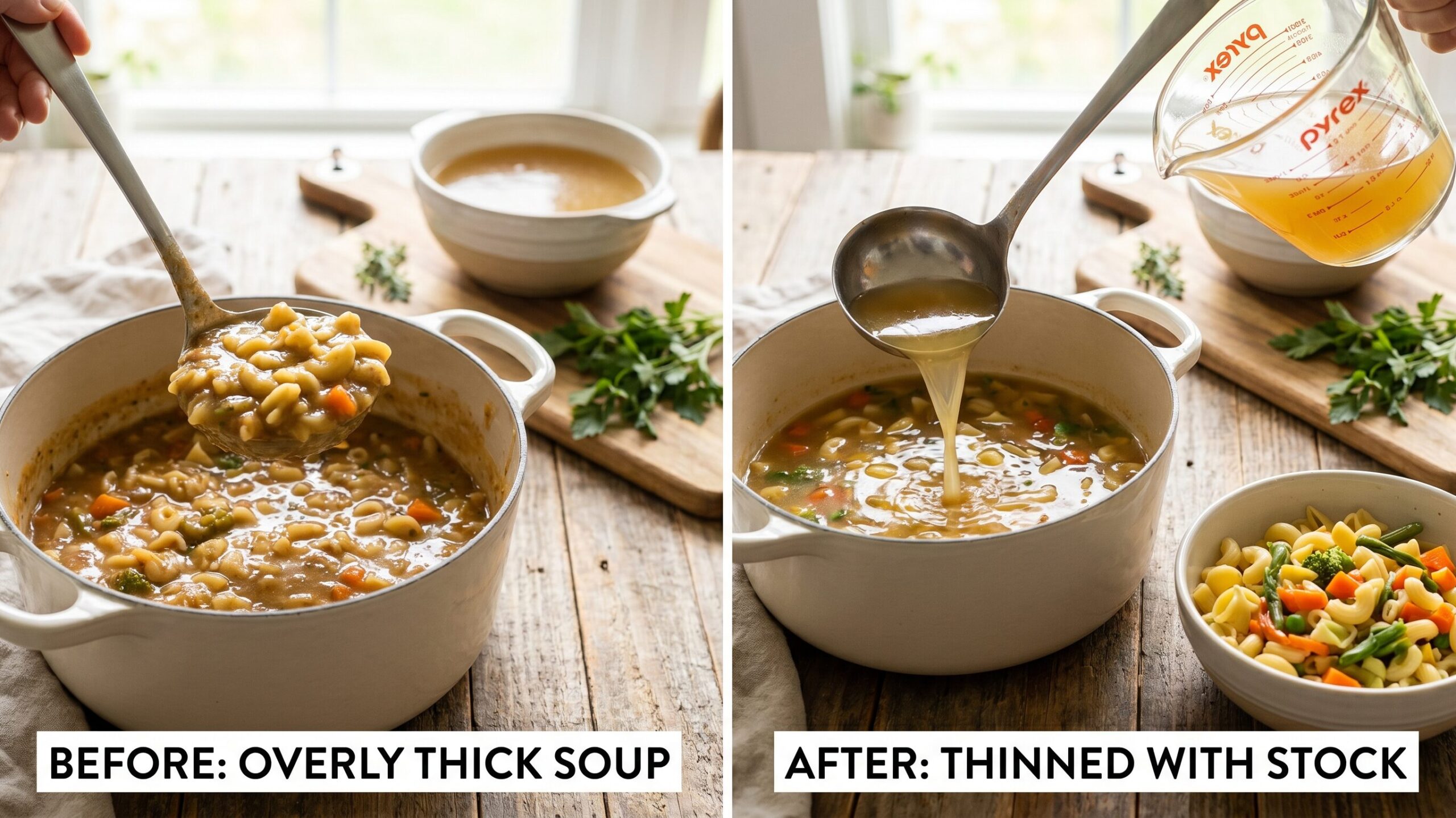
The first time I made this, the soup came out too thick — almost stew-like — because I had not accounted for how much liquid the pasta soaks up. The fix was simple enough: a generous splash of extra stock kept it from becoming a solid mass, and now I always keep a little warm stock on standby when simmering. The second mistake was classic beginner territory — pasta overcooked to the point of mush because I had added it far too early. Now the pasta is always added at the end, with just enough time to cook through before the pot comes off the heat.
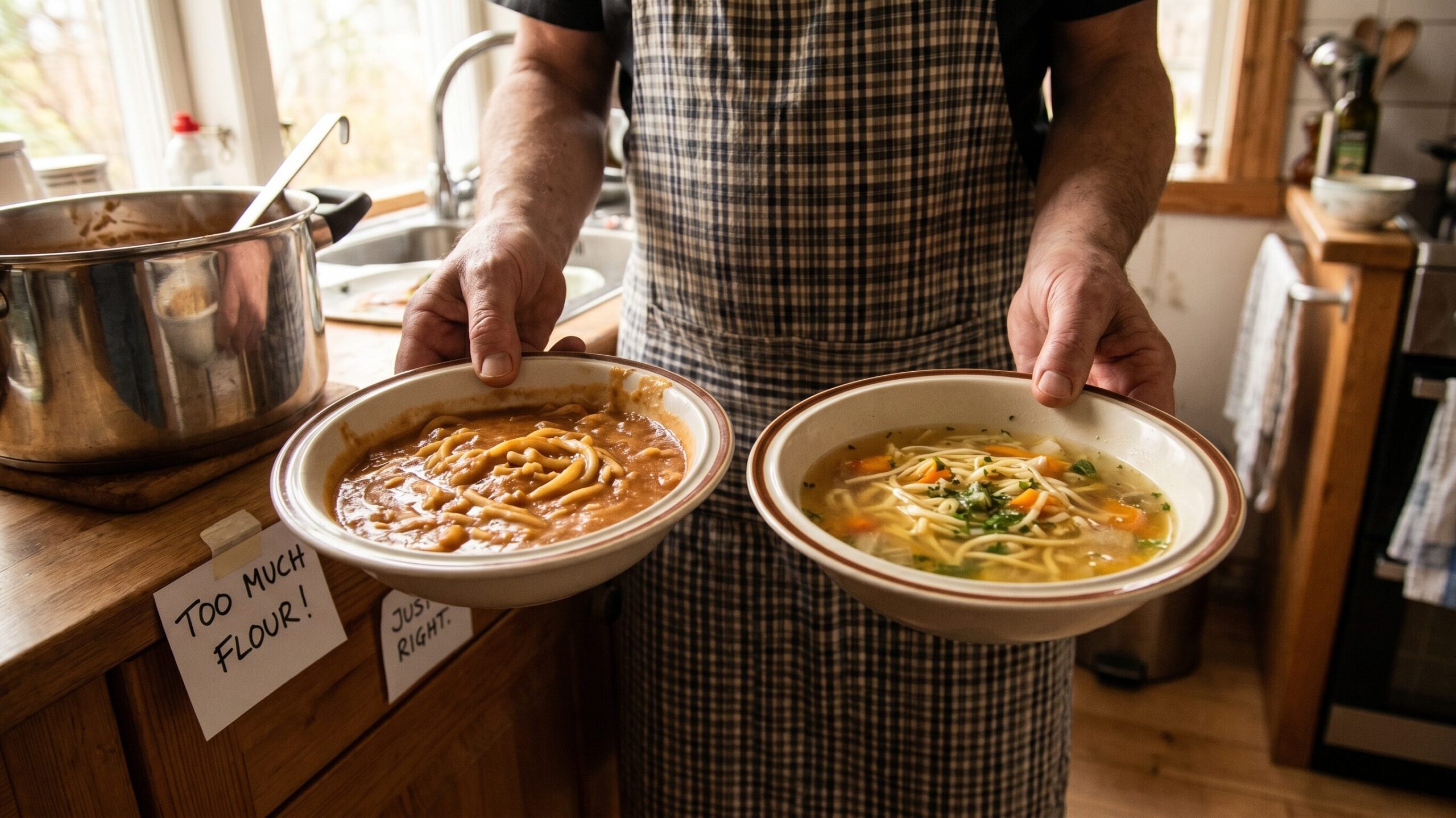
Seasoning was another stumbling block — I used a standard stock the first few times and the finished soup was way too salty, especially after reduction. Switching to a low-sodium stock and holding off on extra salt until the very end, with adjusted seasoning to taste, completely solved it. I also once ended up with vegetables mushy beyond saving because I had been distracted and let things simmer far too long — now I check regularly and pull back the heat early to keep everything at a firm texture with genuinely tender vegetables rather than a soft, shapeless mess.
Healthier Version of Mary Berry’s Minestrone Soup
Making a lighter version of this soup requires very few changes and none of them sacrifice flavour in any meaningful way. The easiest swaps are to simply skip Parmesan or use a small amount of a dairy-free alternative, and to reduce oil slightly during the base — using one tablespoon instead of two gives you a noticeably lighter option without affecting the depth of the dish. Switching to whole wheat pasta rather than regular adds extra fibre and a slightly nuttier flavour that pairs well with the tomato base.
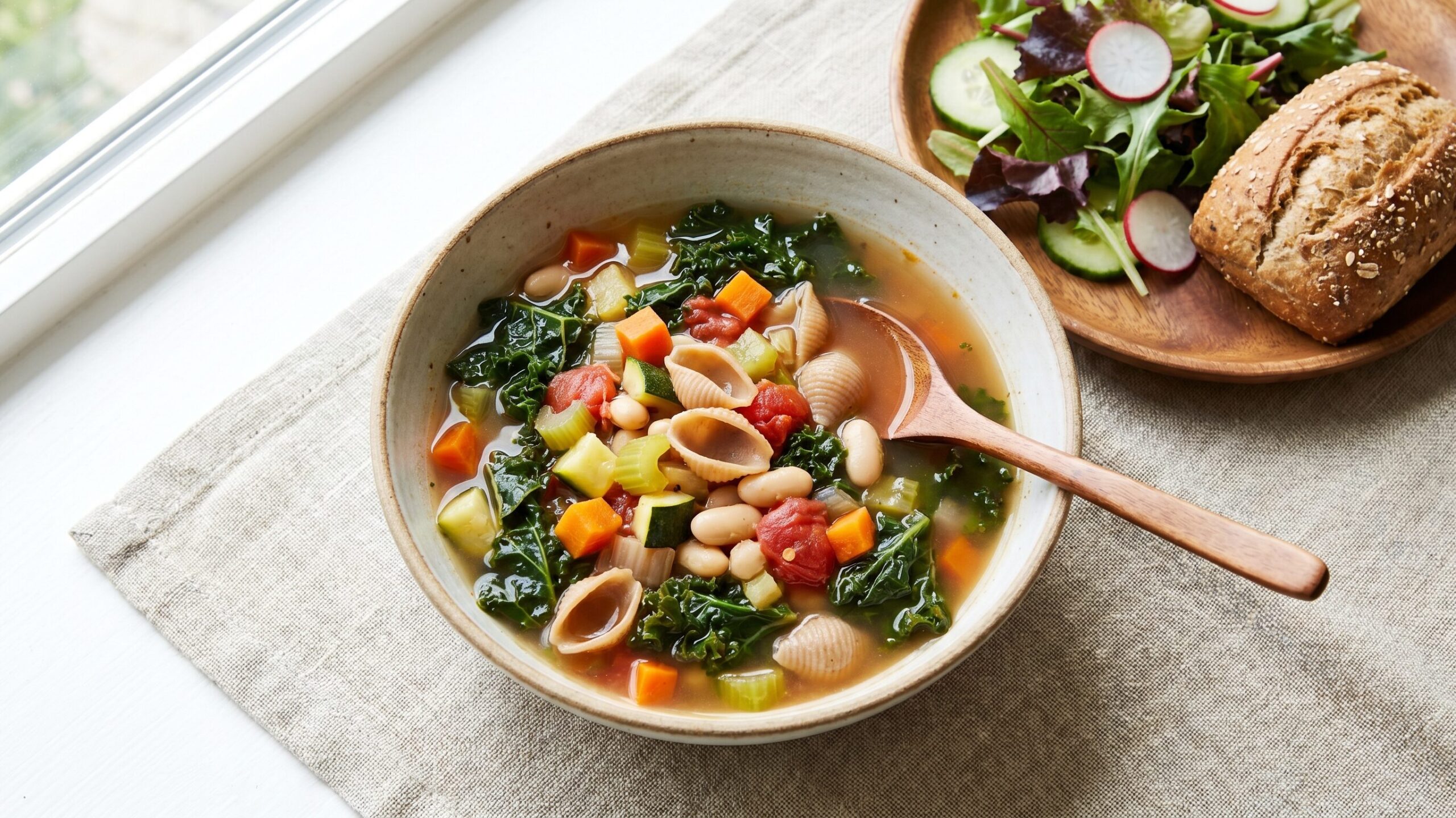
Boosting the nutritional value further is as easy as stirring in a handful of kale or spinach for added nutrients towards the end, both of which pack a serious nutritional punch without altering the character of the soup. To manage sodium levels, choose unsalted beans and use homemade stock where possible — this alone makes a significant difference to how much control you have over the final salt content. A bowl made this way is genuinely wholesome from top to bottom.
Ingredient Substitutions for Mary Berry Minestrone Soup
| Original Ingredient | Substitute | Notes |
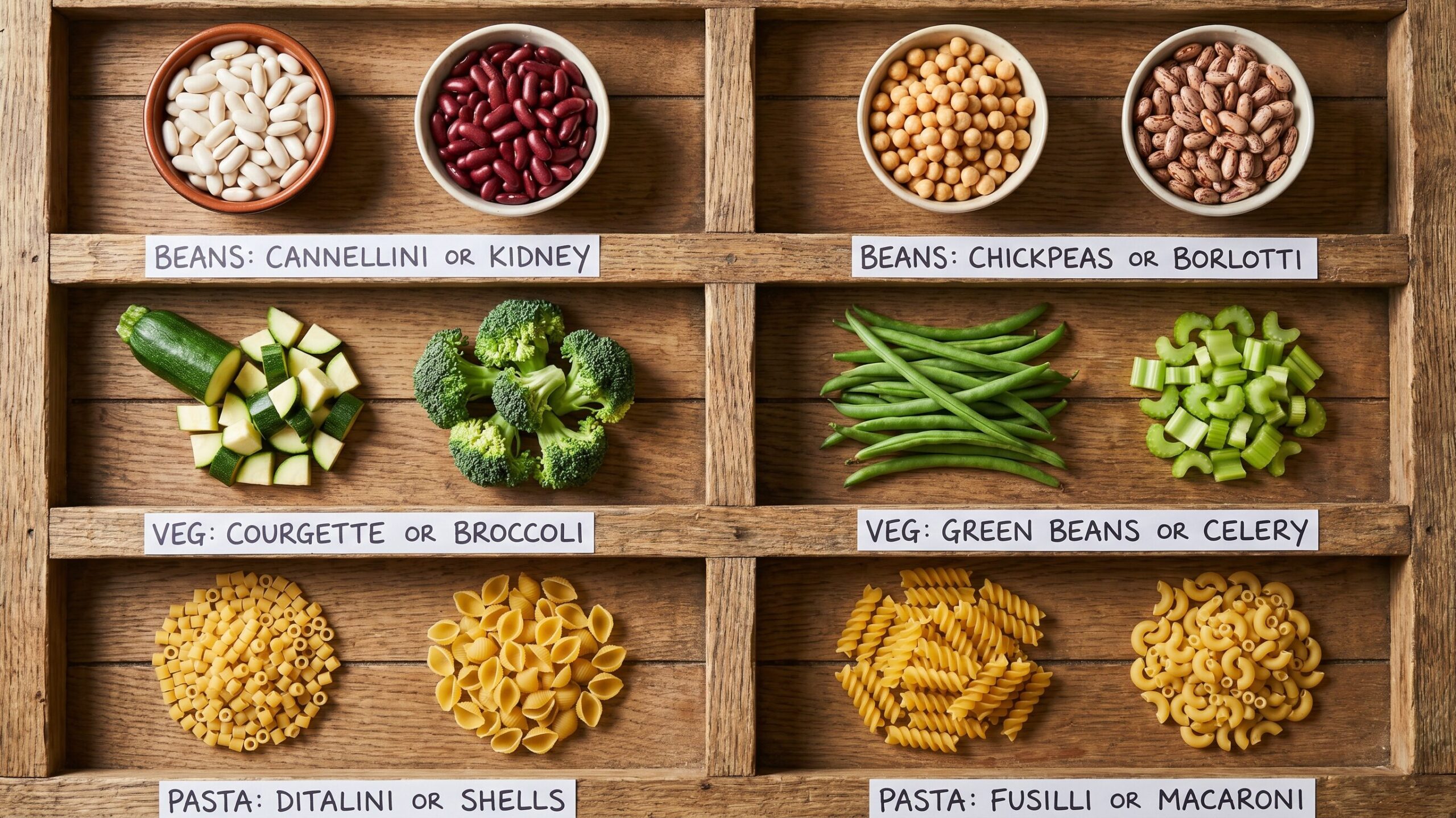
| Cannellini Beans | Kidney Beans | Similar texture, hearty flavour |
| Cannellini Beans | Chickpeas | Adds a different texture and nutty flavour |
| Courgette | Broccoli Florets | Holds shape well during simmering |
| Courgette | Extra Green Beans | Maintains texture without becoming too soft |
| Tomato Purée | Ketchup | Useful pantry substitute with similar sweetness |
| Tomato Purée | Extra Chopped Tomatoes | Slightly larger quantity can replace purée without significantly changing flavour |
| Small Pasta | Rice | Suitable gluten-free alternative |
| Small Pasta | Quinoa | Gluten-free option that adds texture and extra protein |
| Quinoa | Protein Boost | Adds nutritional value and works well in rich broth |
Pairing Ideas: What to Serve With Mary Berry Minestrone Soup
This soup is filling enough to stand alone, but the right accompaniment takes it from a weeknight bowl to something that genuinely feels like a proper meal. Crusty garlic bread is the classic choice for good reason — that perfect crunch against the soft vegetables and brothy base is hard to beat, and it handles the job of mopping up every last drop of soup beautifully. Cheese scones are a brilliant alternative for dipping, and they complement the Italian flavours surprisingly well.
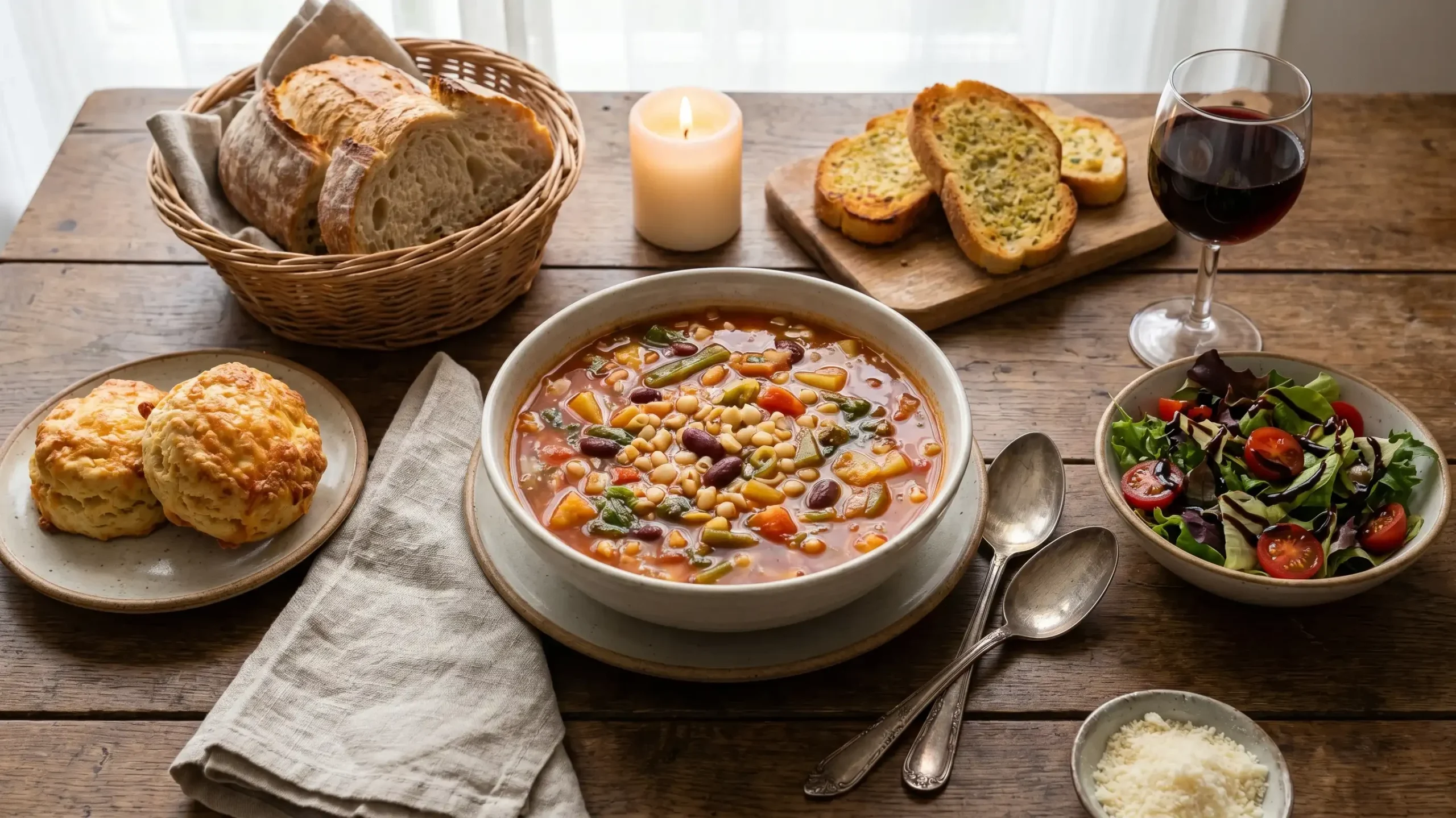
If you want something a little lighter on the side, a simple side salad with a sharp vinaigrette cuts through the richness of the soup nicely. For a more substantial meal, a piece of grilled chicken on the side delivers a solid protein boost without overpowering what is already a very flavourful bowl. And for something a little more considered, a slice of olive focaccia makes for a lovely Mediterranean-inspired pairing that feels intentional rather than accidental.
Expert Tips to Make Perfect Mary Berry Minestrone Soup
For the cleanest results, cook pasta separately in salted water and add it to individual bowls at serving — this prevents the pasta from soaking up too much broth during storing soup and keeps every leftover portion tasting fresh. When using canned beans, discard the soaking liquid and rinse them well before adding, as the liquid can make the broth taste slightly metallic. Always simmer gently rather than boiling hard, which helps keep your firm vegetables intact and the broth clear rather than cloudy.
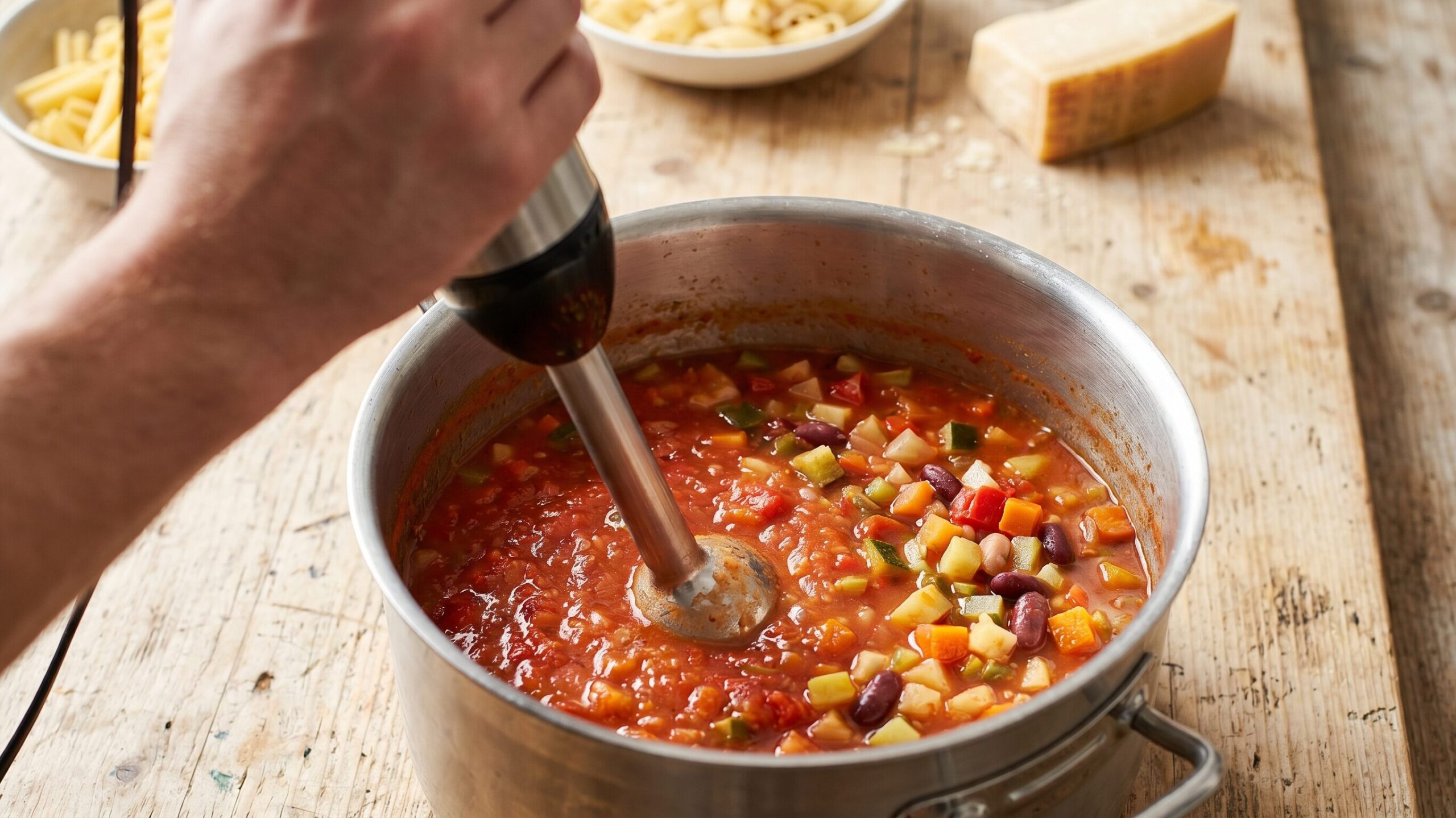
Leaning into colour pays dividends here — deliberately choosing colourful vegetables of different shades makes the finished soup visually appealing as well as nutritious. Stir in fresh herbs as late as possible for best flavour, since heat degrades their brightness quickly. If you prefer a denser consistency, blend half the soup using a hand blender before adding the pasta — this gives a naturally thicker texture while preserving the chunky elements. Always add beans last among the longer-cooking ingredients to protect their structure, and taste before serving: if the tomatoes have left a sharp acidity, a tiny pinch of sugar will balance the flavour without making the soup taste sweet.
Creative Ways to Customize Mary Berry Minestrone Soup
If you eat meat, dicing a little pancetta or bacon and frying it off before the vegetables creates a smoky depth that transforms the soup into something almost completely different — still recognisably minestrone, but with a richer, more robust character. A pinch of chili flakes added to the base brings gentle heat without overwhelming the more delicate vegetable flavours, and it is especially good in cooler months when you want the soup to warm you from the inside out.
For anyone keeping it vegan, simply skip the cheese and finish the bowl with a generous drizzle of good olive oil or a spoonful of pesto for extra richness — the difference is minimal and the result is still deeply satisfying. Seasonally, this soup takes a lovely seasonal twist depending on what you use: swap in pumpkin during autumn for a sweeter, earthier version, or keep the courgette and load up on summer greens for a lighter, brighter bowl when the weather is warmer.
Serving Suggestions
A bowl of this soup deserves to be served with something that does it justice. Warm crusty bread is always the first choice — it is practical, comforting, and universally loved. Garlic bread is a close second, adding a buttery, aromatic element that pairs especially well with the herb-infused broth. For something a little more elegant, toasted ciabatta slices rubbed with a cut garlic clove and drizzled with olive oil make a beautiful accompaniment that feels more considered without any real extra effort.
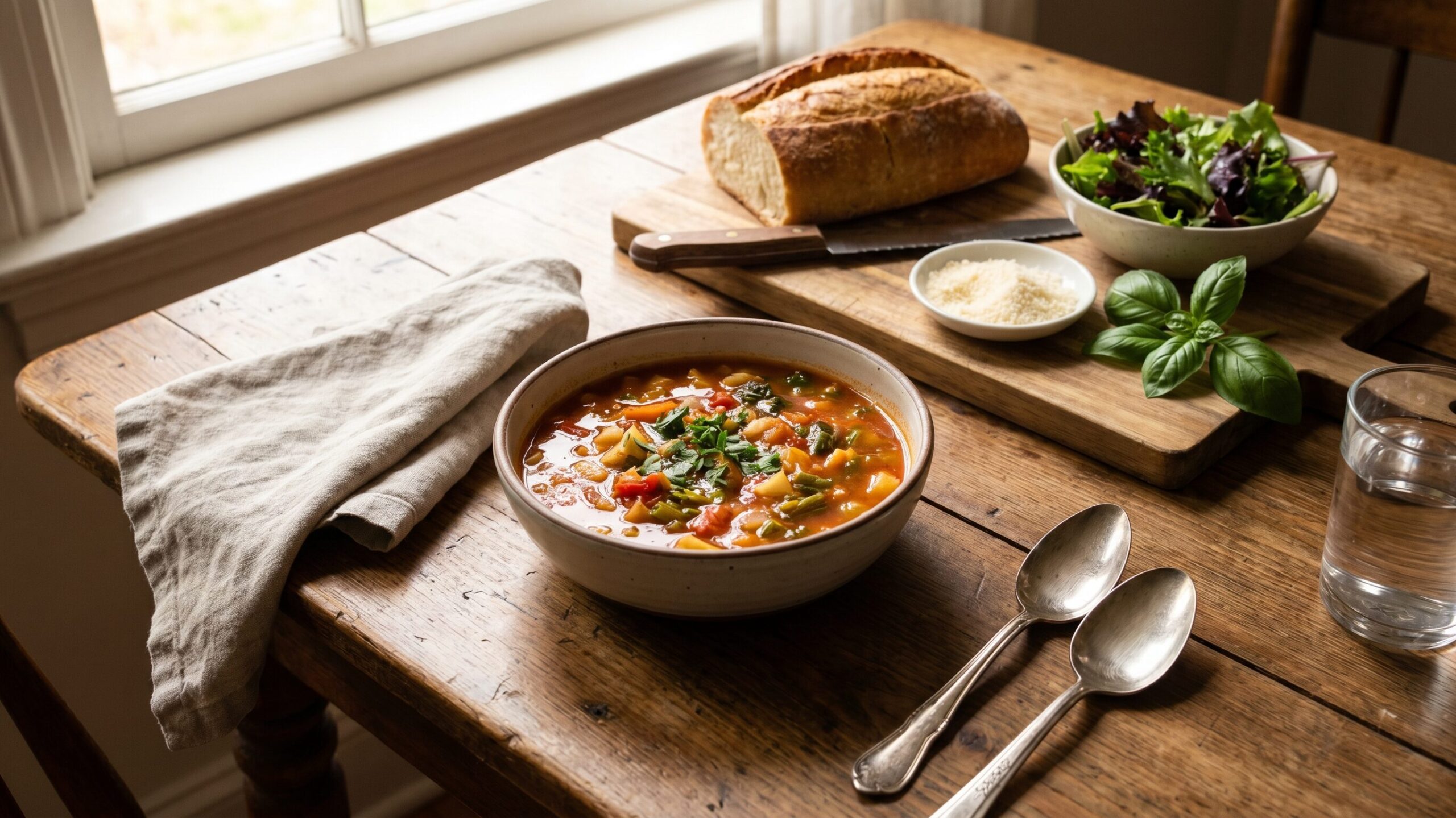
On the side, a simple green salad dressed lightly with lemon and olive oil keeps things fresh and stops the meal from feeling too heavy. Finish the bowl itself with a scattering of extra Parmesan, a few torn leaves of fresh basil, and perhaps a final drizzle of your best olive oil — these small touches make the presentation feel genuinely inviting rather than just functional.
Storage
Once cooled, do not leave the soup sitting at room temperature for longer than 2 hours before transferring it to the refrigerator. Stored in an airtight container, it will keep well in the fridge for up to 3 days, though you will notice the soup thickens considerably as it sits because the pasta continues absorbing liquid. For longer storage, freeze portions in freezer-safe portion-sized containers where it will keep well for up to 3 months — though for the best texture, it is worth freezing the soup without pasta and adding freshly cooked pasta when you are ready to reheat and serve.
To use frozen portions, thaw overnight in the fridge rather than defrosting at room temperature for food safety reasons. The soup keeps well through both refrigeration and freezing, making it one of the more reliable dishes to batch and store — a genuinely useful quality for busy households that benefit from having a proper meal already waiting.
How to Reheat Mary Berry Minestrone Soup
The best way to reheat this soup is gently on the stovetop over medium heat for around 5–7 minutes, stirring occasionally to bring it back to an even temperature throughout. If you are short on time, the microwave works perfectly well — heat in short intervals, stirring between each one to avoid hot spots and ensure the soup heats evenly rather than scalding in patches.
If reheating from frozen, make sure you defrost fully before applying heat, then reheat gently on the stovetop for the best result. The soup will almost certainly have thickened during storage, so add a splash of water or some extra stock as it heats to maintain consistency and prevent dryness — start with a small amount and adjust gradually rather than adding too much at once and diluting the flavour.
Nutrition
Each serving of this soup provides a solid nutritional profile, with approximately 220–285 kcal per bowl depending on the specific ingredients used. In terms of macros, expect around 28–36g of carbohydrates, 9–11g of protein, and 8–10g of fat, with saturated fat sitting at roughly 2–4g saturates per serving. The sodium content comes in at around 690mg, which is worth being mindful of if you are watching salt intake — using low-sodium stock is the easiest way to bring that figure down.
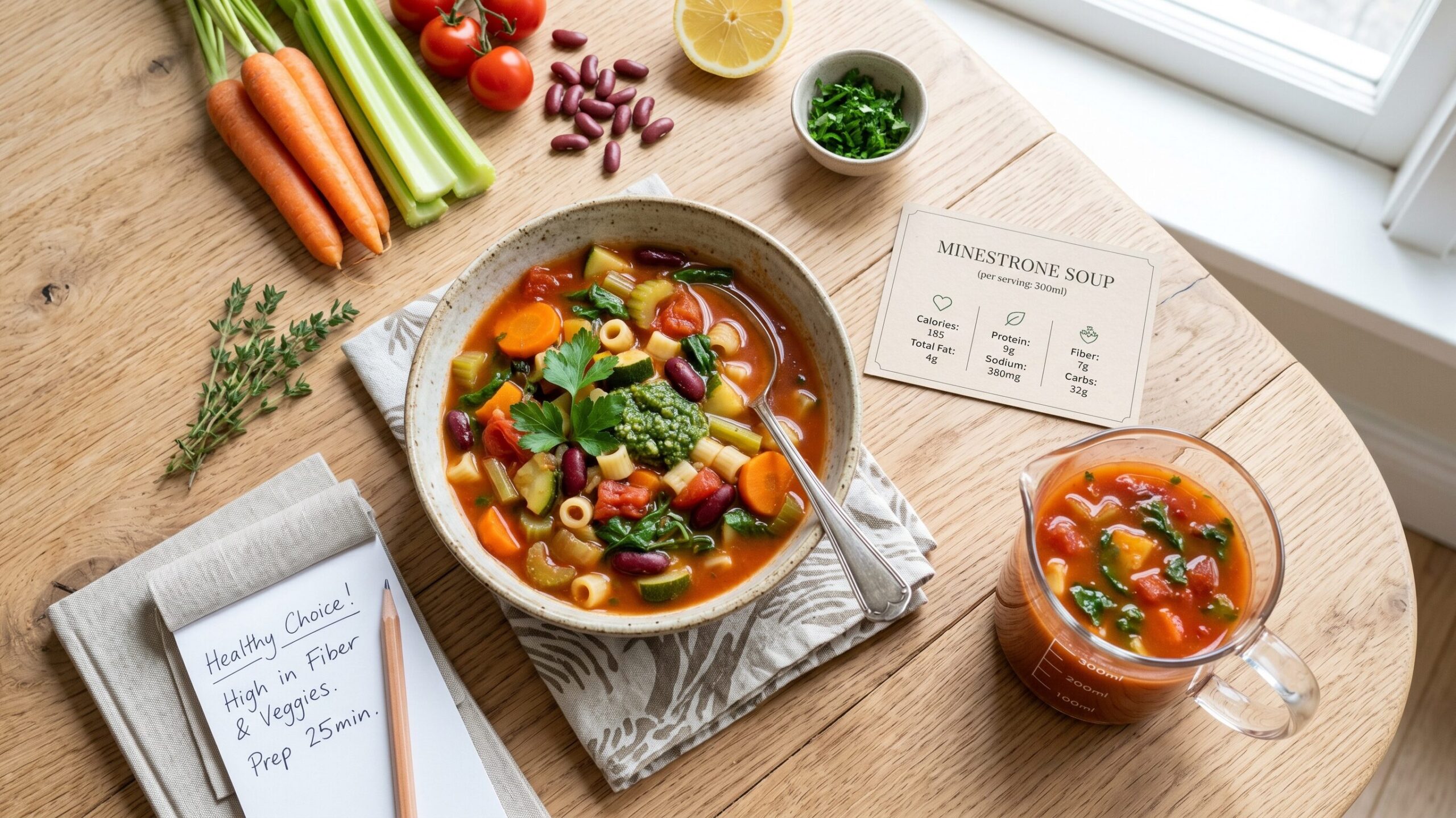
On the more positive side, the soup delivers around 7–8g of sugars from the natural sweetness of the vegetables and tomatoes, and a genuinely impressive 4–6g of fibre per bowl, which supports digestive health and helps the meal feel satisfying for longer. The 2.2g salt figure reflects a standard preparation; adjusting the stock and holding back on added salt during cooking can meaningfully reduce this. Please note all nutrition values are estimates and will vary based on the exact ingredients used and portion sizes.
Mary Berry Minestrone Soup Recipe (FAQ’s)
Can I make this minestrone soup ahead of time?
Yes, making ahead is perfect for this recipe you can prepare it completely and store it in the fridge, with flavours develop even better the next day. The pasta absorbs liquid as it sits, so when reheating, add extra stock or hot water to loosen consistency back to the right texture. I recommend cooking the pasta slightly less than needed since it will continue softening overnight.
Which pasta shapes work best for minestrone soup?
Small pasta shapes like ditalini, macaroni, and small shells are ideal because they cook evenly and fit nicely on a spoon with vegetables and broth. Avoid large or ribbon-like pasta as they dominate the bowl and don’t work well for this style of soup. I prefer ditalini because it holds the broth beautifully without turning mushy.
Is this minestrone soup vegetarian or vegan?
The basic recipe is vegetarian using vegetable stock and Parmesan cheese, and it is easily made vegan by skipping the Parmesan cheese and finishing with olive oil or a spoonful of pesto instead. You can also use a vegan alternative to Parmesan if preferred, though the soup tastes complete without it. Both versions are equally satisfying and flavourful.
What should I do if my minestrone soup is too thick?
If soup too thick, add extra stock or hot water one spoonful at a time until you reach the right consistency the pasta absorbs liquid so this is normal. When reheating leftovers, gradually add warm stock to loosen consistency back to proper soupy texture. Keep warm stock on hand while cooking so you can adjust consistency right at the end.
Related Posts
Mary Berry Cauliflower Soup Recipe
Mary Berry Pea and Mint Soup Recipe
Mary Berry Butternut Squash and Red Pepper Soup Recipe
Mary berry chicken and vegetable soup recipe

Mary Berry Minestrone Soup
Ingredients
Method
- Heat the olive oil in a large saucepan over medium heat.
- Add the onion, garlic, celery, and carrots, and cook until softened.
- Stir in the courgette, chopped tomatoes, tomato purée, oregano, and bay leaf.
- Pour in the stock and bring to a gentle boil.
- Reduce the heat and simmer for 10 minutes.
- Add the cannellini beans and green beans, then simmer for another 10 minutes.
- Stir in the pasta and cook until tender.
- Add the shredded cabbage or spinach during the final few minutes of cooking.
- Remove the bay leaf and stir in the fresh basil.
- Season with salt and black pepper.
- Serve hot with grated Parmesan, a drizzle of olive oil, and crusty bread.
Notes
- Cook the pasta separately if making the soup ahead to prevent it from becoming too soft.
- Add extra stock when reheating if the soup has thickened.
- Mash a few beans for a naturally thicker broth.
- Use seasonal vegetables to customise the recipe.
- Freeze without the pasta for the best texture.